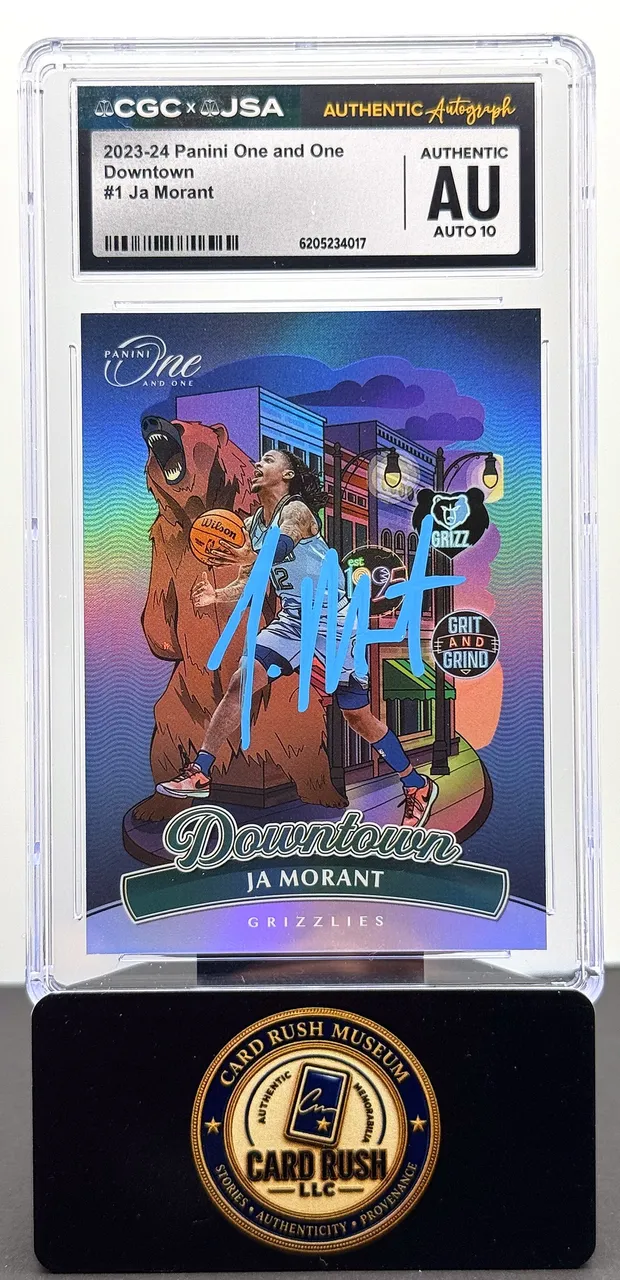
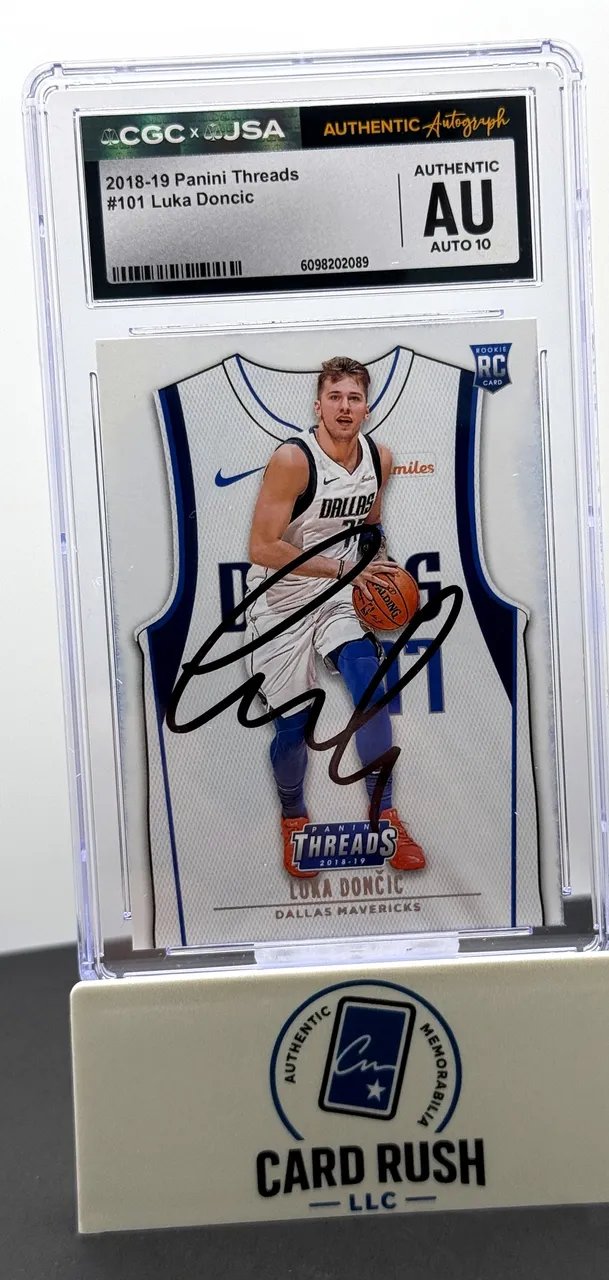
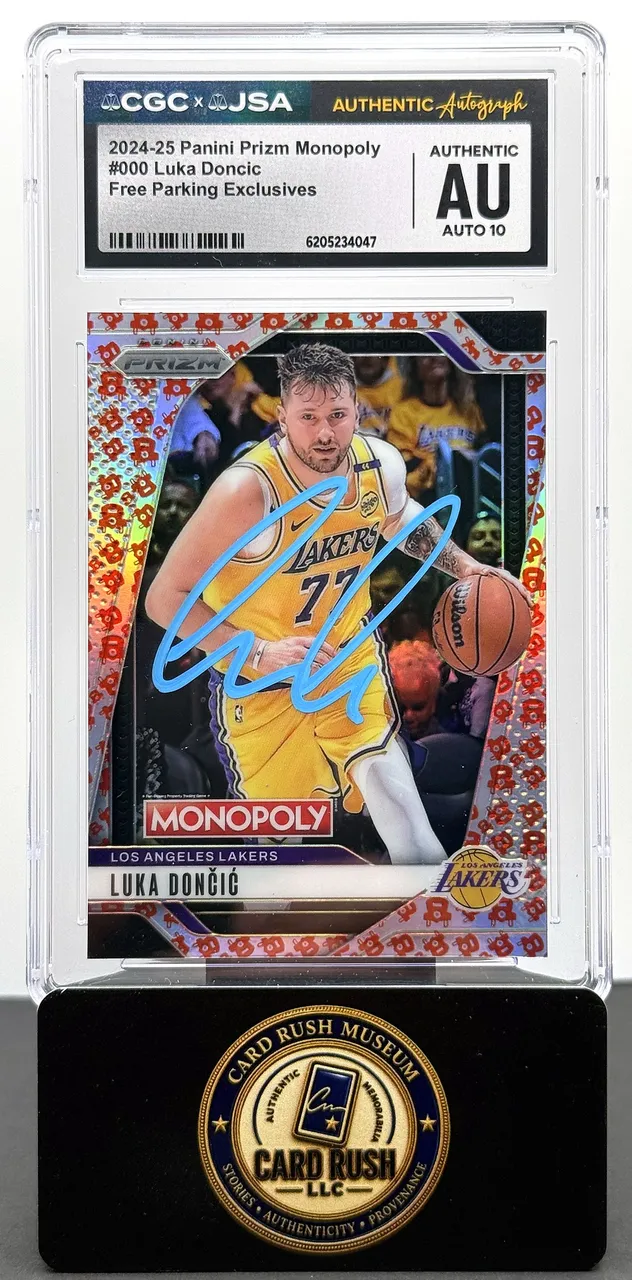
Welcome to Card Rush Museum—where every artifact has a story.
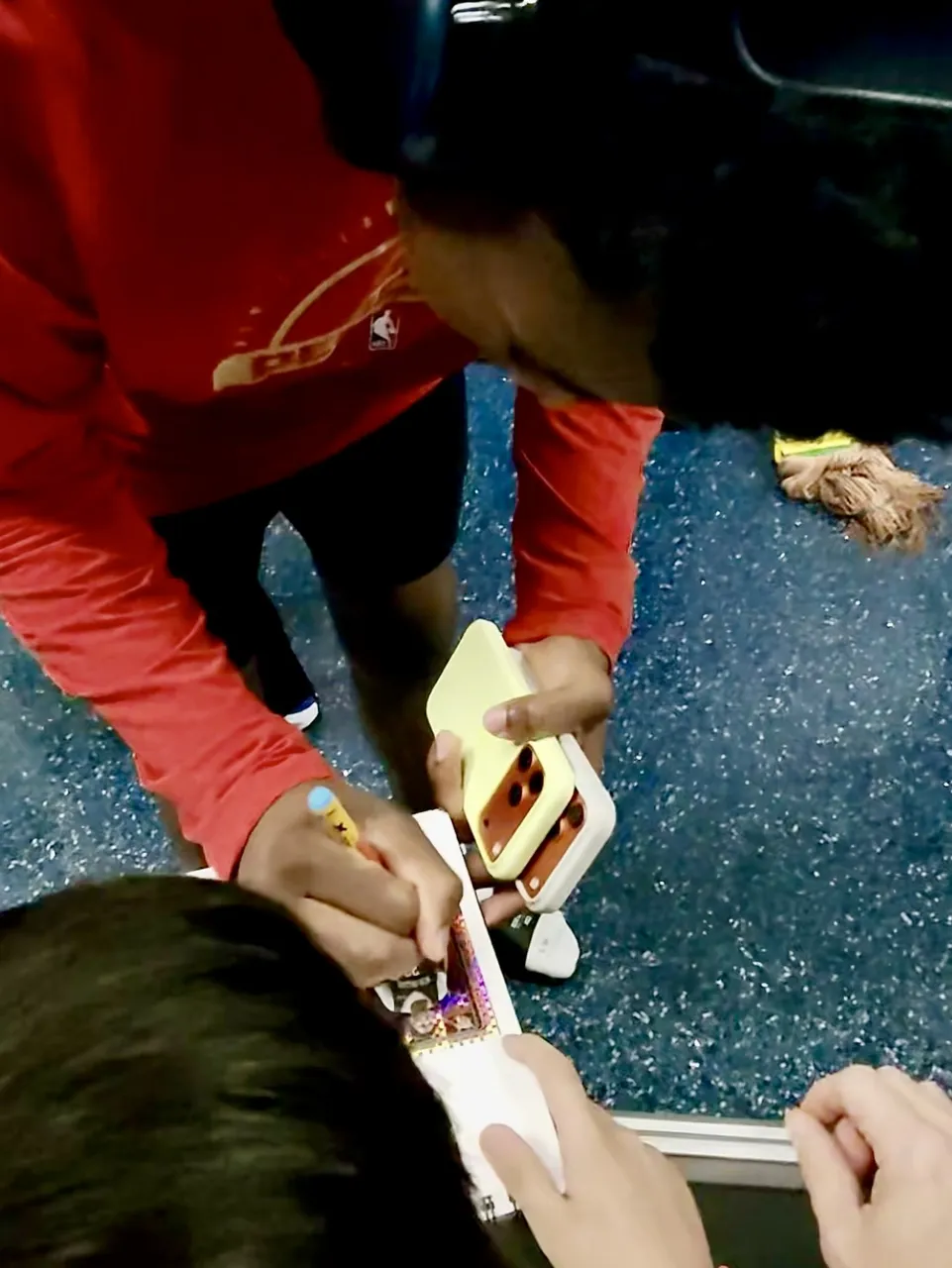
Card Rush is a father-and-sons museum of basketball autographs signed in person. A player, a paint pen, and someone close enough to ask. Every signature goes down once, by hand, and no two come out the same — so each card here is the only one like it. Most of them we watched get signed, and filmed. Where we didn't, we say so.

Extraordinary experiences deserve to be preserved.
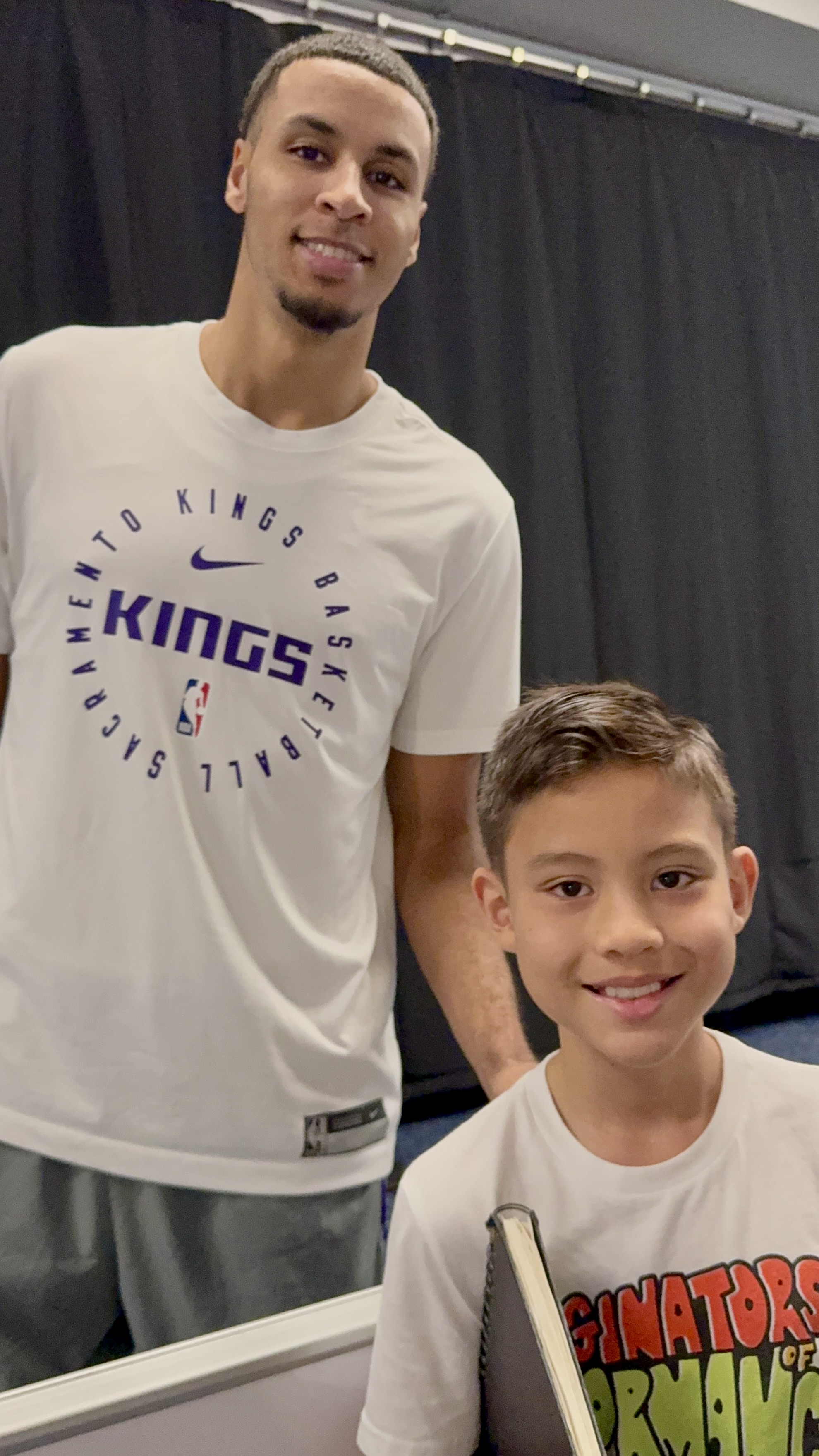
Two kids, a paint pen, and a spot at the rail.

It became a business because we got good at it. It became a museum when we finally worked out why.
Here's why.
An in-person autograph has nowhere to live in this hobby. It isn't a pack pull, so no manufacturer ever guaranteed it. It isn't a vintage slab with forty years of paperwork behind it. It's a player, a pen, and somebody standing close enough to ask — and the market has never known how to value that.
So the market defaults to what it can verify. Pack-pulled rules, because Topps and Panini say so, printed right there on the card.
Fair enough. If authenticity is the problem, let's talk about authenticity.
A manufacturer's guarantee is a company's word. We filmed ours. Where we filmed it, you can watch the pen touch the card in one unbroken shot, with a date on it. You don't have to take our word for anything. You have your own eyes.
That isn't a lesser kind of proof. It's the only kind that doesn't ask you to trust somebody.
And we don't stop there, because we don't think you should have to. Trust, but verify. Nothing leaves this Museum on our own footage: every in-person autograph is authenticated and encapsulated first by an independent third party — CGC/JSA, PSA, Beckett or SGC — so the artifact joining your collection carries a judgment that isn't ours.
And once you've watched it happen, the thing stops being cardboard in plastic. Every one is signed once, by hand, differently, and there is no second copy anywhere to compare it to.
We didn't come up with that idea. We were shown it. The man who taught us this hobby, Mario Matos, once walked us through his collection, and somewhere in the middle of it the cards stopped being cards. It wasn't inventory. It was a gallery. He is, as far as we're concerned, the Andy Warhol of card collecting.
And like Warhol, you don't have to understand it to feel it. Art doesn't ask you to get it. It just has to speak to you. There's a Tragically Hip song, “Escape Is at Hand for the Travellin' Man,” built around that exact moment: you're in a crowd, a band is playing, and you realize it's speaking straight to you. That's what happens at the rail when the pen touches the card. It's what happened in Mario's collection. It's what we want to happen to you here.
So we're not going to tell you these are art. We're going to show you.
That's not a collectible.
That's art.
We built a museum to show you
Nothing here is ranked. A building is a different kind of encounter, not a better one — and where an artifact lives depends on what it is, never on what it costs.
The Learning Hub runs through all three. So do the artifacts. Search a player and you will find everything the Museum holds on him — the stories, the portraits, the cards that are here, and the ones that aren't anymore.
Where the stories are kept.


These are the pieces that shaped our journey as collectors — the grails that taught us, inspired us, and brought us closer together. Each one carries a story, a moment, and a lesson. This is where the Card Rush Museum begins.
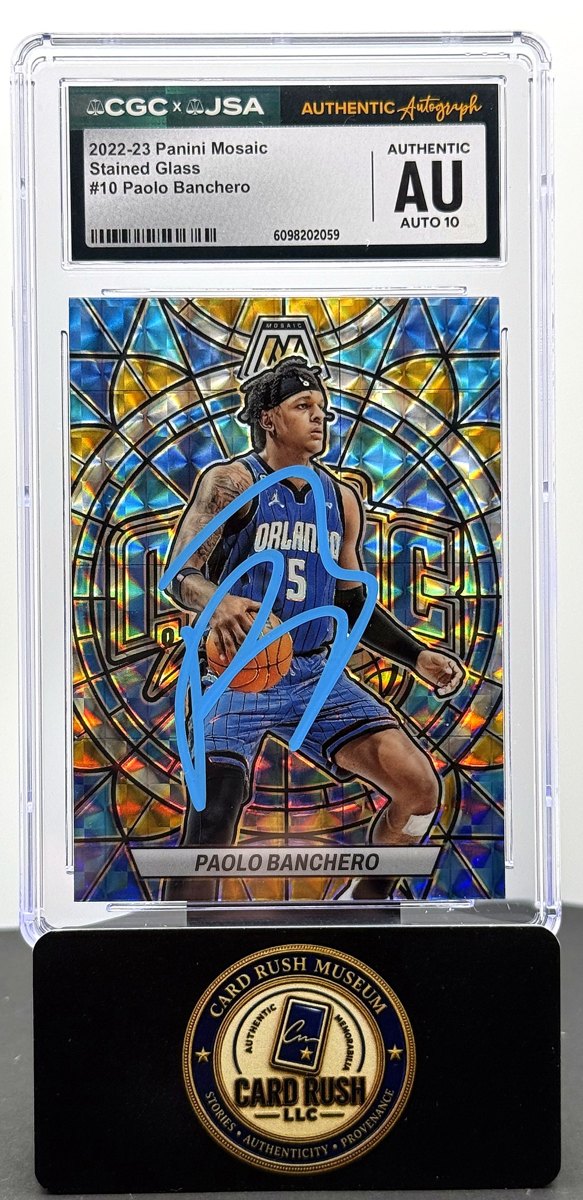
I’ll never forget the moment this card came out of the pack. It didn’t just appear — it hit. The corners were sharp, the surface clean, and the autograph looked perfect. For a second, I thought I had pulled something unreal. Dad saw it too. We both felt that surge — that maybe this was a true 10‑10.
Waiting for the grade felt like forever. When it came back auto‑10, I was disappointed for a moment… but only a moment. Because the truth is, this card meant more to me than any number. I pulled it myself. I felt that rush. And that feeling changed everything.
This was the card that made me fall in love with collecting. It made me want to learn, to chase, to understand what real value looks like. My younger brother Caeden jumped in with me. We started going for in‑person autographs, meeting players, and seeing the hobby up close — not just online, not just in pictures, but in real life.
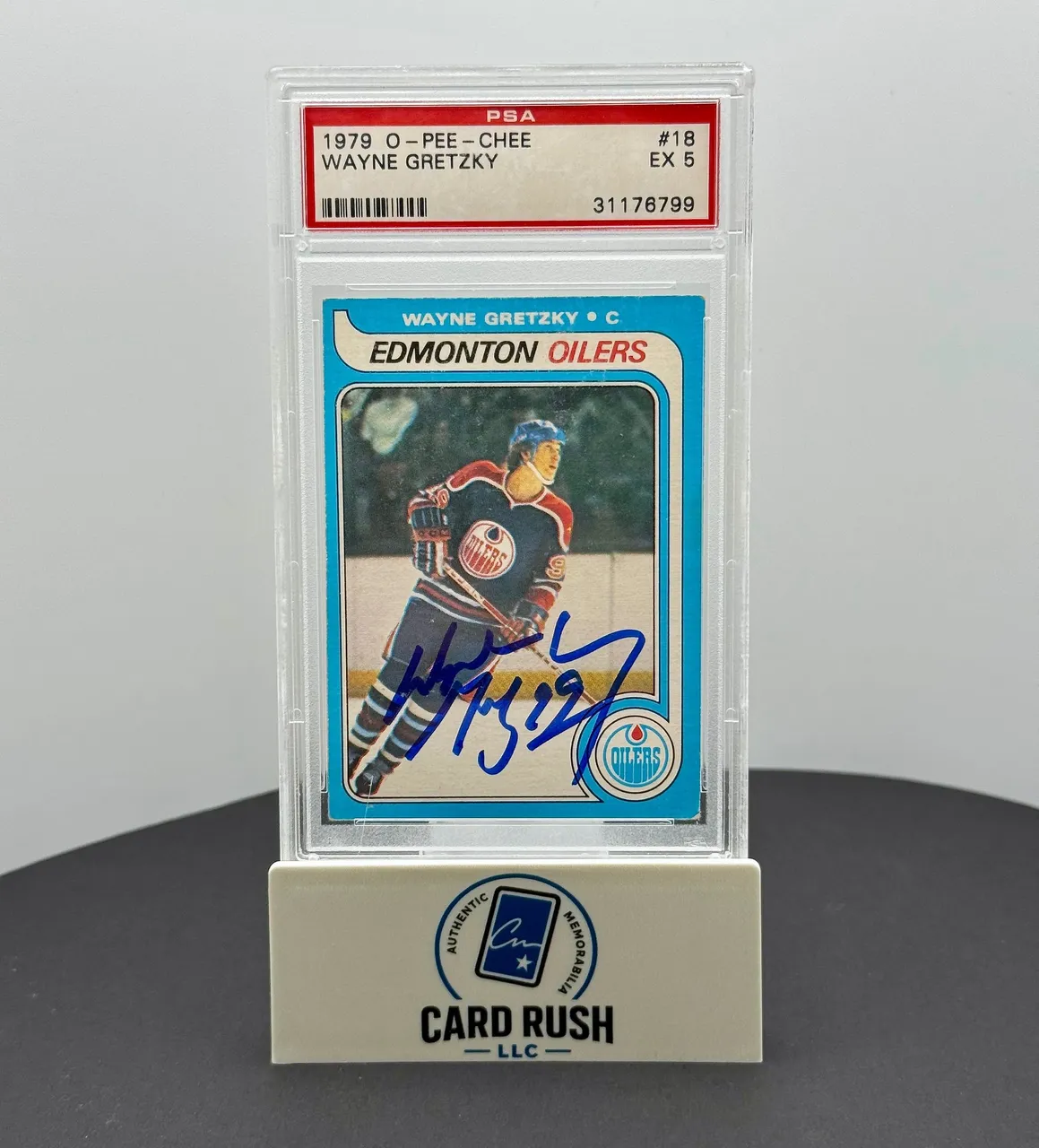
Dad showed us the grails that shaped his own journey — his in‑person signed Gretzky rookie, and the Kobe patch auto he calls his centerpiece. Seeing those cards, and holding my first big pull, made me realize something: collecting isn’t just about what a card is worth. It’s about the story behind it.
This card is where my story begins.
This is my first rush.

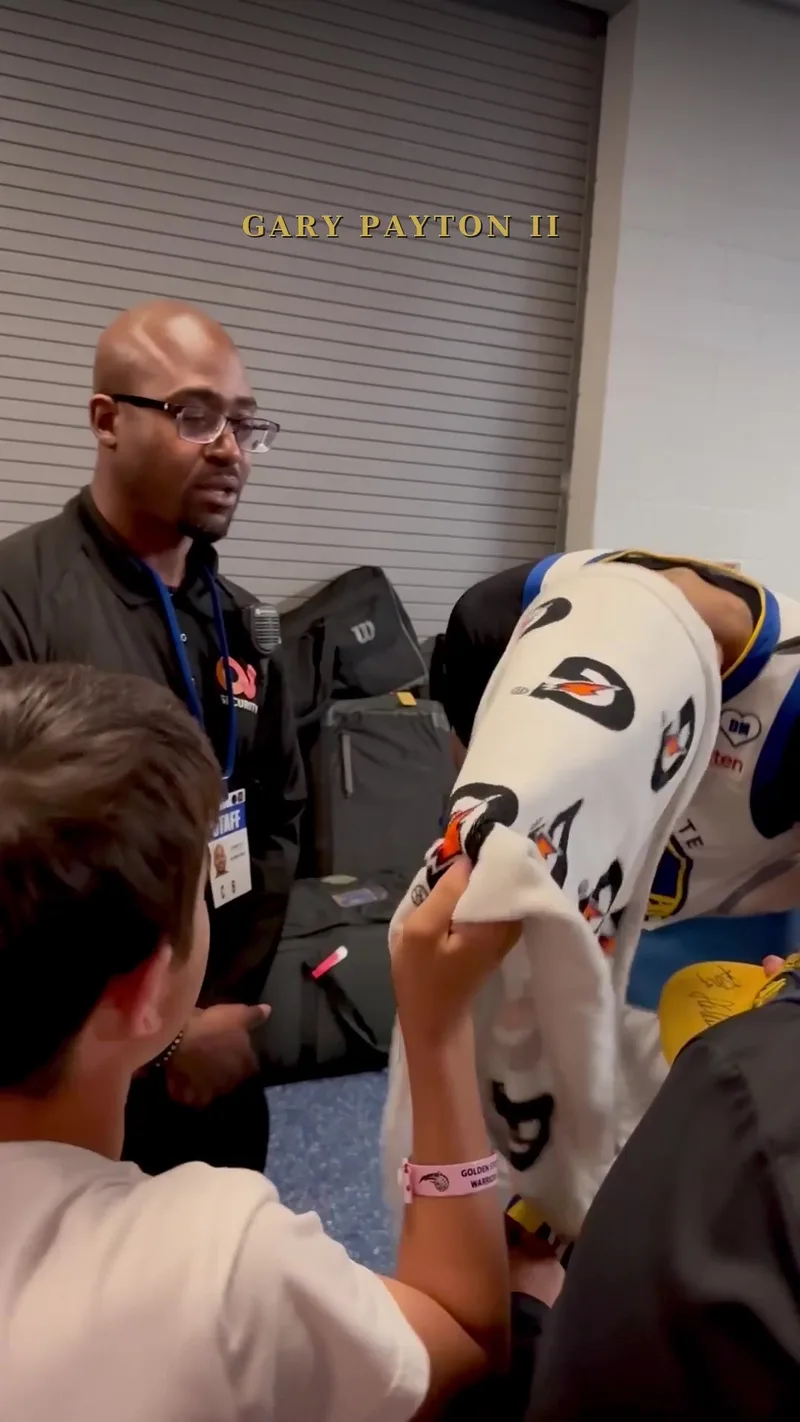
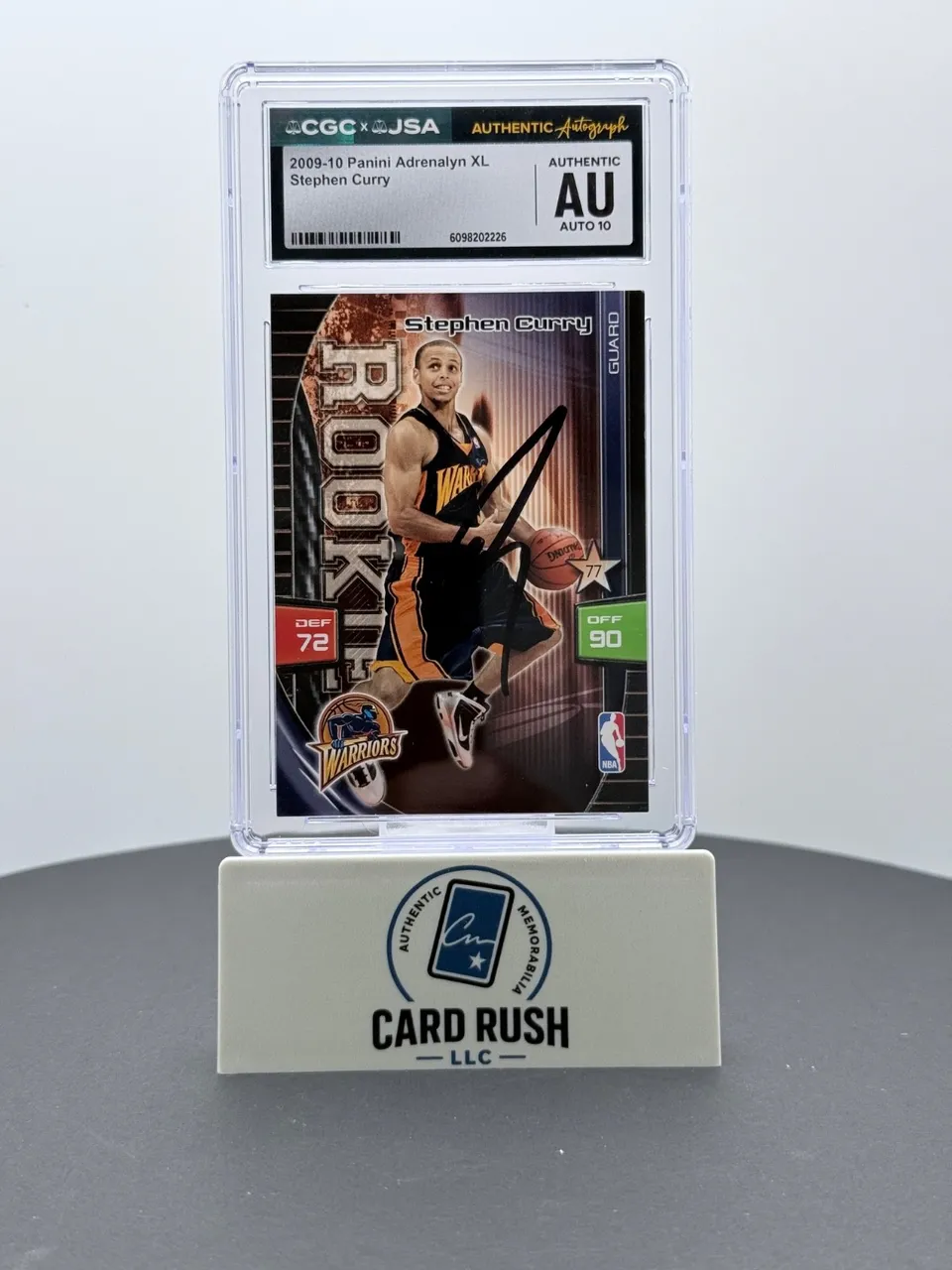
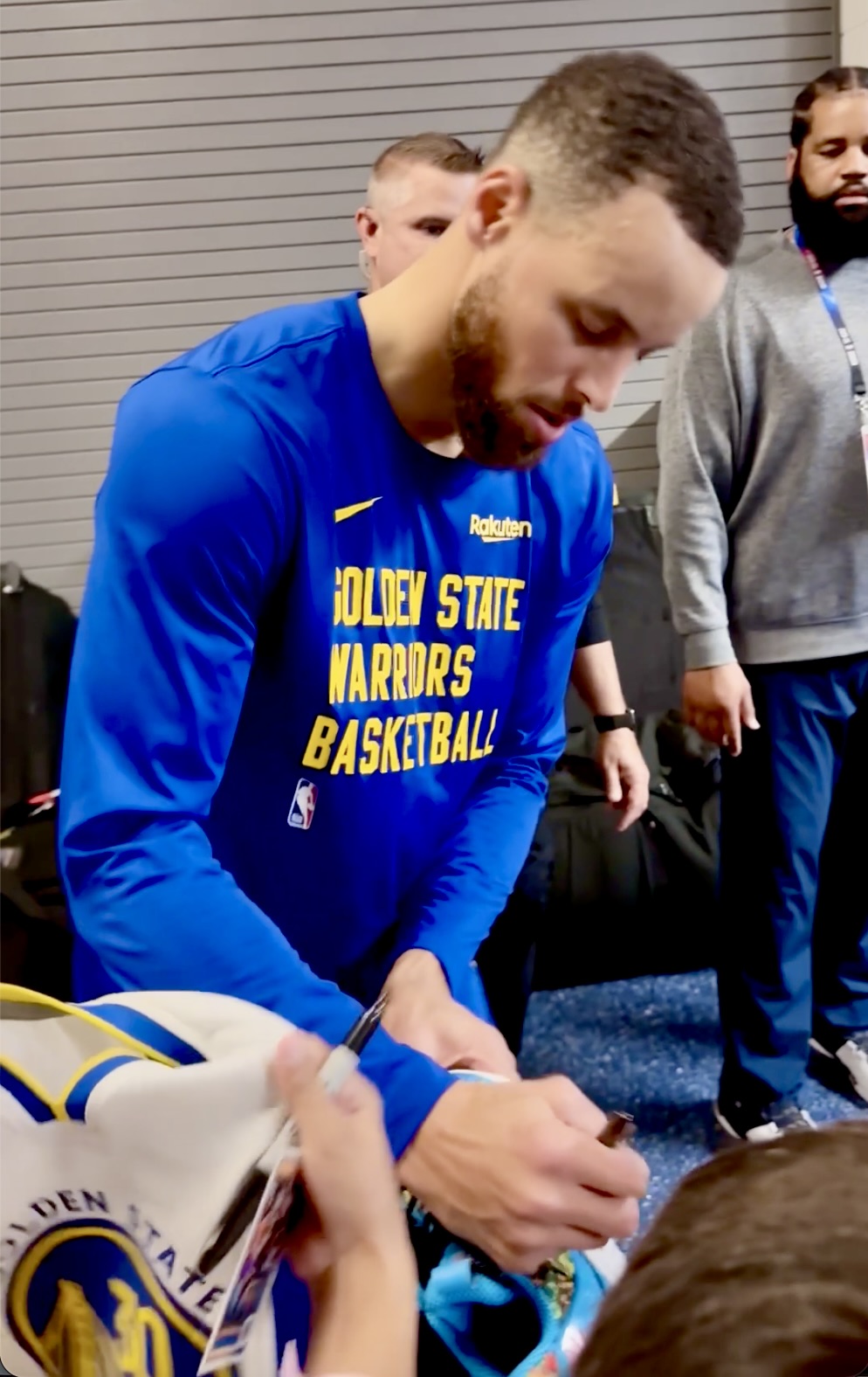
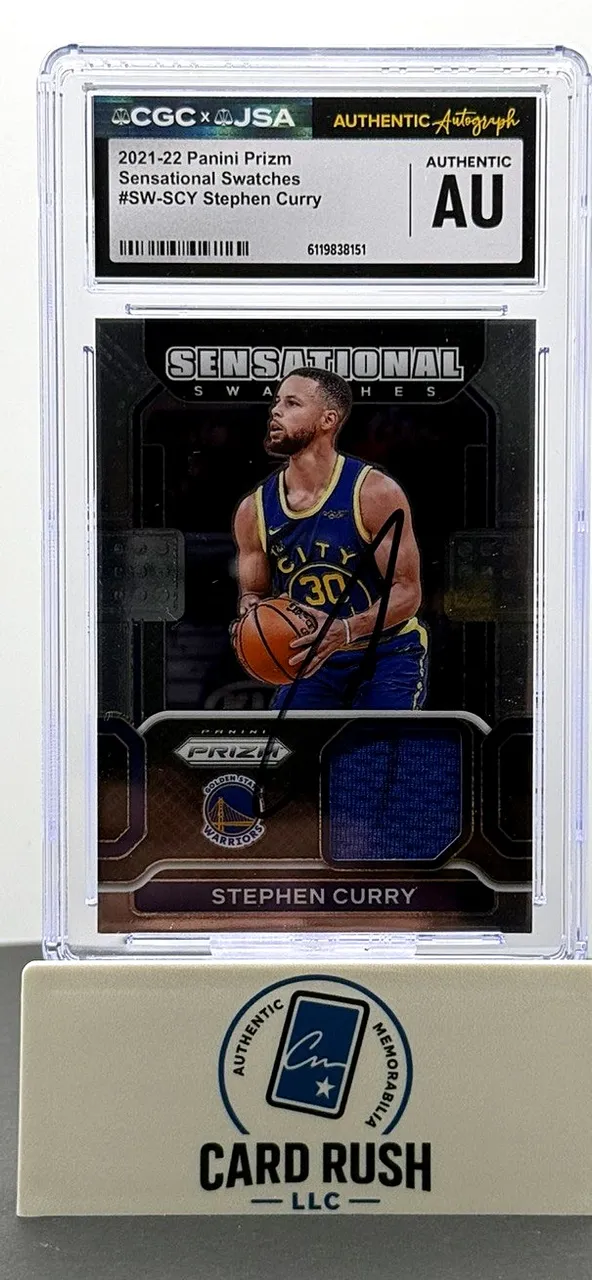
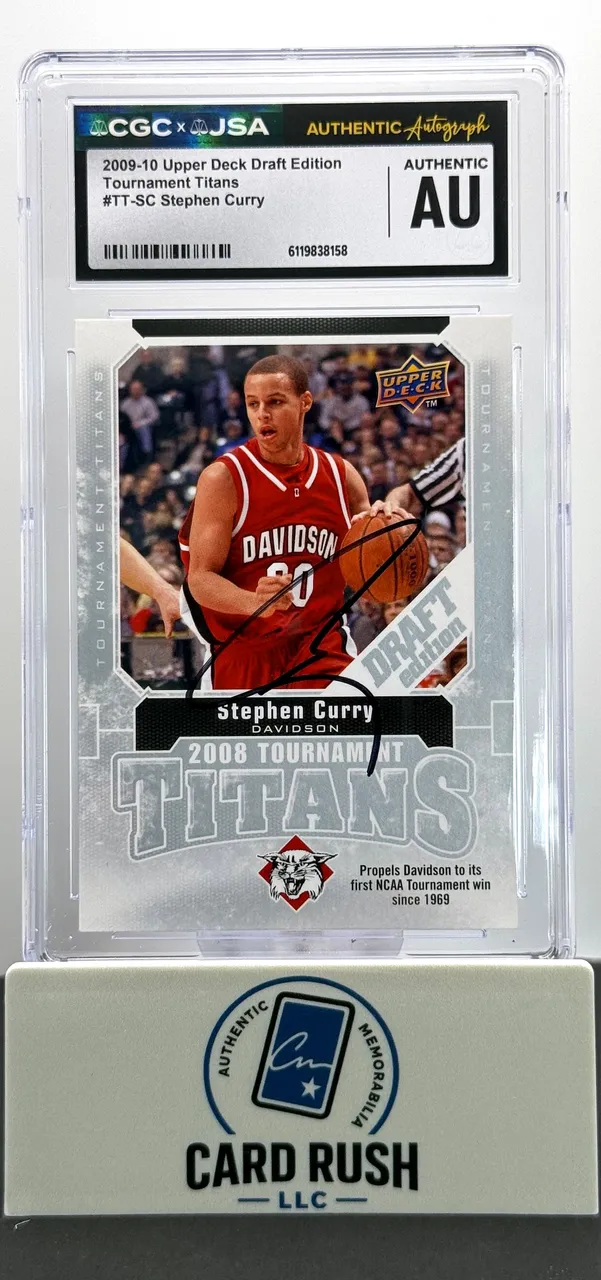
I was nine when Steph Curry stopped in the tunnel at Kia Center and signed my rookie card. I couldn’t believe he was right in front of me — actually signing something I was holding. I watched the marker touch the card. I watched him hand it back. It felt like the biggest moment of my life.
PSA rejected it even with the video of him signing, and I didn’t understand how they could say it wasn’t real when I saw it happen. CGC/JSA authenticated it and gave it an auto 10, proving the moment was exactly what I knew it was.
This card is more than an autograph. It’s the memory of meeting Steph Curry at nine years old, the shock, the excitement, and the feeling I’ll never forget. It’s the moment that made me fall in love with collecting.

The two cornerstone cards that built the Card Rush legacy.
Every museum has a beginning. For Card Rush, it began with a father who believed that collecting could be more than cardboard — it could be a legacy. These two grails represent the foundation of that legacy, the spark that inspired Christian and Caeden to build their own exhibits and continue the chase.
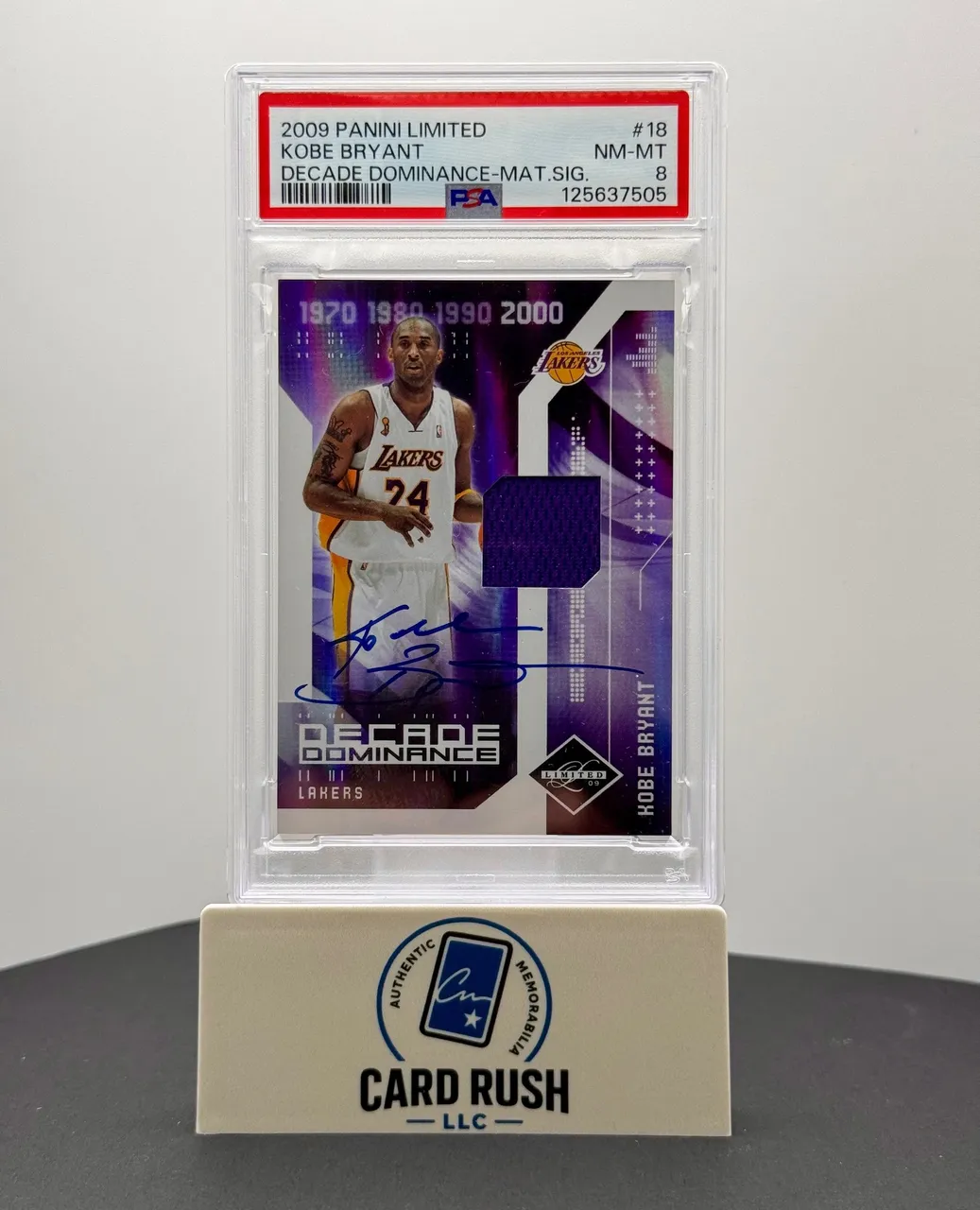
The Wayne Gretzky O‑Pee‑Chee rookie autograph stands as the first true cornerstone — a card that transformed a simple collection into a lifelong pursuit. The Kobe Bryant Decade Dominance on‑card auto patch completes the pair, symbolizing perseverance, passion, and the thrill of the hunt.
Together, these grails form the origin story of Card Rush: a father’s passion passed down, preserved, and displayed for generations.


Beyond the origin story, the collection keeps growing. Some pieces the family holds onto for good — the Curator's Collection, kept and displayed, never transferred. Others come with a story we're ready to pass on to the next collector, and those hang next door, in the Art Gallery.
These are the family's own keepers — pieces we've chosen to hold onto and display rather than sell. They are the Museum's permanent collection.
Not every card in this Museum is for sale. Some are kept simply because of how they were earned.
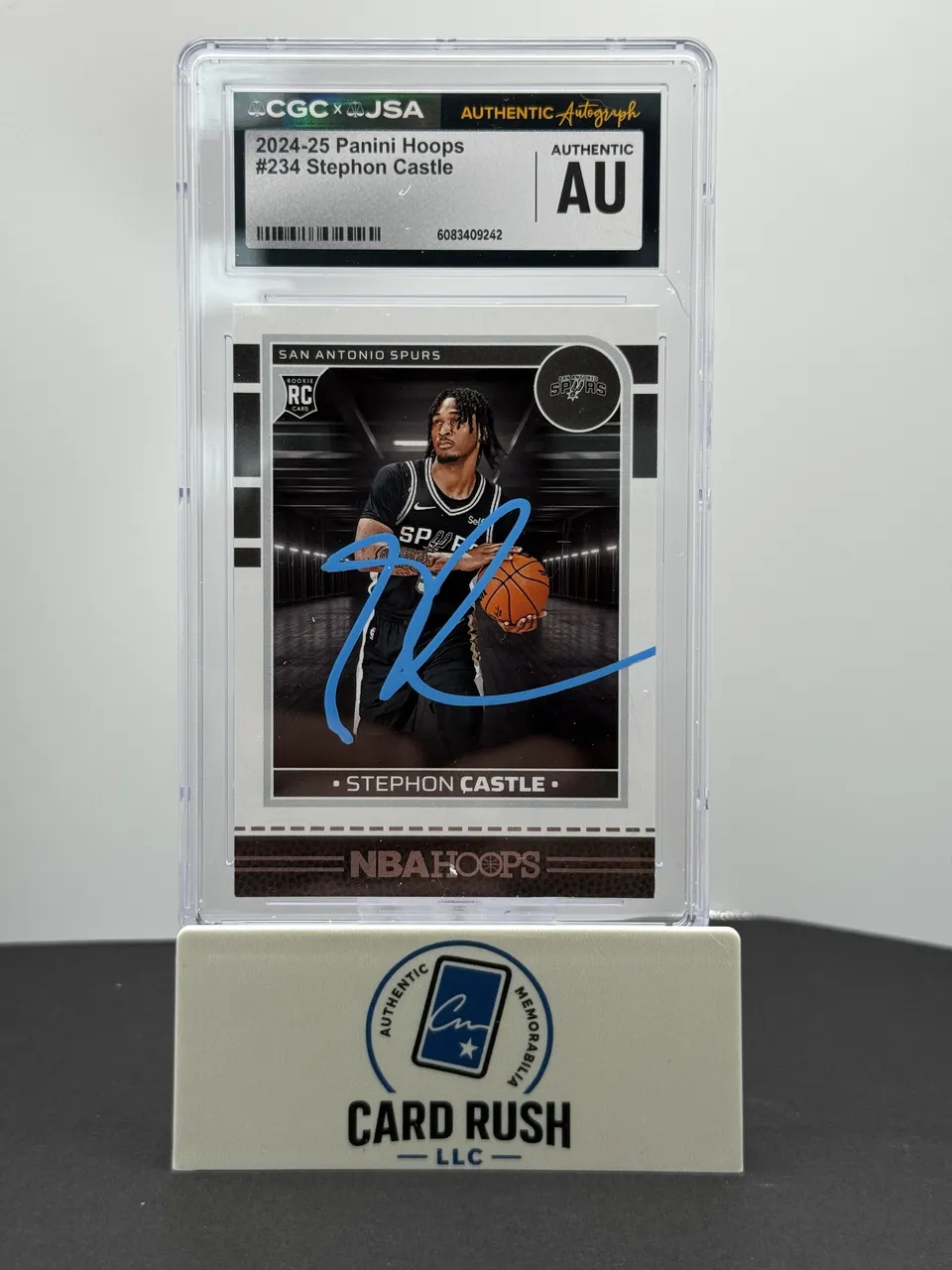
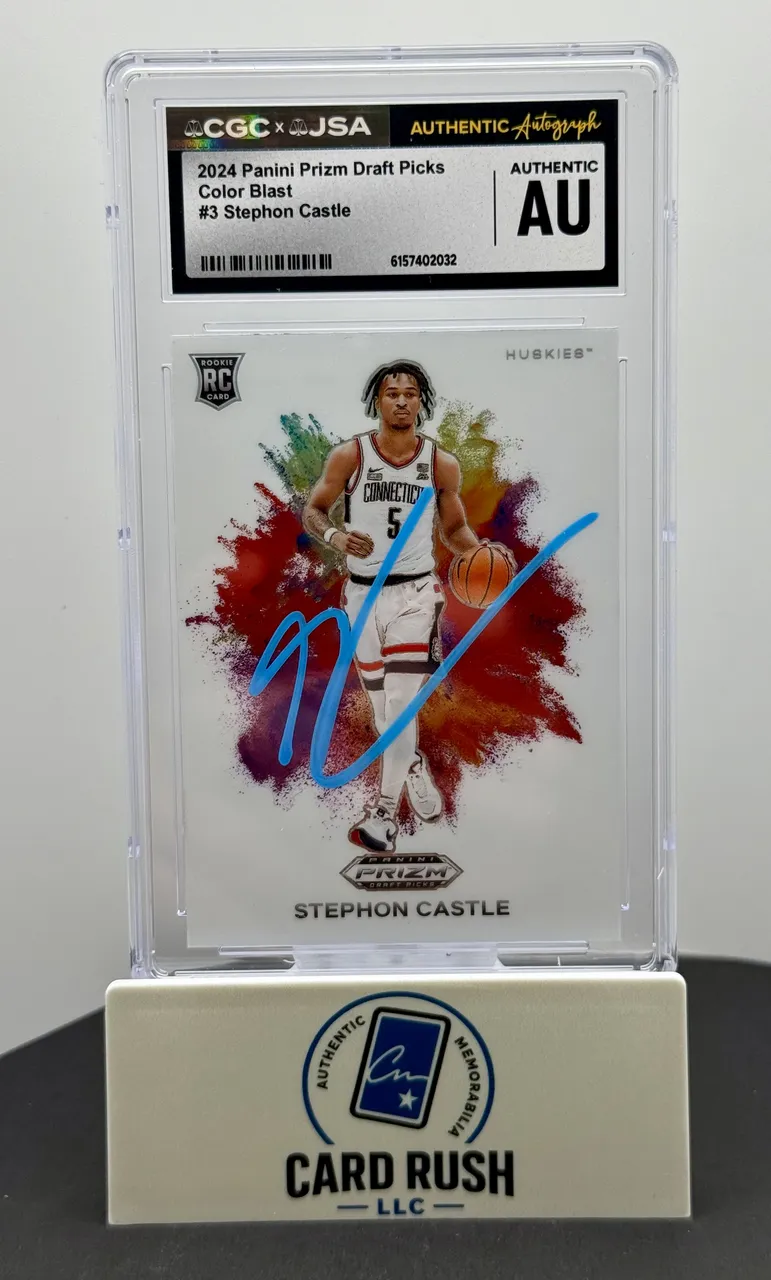
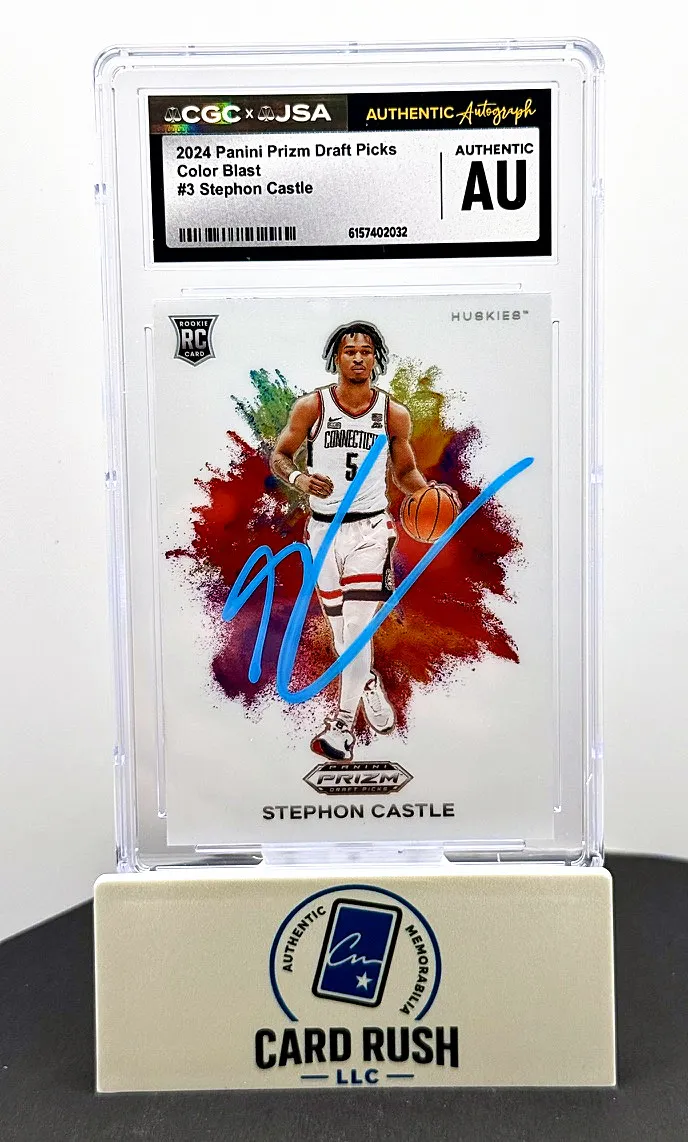
Collectors have a word for the pieces they keep rather than sell — PC, short for personal collection. Every rookie class has its "chase cards," too: the rare parallels and inserts nobody expects to pull, the ones that define a set. Panini's Kaboom and Downtown, Topps' Refractor, and the Prizm Draft Picks Color Blast pictured here all belong to that tier. Stephon Castle's rookie class has quietly given us two of them.
It started with an ordinary night that turned into an extraordinary one. We're an Eastern Conference family, so Western Conference teams only comes through Orlando once a season. It was Castle's Rookie Season and we were there to watch the Spurs. We were let onto the floor early to see the team warmups, and as Castle jogged toward the court, he nearly ran into Christian. He stopped anyway, said hello, and Christian, a little shy in the moment, asked if he'd sign his rookie card. Castle didn't hesitate — he took Christian's blue paint pen and signed it right there by the court. It's a small gesture, but it's the one we still talk about, and it's why he's been one of our favorite players to watch ever since. That original card has since been transferred to a new collector — you can see it preserved in the Museum Archive.
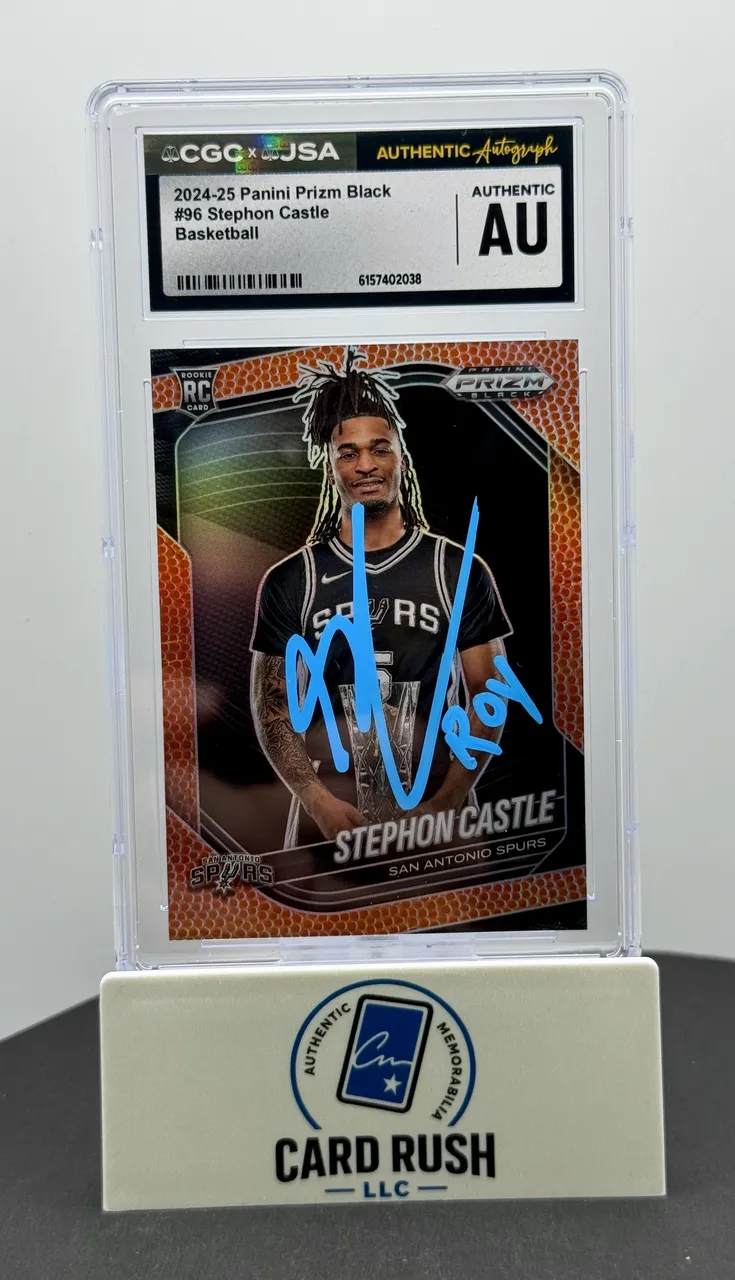
The following season we were able to add two rarer pieces: the Color Blast rookie above, and a Prizm Black rookie inscribed "ROY" — Rookie of the Year — fitting, since that's the very trophy he's holding in the photo. Neither of these was signed in front of us; both were sourced the way we source anything we can't be in the room for. An inscription like that carries a different kind of rarity than a numbered parallel; it's added by the player's own hand, after the fact, and collectors prize it for exactly that reason.
Two seasons, three cards, one rookie the Museum was lucky enough to catch early. The card from that night has gone to a collector who's been with us since the beginning, and who intends to keep it. The other two aren't going anywhere.

The card that started our love of Castle — since transferred, now in the Museum Archive

U Conn Rookie Color Blast

2024-25 NBA Rookie of the Year
This is a story of the moment and the player, not one single card, which is why it isn't tied to a single artifact here.
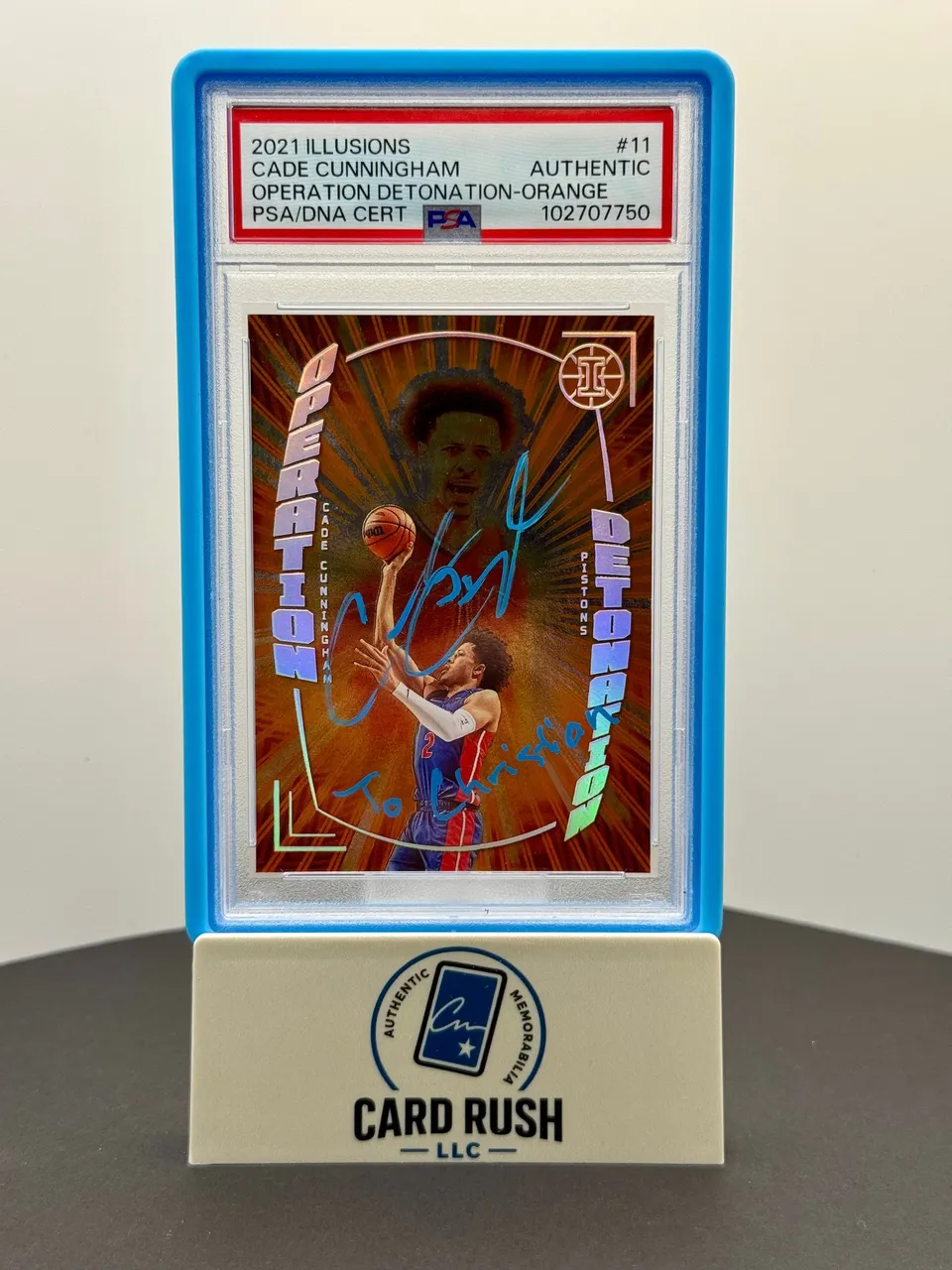
In the tunnel before the game, Cade Cunningham wasn't signing for anyone. Christian, still young in his collecting journey, held out a card anyway — not expecting much. Cade paused, looked at him, and Christian simply said, "It's okay… you can keep this one."
That moment changed everything. Cade looked genuinely touched.
"Wait… for me? For real?"
Christian nodded. Cade asked his name, took the other card in his hand wrote "To Christian", signed the card beautifully, and handed it back — while still keeping the card Christian had gifted him. A stellar experience from an NBA All-Star!

This is a story of the moment and the player, not one single card, which is why it isn't tied to a single artifact here.
The people who hold a particular place in this Museum — each for a reason this family can point to. Some shaped the game, or shaped us, long before we ever got there.
Here is the evidence, not just our word for it. Every story in this wing is anchored to real footage from the moment itself — some prove the exact artifact on camera, others prove the experience around it. Either way, it's documentation of context and presence, not a substitute for PSA/BGS/SGC/CGC/Beckett/Topps/ Panini/Fanatics authentication of the autograph itself.
The exact artifact, continuously documented on camera, becoming the artifact — the strongest evidence there is. Not reliant on memory, testimony, or trust.
His rookie card, signed years into the career it was drafted for — and the camera never left it either time.
Jalen Johnson wasn't a rookie anymore by the time we caught up with him. By October 24, 2025, when the Hawks came through Orlando to play the Magic, he'd grown into a real piece of Atlanta's rotation — the promise on the back of his 2021-22 Donruss Rated Rookie finally starting to look like the present tense. We'd carried that card for a while, waiting for a night like this one.
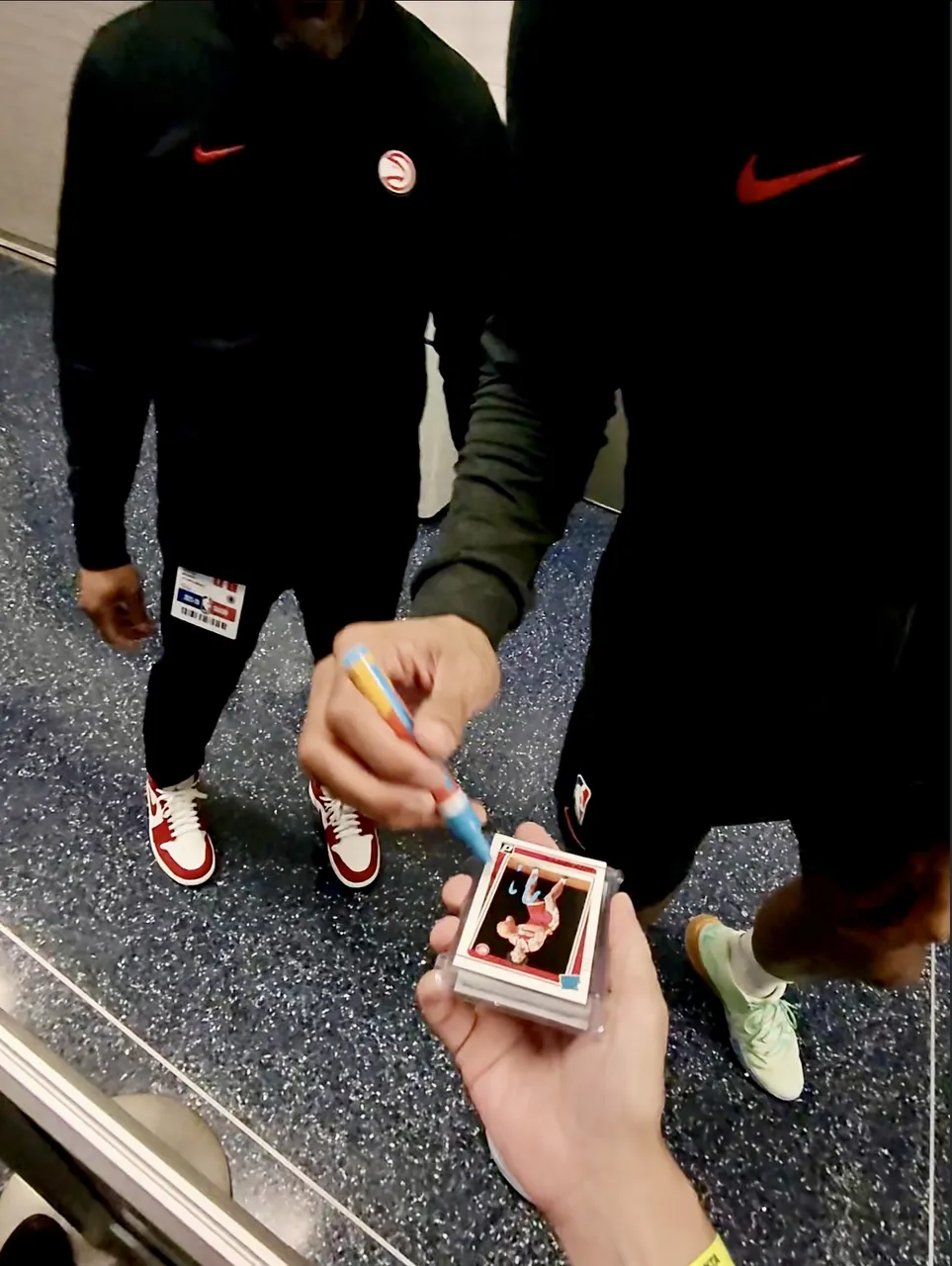
He stopped in the tunnel. Christian went first — Jalen Johnson took his time with it — and then he signed for me. Blue paint pen, on-card, clean through the whole signature.
The camera stayed on the card from before the pen touched down until he lifted it, for both signings. That's not a small detail — it's the difference between a good story and proof. CGC and JSA didn't need the footage to grade the autograph a perfect 10, but we didn't need to rely on memory either.
The card is four years old. The signature is brand new. Both are real.
Kia Center, Orlando, October 24, 2025
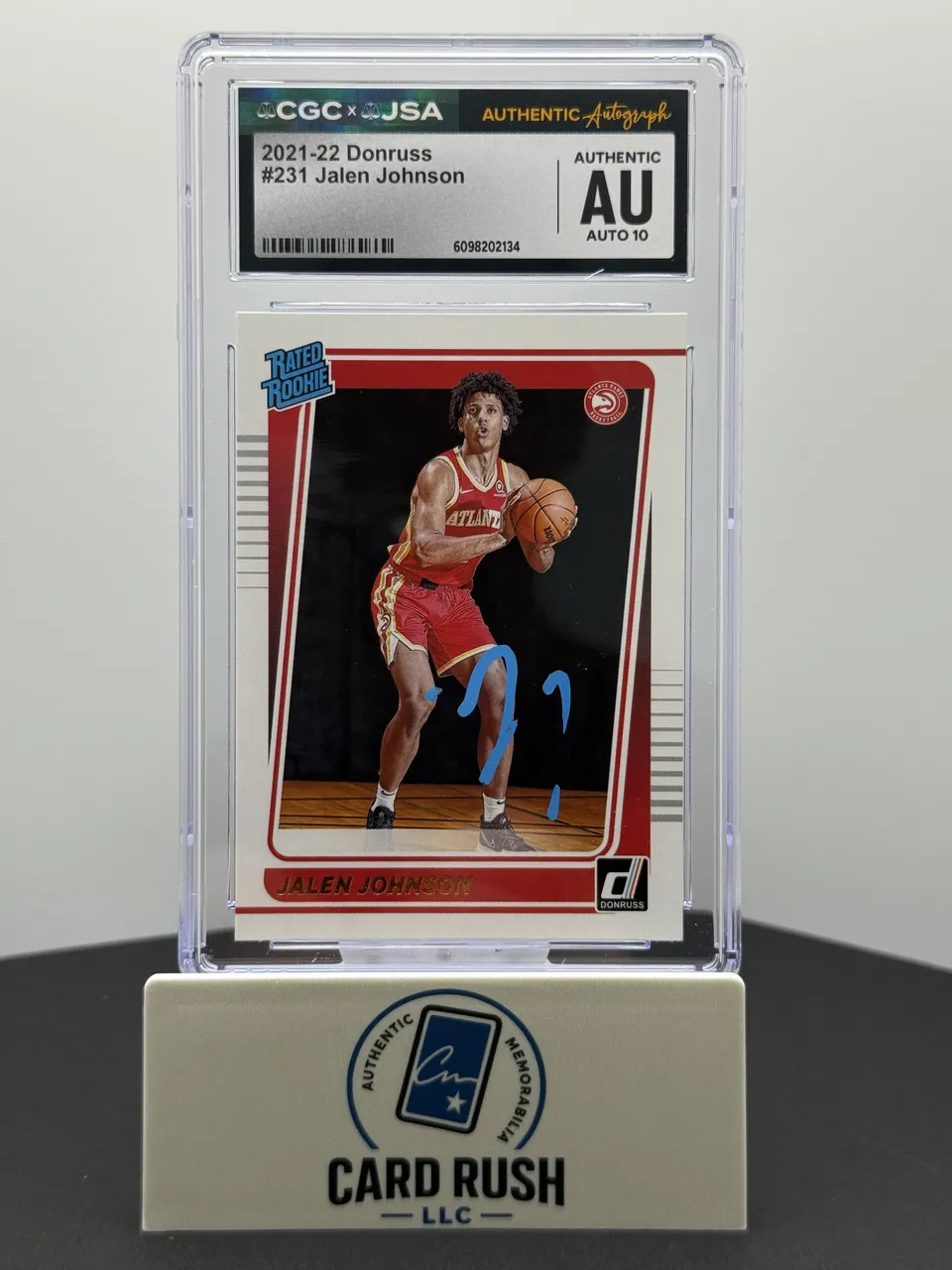
Kia Center, Orlando, October 24, 2025

Two cards, signed on camera by a player who wasn't even dressed to play — on the same day we committed to his family's camp.
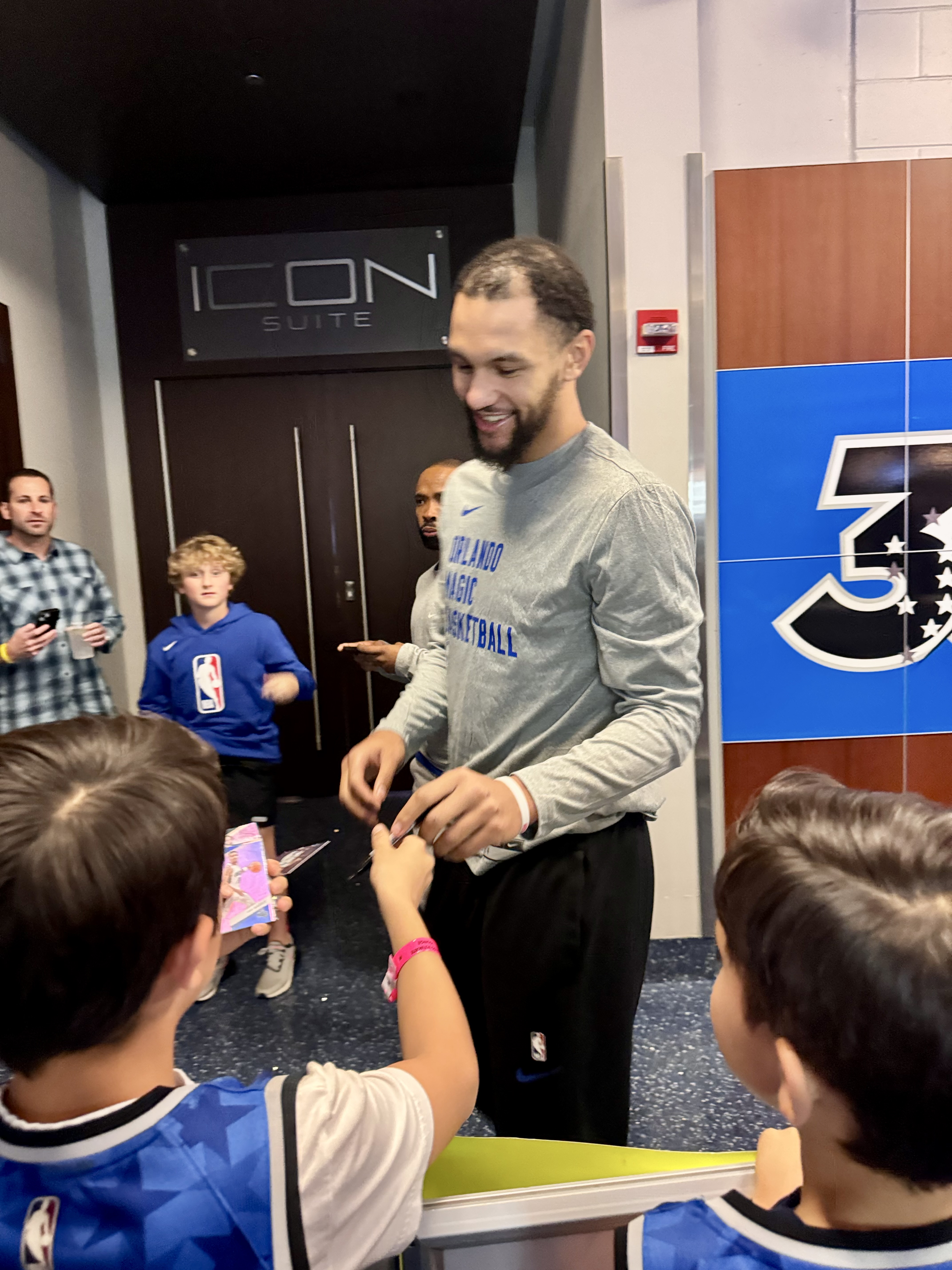
March 11, 2026. Franz Wagner was still out, still on the injured list, with no reason to be anywhere near a crowd. We saw him in the tunnel anyway.
That was the same day we had signed up for the Wagner Brothers camp — the one scheduled for that fall, right before preseason. We had already committed to spending a day with his family in the gym. We had no idea we would be standing in front of him before the day was out.
He stopped. He talked with us for a minute, and he was kind about it — the kind you notice, because a player who isn't playing owes a tunnel full of people exactly nothing. Then he signed. Two cards, one after the other, with the camera running the whole time.
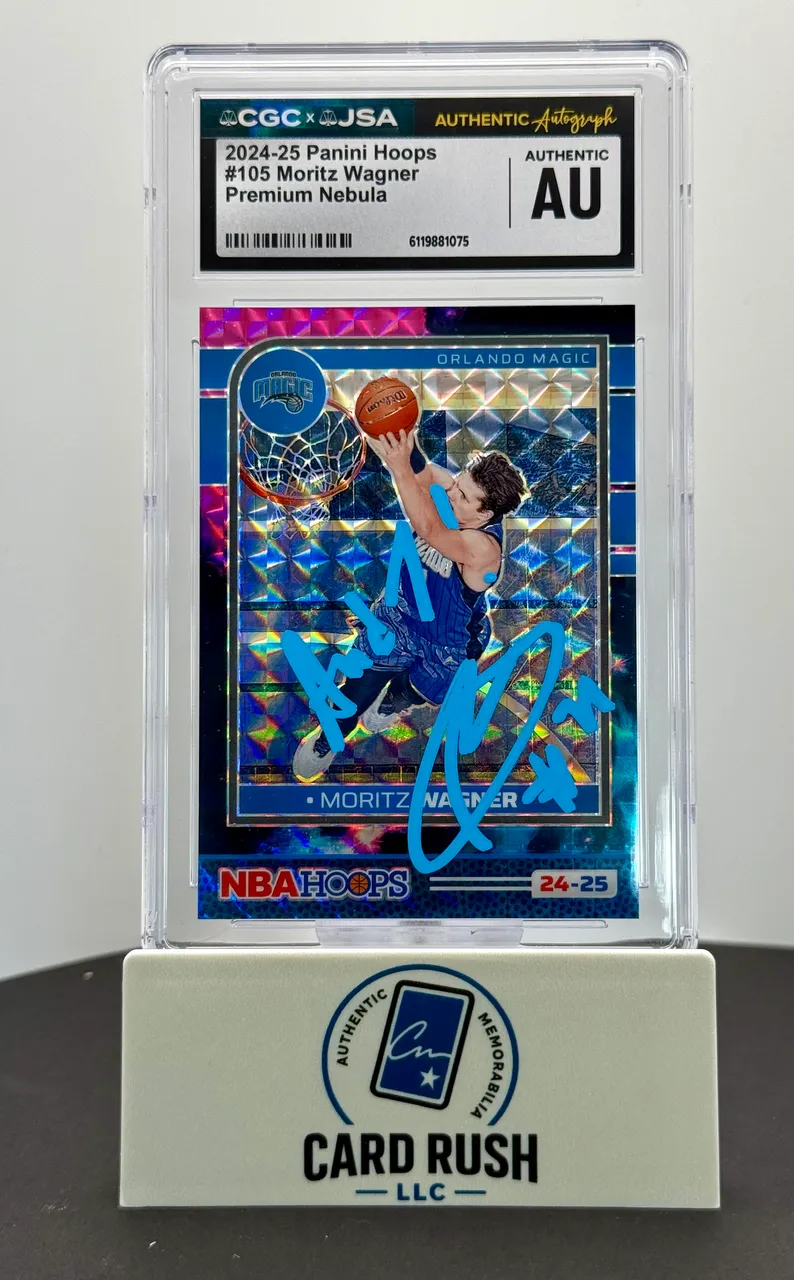
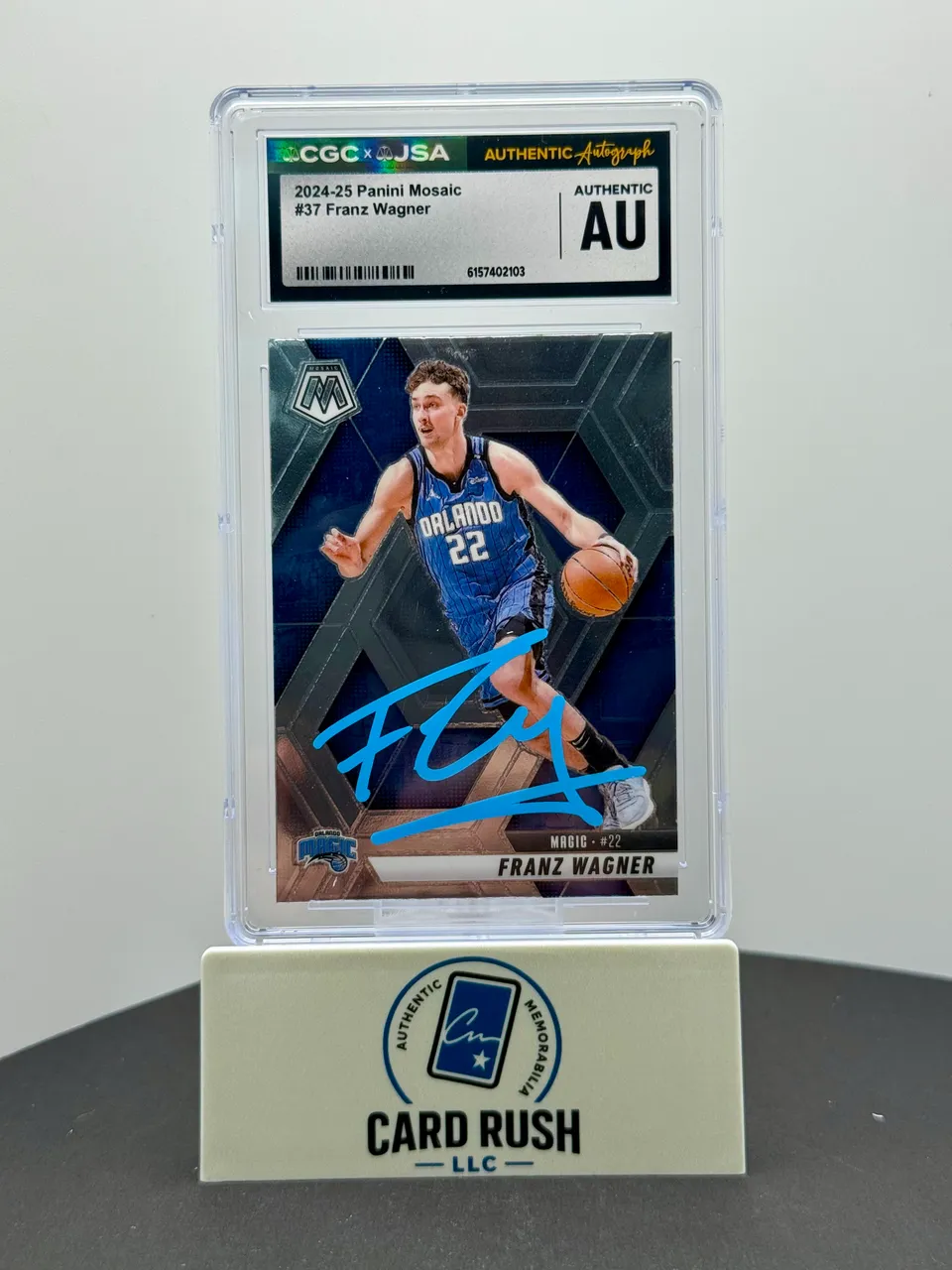
The first was his 2023-24 Topps Chrome #79. The second was his 2024-25 Panini Mosaic #37. Both came back from CGC and JSA as Authentic Autographs, certified on consecutive numbers — 6157402102 and 6157402103 — graded together because they were signed together.
That is why the Wagner brothers hold the place they hold in this museum. Franz had every reason to keep walking. He stopped instead.
We're going to miss his big brother.
We're going to stay diehard Wagner fans.
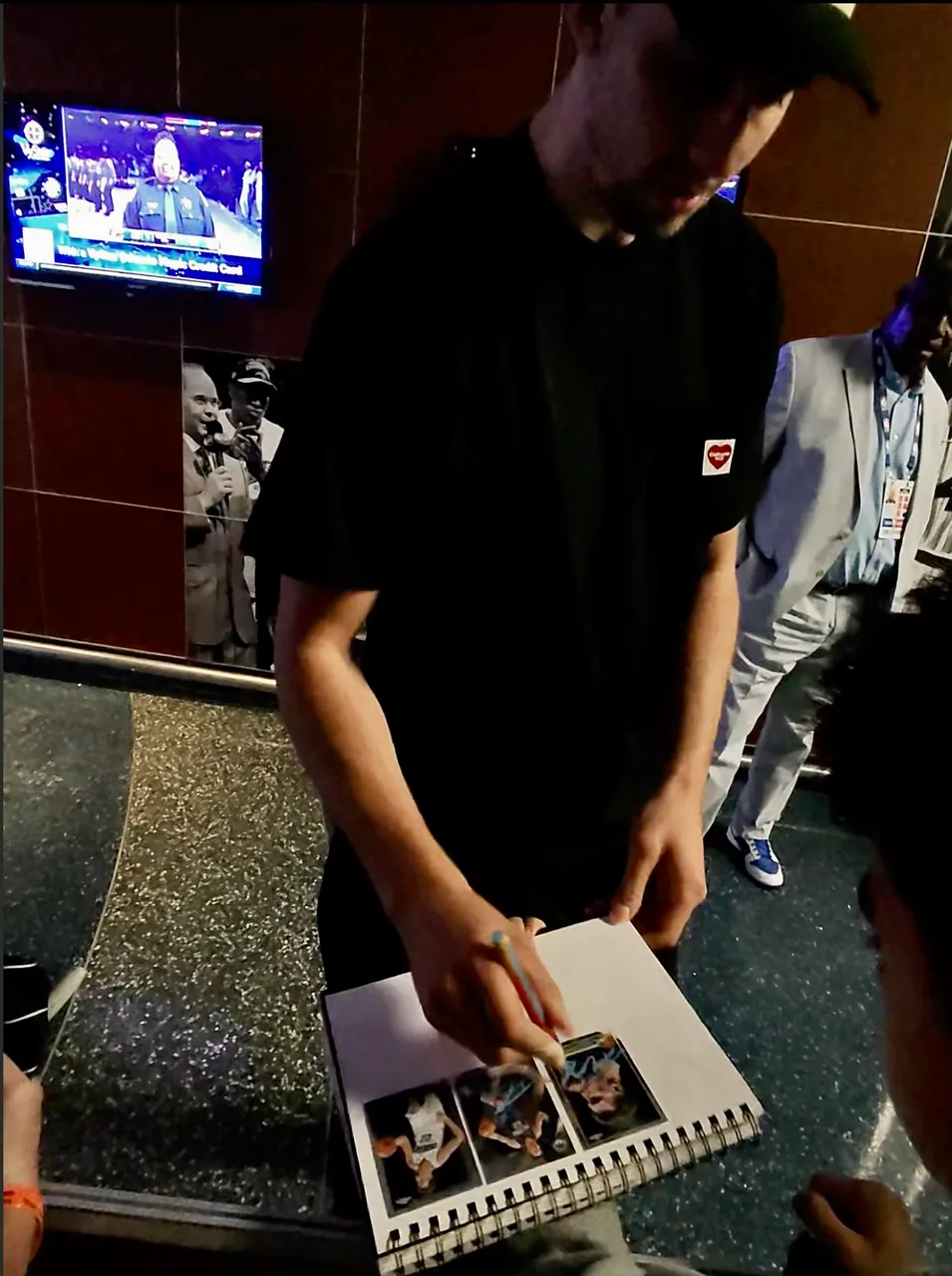
Kia Center, Orlando March 11, 2026
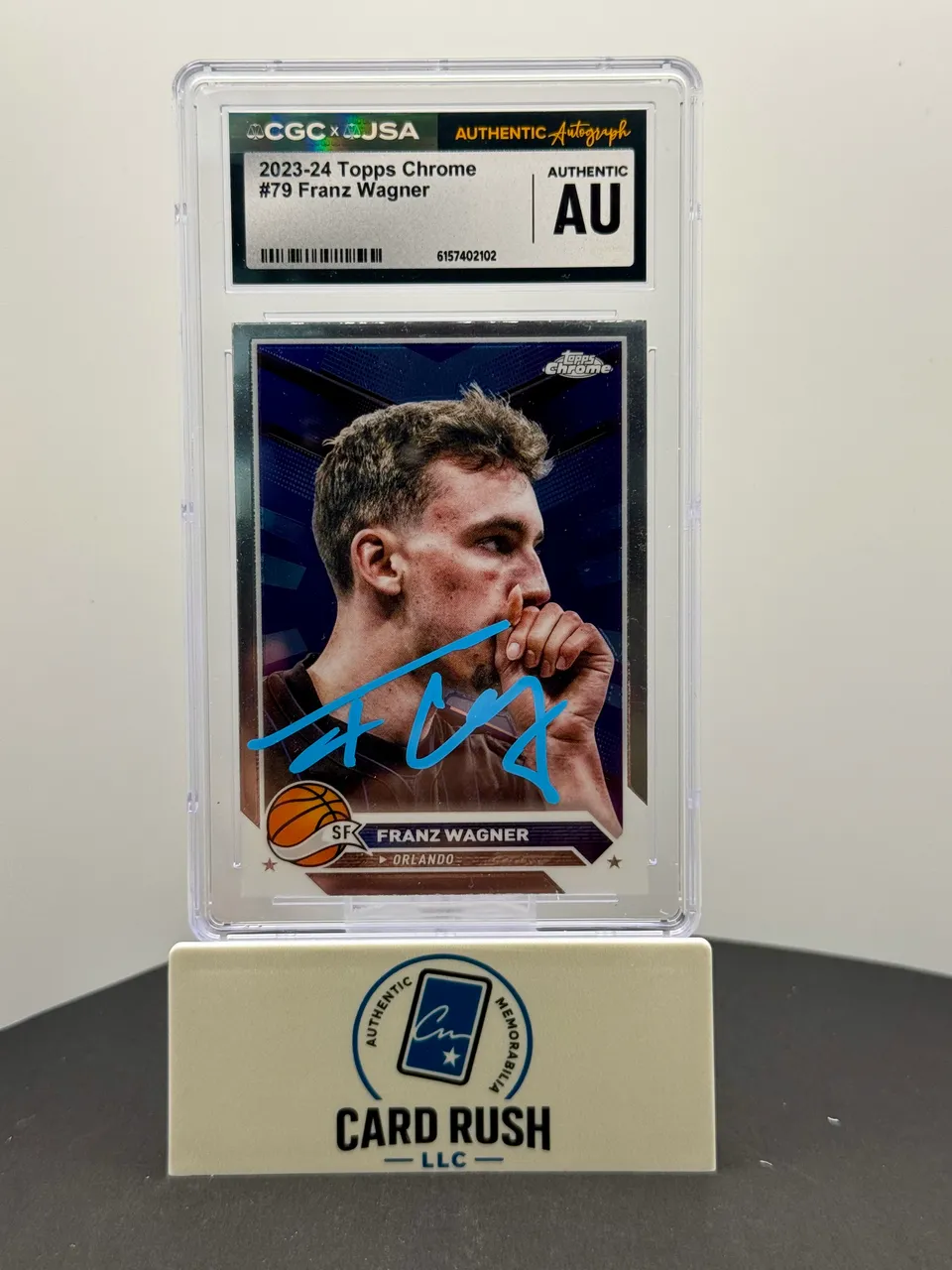
CRM-0359
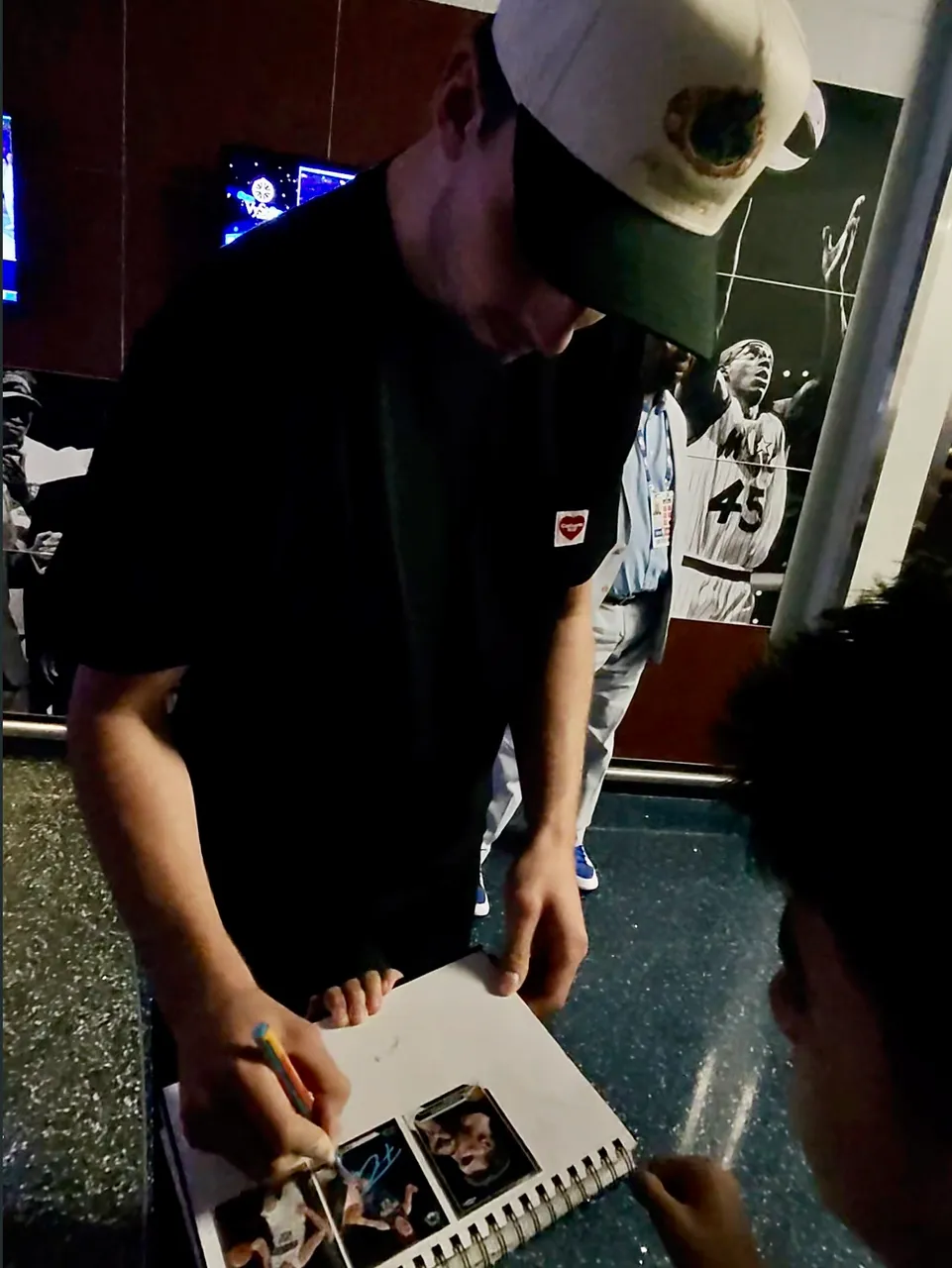
Kia Center, Orlando March 11, 2026

Kia Center, Orlando March 11, 2026
As seen in the reel — this is a story of the moment and the player, not one single card, which is why it isn't tied to a single artifact here.
The experience and access, documented and witnessed firsthand — even where the exact artifact isn't continuously provable from the footage alone.
The card that closes the loop on our whole Kyrie Irving signing day - and lends real weight to two other in-person autos already in the collection.
Kyrie signed three cards for us that day: this 2021-22 Panini Illusions King of Cards, a 2023-24 Donruss Holo Green Laser parallel, and a Panini Hoops Premium Stock piece, all three laid out in front of him at once. The King of Cards was the one he signed first.
The footage we have isn't the raw camera file - it's the cut that went out on Instagram, produced with a highlight reveal at the end instead of one unbroken take. The close-up of him actually signing is real, but it's tight on his hand and the marker, and a casual observer can't say for certain it's this exact card in that moment rather than one of the other two sitting right next to it. Given the texture of King of Cards, and the fact that we were there with Kyrie, we know it's the card. Since the video is not conclusive, here at Card Rush Museum, it doesn't raise to the level of a Provenance Artifact.
The video matters beyond this one card to help foster trust. Your trust is why we send them for authentication and encapsulation, so you don't have to take just our word for it.
Three cards, one sitting, one honest piece of video.
Not a Provenance Artifact - but real Presence, and it backs up two cards that didn't have any of their own.
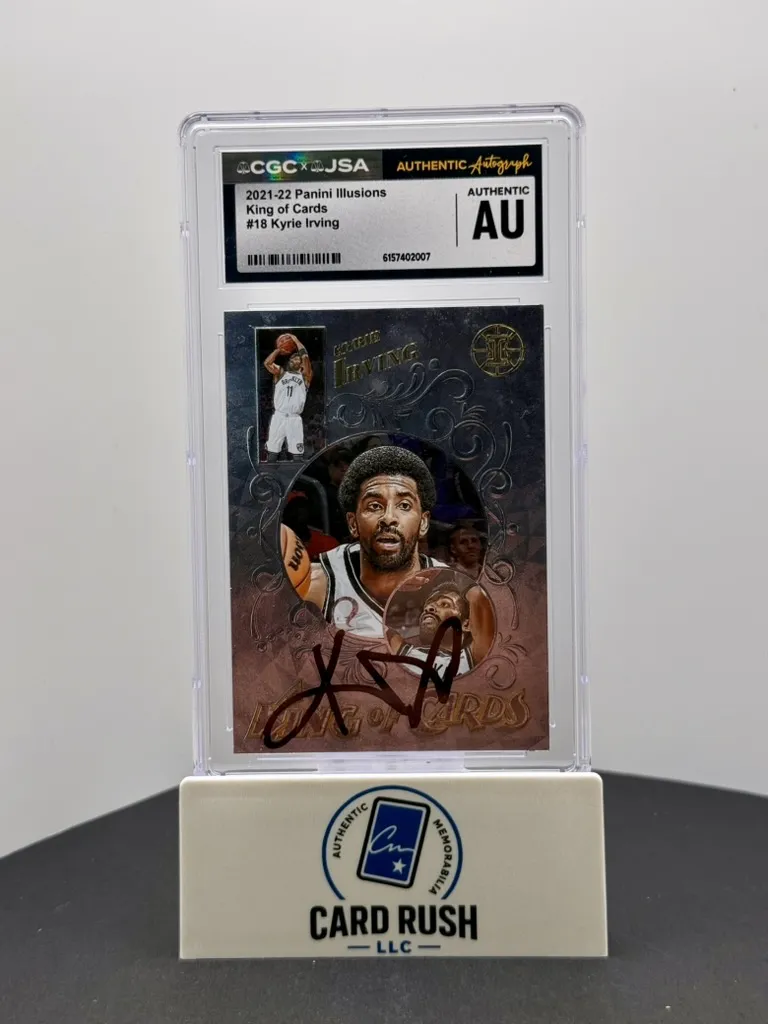
The King of Cards - the first card signed that day
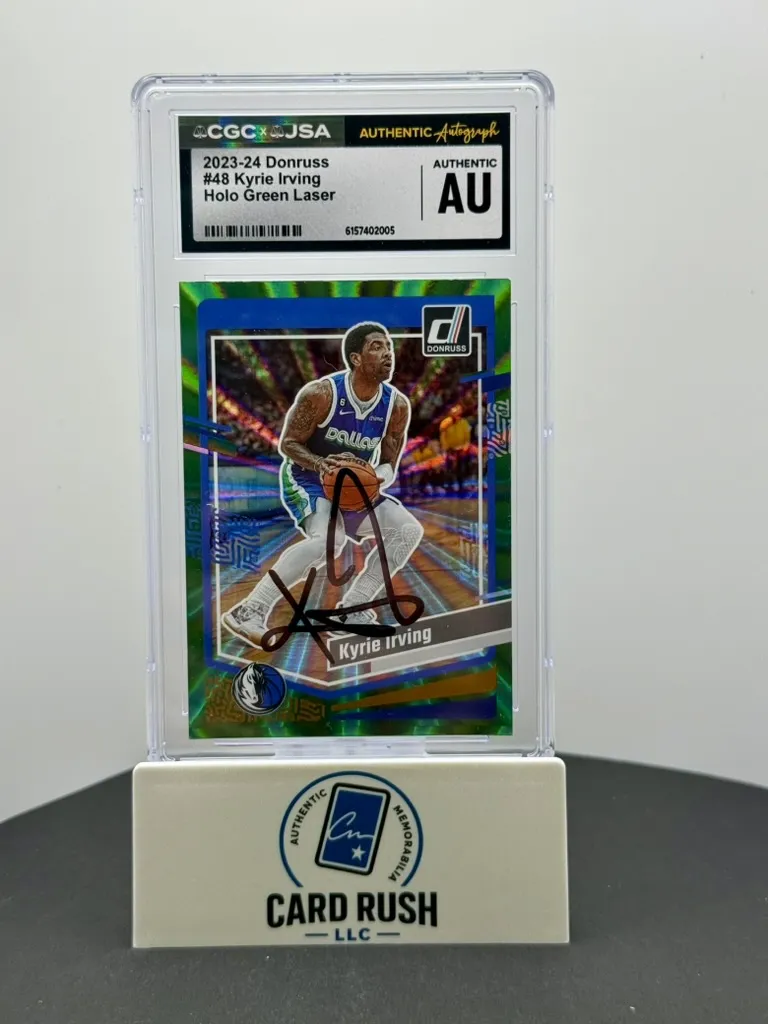
Signed in the same sitting - CRM-0341
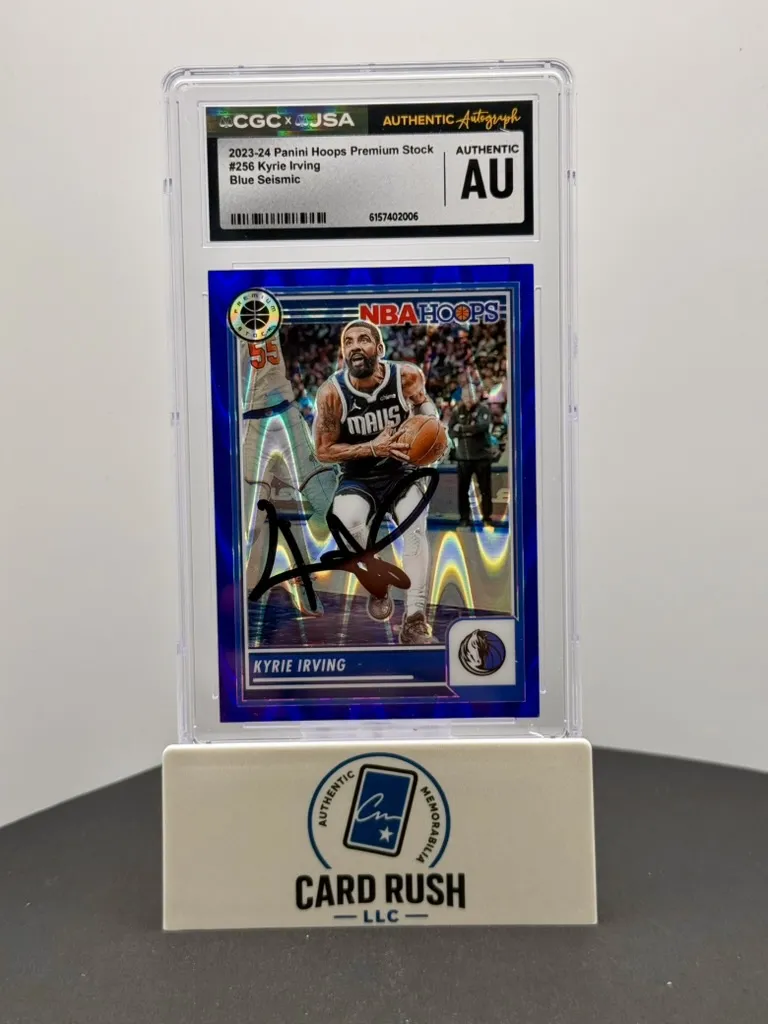
Signed in the same sitting - CRM-0343
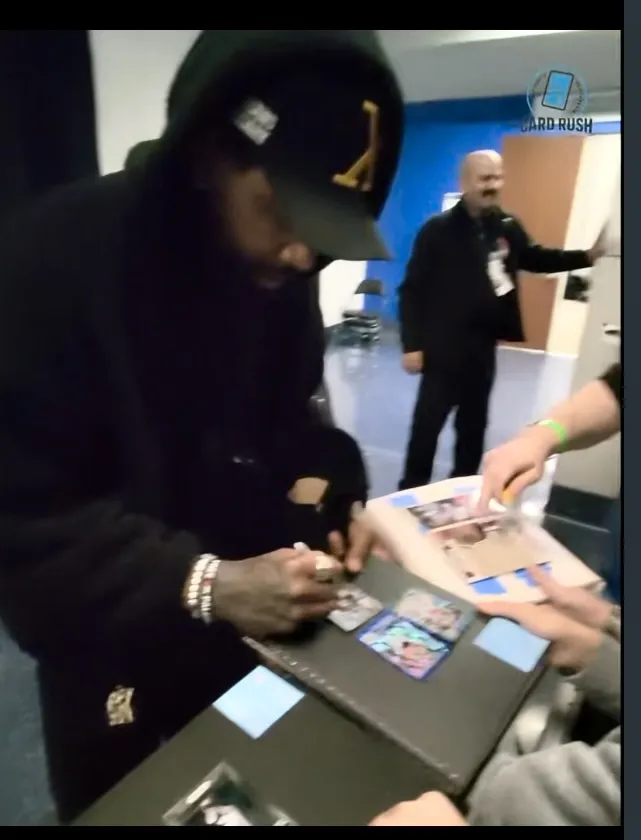
Kia Center, Orlando, March 8, 2026
Filmed in the Visitor Tunnel, Kia Center, Orlando
Not every signature comes with a clean shot of the moment — this one still counts.
January 11, 2026 brought the Pelicans through Orlando, and with them a rookie class worth watching from the tunnel — Jeremiah Fears drawing most of the attention, and a few feet away, Derik Queen, fresh out of Maryland and already carving out his own reputation in New Orleans' frontcourt.
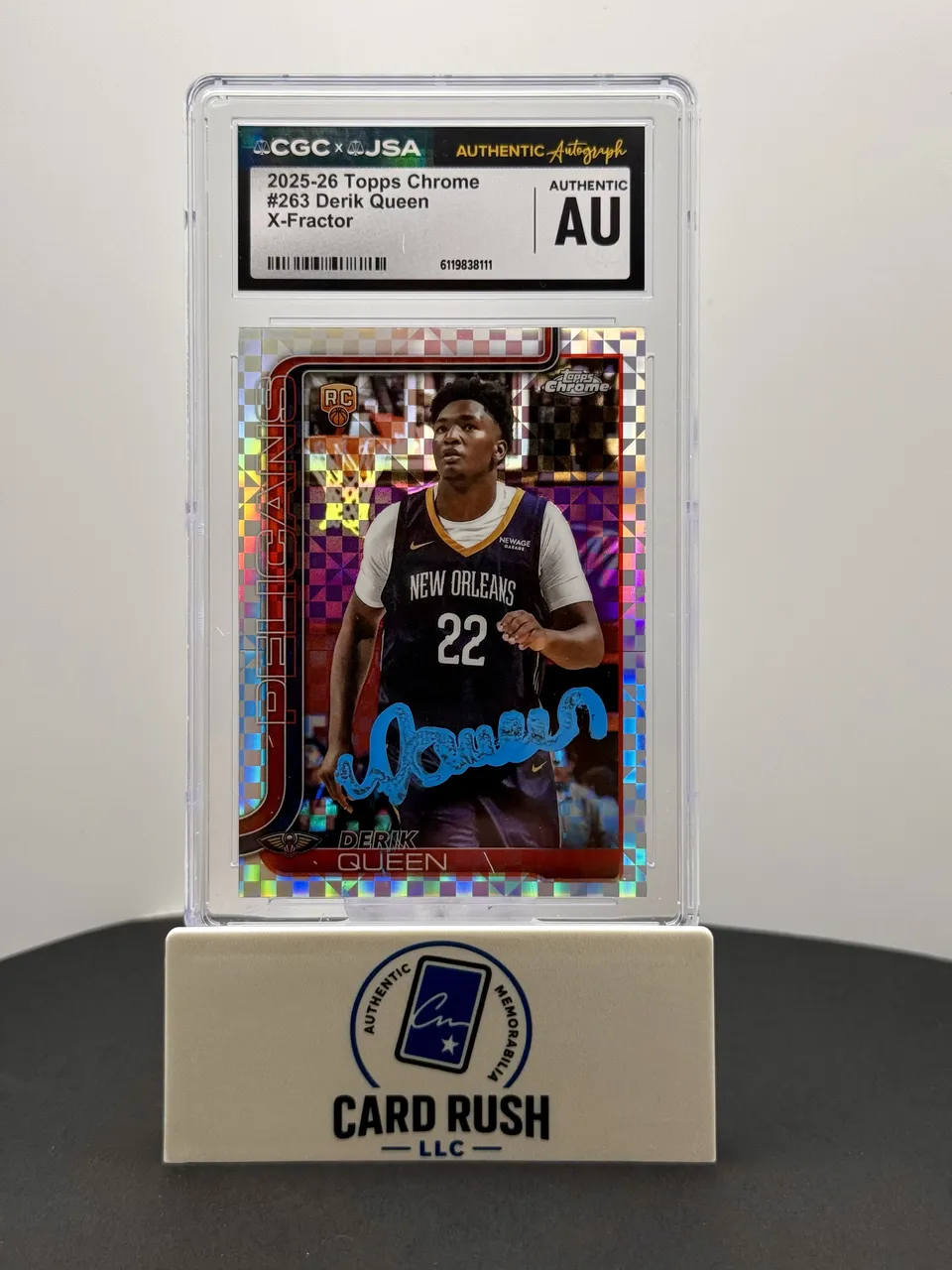
The card waiting for him was a 2025-26 Topps Chrome X-Fractor, his rookie season rendered in that shifting refractor pattern the set is built around. Queen stopped, took it in hand, and signed it in blue paint pen — a full, deliberate autograph that CGC and JSA would go on to certify as authentic.
This one is filed under Presence rather than Provenance Artifact, and that's a distinction worth being honest about. The footage from that night doesn't show his face clearly as he signs, and it picks the card back up only after the pen has already moved — not the unbroken, start-to-finish record some of the Museum's other artifacts can claim. What it does show is real: Queen in the tunnel, the card in his hands, the ink already drying by the time the camera catches up. That's presence, not proof of the whole act, and the Museum would rather say so plainly than borrow a stronger claim it hasn't earned.
A rookie signature, honestly documented for what the footage actually shows.
Kia Center, Orlando, January 11, 2026.


Curated temporary exhibitions from respected collectors — one collector, one theme, a run of stories over a defined window.
Check back for the Museum's next Visiting Curator exhibit.
A new observation, player watch, hobby trend, or collecting insight published each day.
Houston's Alperen Sengun dropped 43 points on 17-of-24 shooting in Friday's NBA Cup win over Utah — his second career 40-point game, and a reminder he's already playing at a fringe-All-Star level. Sengun's cards have never carried the 'chase' status of names like Luka or SGA, partly because his game runs on efficiency and playmaking rather than highlight-reel scoring. Nights like this are how a collector profile quietly shifts from 'solid role player' to 'someone people start tracking.' Worth watching over Houston's next few games: is this a one-off, or does his usage keep climbing as the Rockets push for playoff positioning?
This hobby has a real fraud problem. We're building an honest, plain-English guide — written in association with real experts — so new collectors don't get burned.
Light and humidity ruin more cards in this hobby than bad handling ever does.
Most collectors are careful with their hands and careless with their walls. A card left in direct sunlight for a few months will fade, and it happens slow enough that you don't notice until you hold it next to a fresh copy of the same card. Nobody dropped it. Nobody scratched it. It just sat somewhere bright for too long.
Humidity is the one we actually worry about most in Florida. High humidity warps cardboard and can make it stick to whatever it's touching -- a sleeve, a toploader, another card in a binder page. Once two cards fuse together like that, there's no clean way to pull them apart again.
Our rule is simple: closets beat display shelves for anything you're not actively showing off, and if something is on display, it doesn't stay under the same light forever. We rotate what's out. It's the same reason museums swap exhibits instead of leaving one piece under a spotlight for twenty years straight.
None of this costs money. It just means treating where you keep a card as seriously as how you sleeve it.
The cheapest protection in the hobby is also the most skipped -- here's what each layer is actually stopping.
A penny sleeve stops one thing: surface wear from the card rubbing against whatever's next to it. That's the whole job. It's the thinnest, cheapest piece of protection in the hobby, and it's also the one people skip most, usually right before we hear "it was fine in the box for years."
A toploader does a different job. It's rigid, so it's what actually stops a corner from bending if the card gets bumped or something gets stacked on top of it. Sleeve inside a toploader covers the two most common ways we've seen a card get damaged -- surface scuffs and bent corners -- and it costs next to nothing.
If a card is sitting in a toploader for more than a few days, we tape the top or drop it in a card saver so it can't slide out and rattle around inside. It sounds small. It's the difference between a card that looks the same in ten years and one with a scuff nobody remembers causing.
None of this replaces a slab once a card is valuable enough to grade. But for everything on its way there, or everything that's staying raw, sleeve and toploader is the floor -- not something you graduate past.
A graded card and a raw card fail in different ways -- here's what we watch for on each.
A slab does a lot of the work for you, but people treat it like the finish line, and that's the mistake. Cases crack if they're dropped on a corner or stacked without support, and a cracked case undoes the entire point of grading it in the first place. We keep slabs upright, in boxes actually built for the case size -- not loose in a drawer where they can knock into each other every time it's opened.
A raw card doesn't get that buffer at all, which is why sleeve-and-toploader isn't optional the way it can feel optional once something's certified. Raw cards take the everyday damage first: fingerprints, a binder page that's a little too tight, a swing in humidity overnight.
The line we tell each other is: grading changes what you're protecting a card from. It doesn't end the job. A slab keeps grime and fingerprints off the surface -- it doesn't stop a crack, and it definitely doesn't stop somebody tossing it in a box with twenty other slabs and calling it storage.
If a card mattered enough to send in for grading, it matters enough to keep storing properly after it comes back.
The museum preserves more than artifacts. It preserves the journeys of those who explore it.
A private wing of Card Rush Museum.
Your passport, credentials, provenance, and your place inside Card Rush Museum.
Everything on display here is curated by the family — but there's a private wing of the Museum too: a passport that records your journey, museum credentials that commemorate real milestones, and a provenance record that only builds, never resets.
“I really do believe that doing the online museum is a unique feature — not only for your customers, but for your children as well — and provides them with an infinite amount of reviewable nostalgia for the rest of their life.”
Member since, current standing, and every museum credential you've earned — issued as a passport, not an account dashboard.
Museum Visitor, Grail Seeker, Museum Scholar, Founder's Circle, Museum Patron — real credentials, from the moment you join to years of participation in the Museum.
Provenance is your history with the Museum — it only builds, never resets, and there's no leaderboard or point count to watch. As it grows, we reach out directly to let you know what's available to you.
Some collectors are named Museum Patron by the Museum itself — a permanent recognition, not a reward.
Every story deserves authenticity. Every artifact deserves provenance.
Every piece carries the card manufacturer's authenticity guarantee if sold raw, or independent third-party authentication from CGC/JSA, PSA, Beckett, or SGC if it's an in-person autograph — not just our word for it.
Most signings we attend ourselves. Where we can't, we use a small, vetted circle of hobby veterans only — never an open marketplace or mail-away mill.
Most cards carry independent CGC/JSA, PSA, Beckett, or SGC authentication — a second, outside set of eyes confirming what we're telling you.
The card never leaves vetted hands between the signing and your doorstep.
Where artifacts are shown for what they truly are.
Every one of these has a story worth telling — and a home still to find.
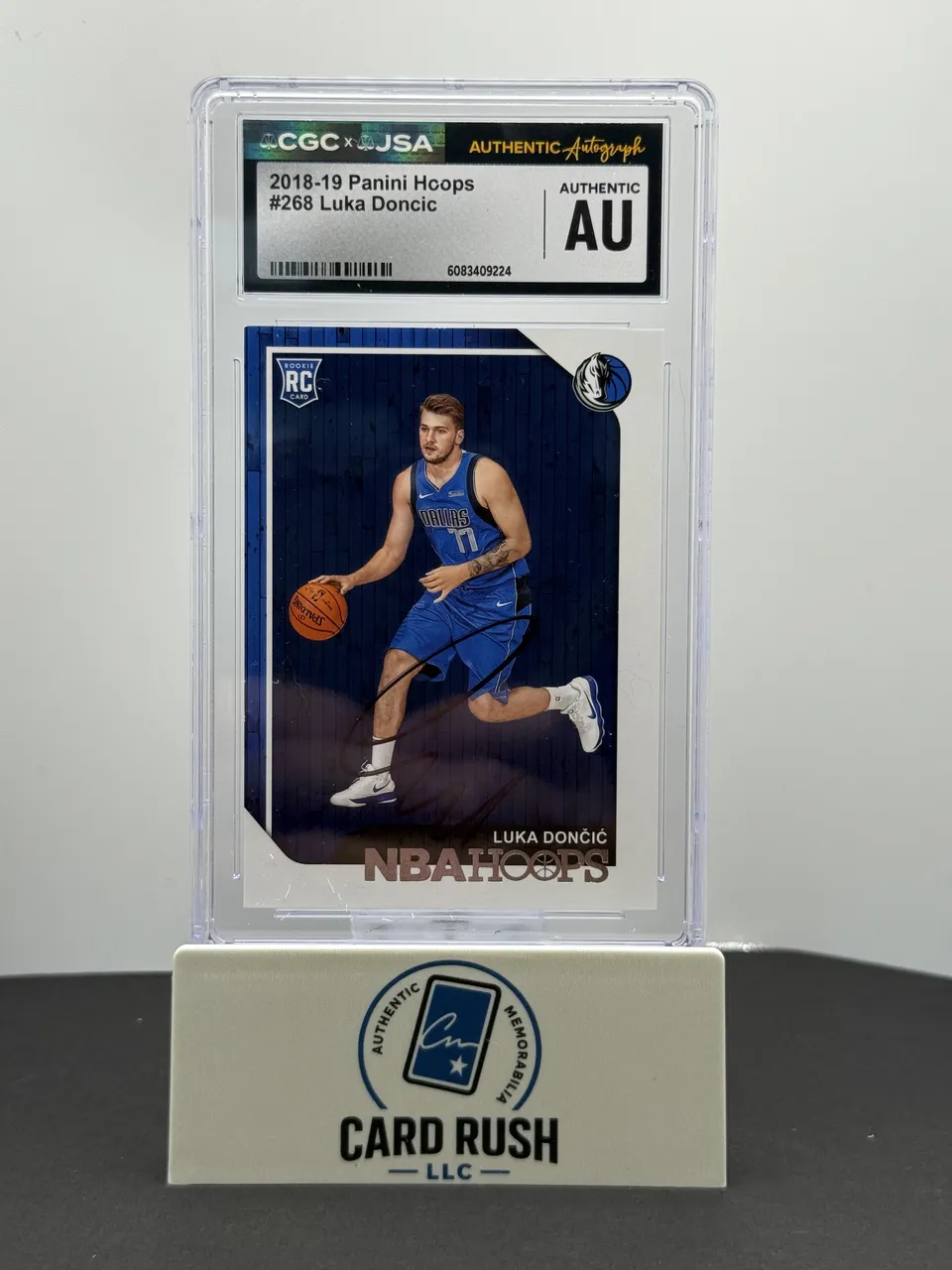
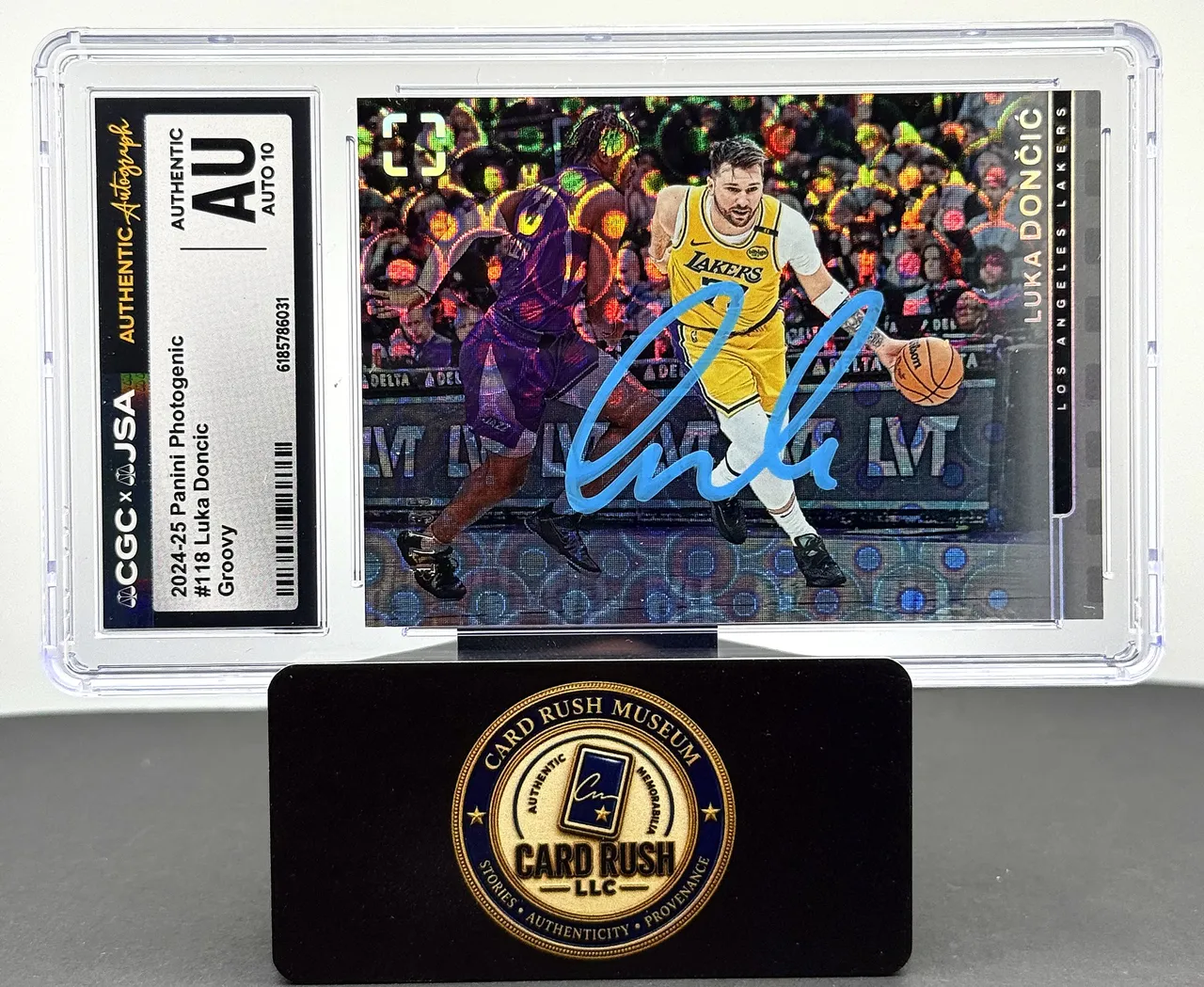
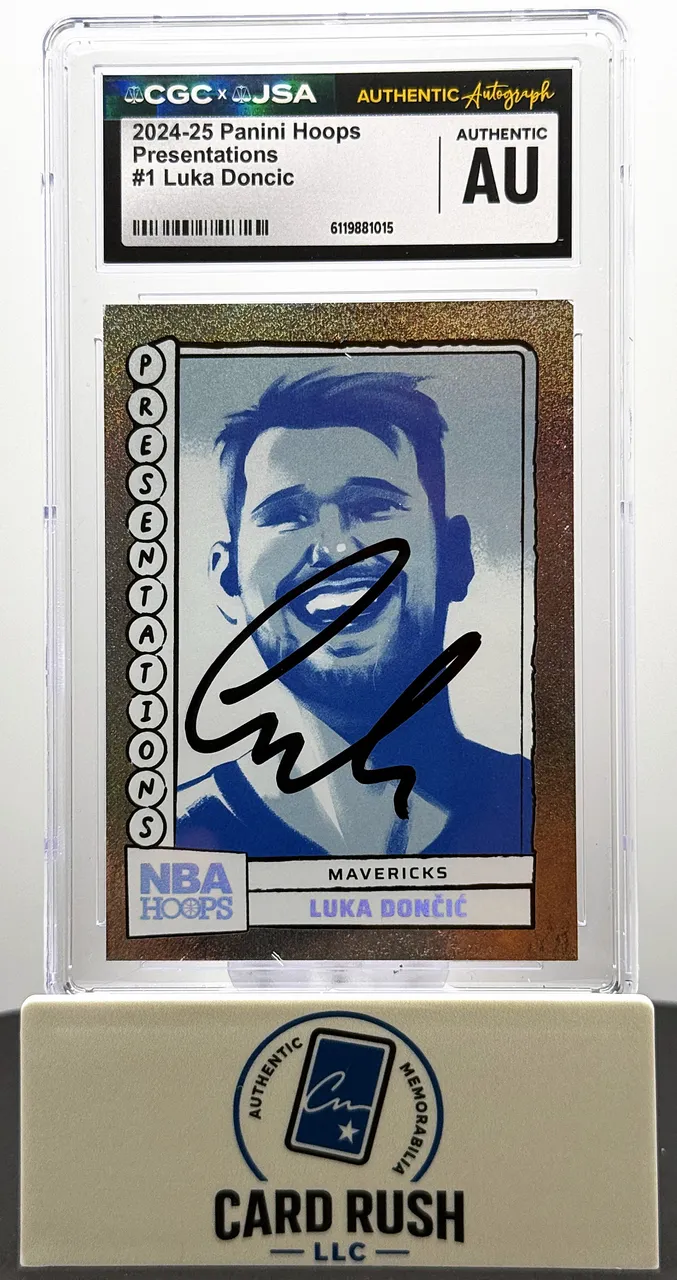
A rookie card from his Dallas days, signed after the trade that sent him to L.A. — proof some things about a player don't change with the jersey.
I'd stood in that tunnel before, but this one felt different. Luka had just been traded to the Lakers, and this was the first time the Lakers were coming through Orlando to play the Magic. He'd been out warming up, and from where we stood we could see him — but seeing him and actually getting him to stop are two very different things.
LeBron plays for the Lakers too, and everybody knows LeBron doesn't really sign in the tunnel. I remember thinking: what if Luka's like that now? New team, new city, maybe a different guy surrounded by a different circle. I honestly wasn't sure it was going to happen.
Then the teams started heading back toward the locker room, and Luka stopped. He turned around and signed for everybody who was there — and he made sure to get to me. I handed him my Hoops rookie, the one from his very first season in Dallas, and he signed it right there in the tunnel wearing his new Lakers gear.
My dad was standing right next to me the whole time, so the second Luka handed it back, I just turned and showed it to him — I hadn't even really looked at it myself yet. That's still one of my favorite moments in this whole hobby — not just the autograph itself, but realizing the trade hadn't changed anything about who he actually is. He was still the same guy who stops for kids in the tunnel.
That's Luka Dončić for me — not just a favorite player on a card, but a favorite player, period.
We've already got plenty of pieces signed by Luka in the collection, so letting this one go doesn't mean letting go of the memory — I've got that either way. I'd rather it go find a new home with another collector who'll get just as much out of it as I did.

Kia Center, Orlando — March 24, 2025
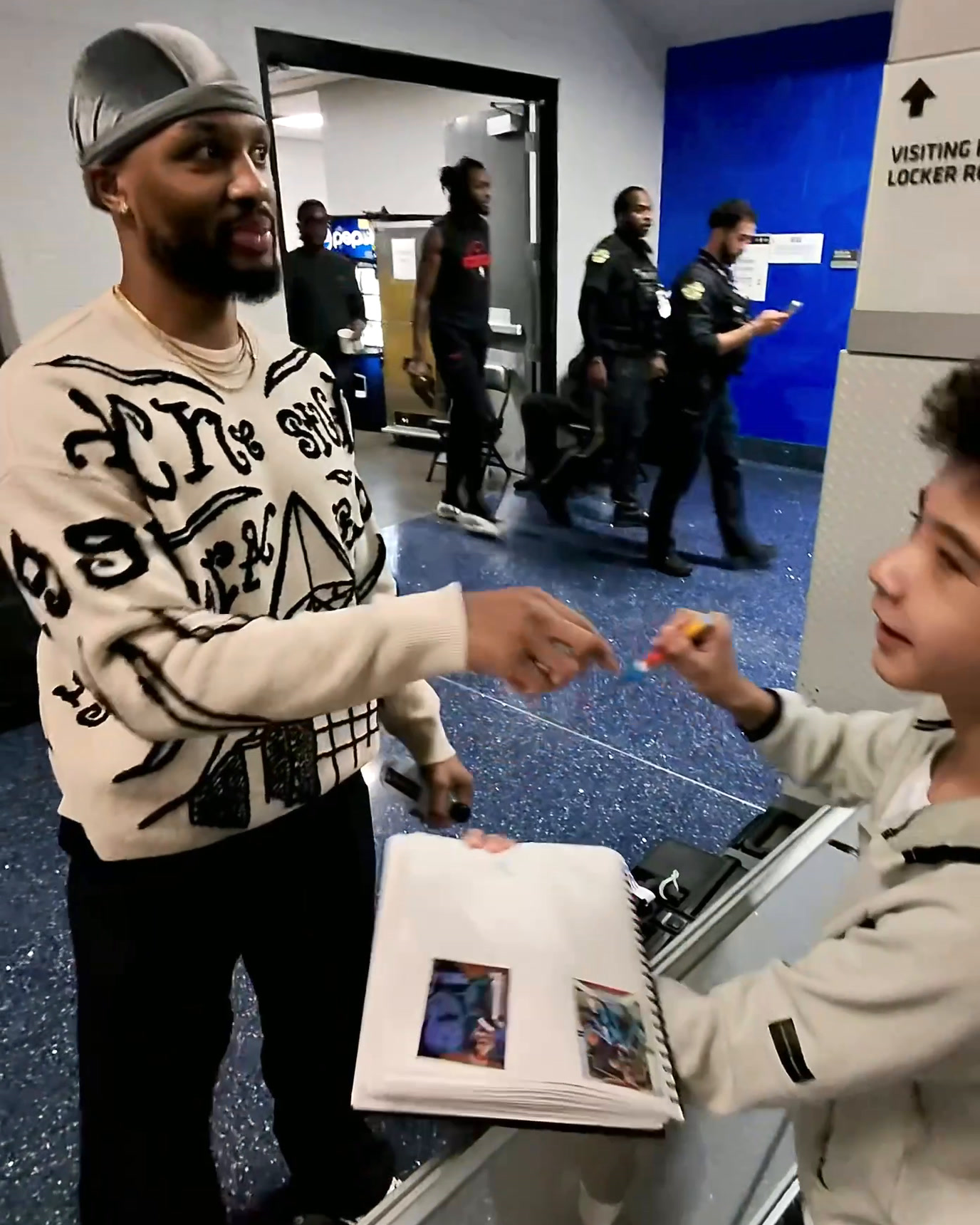
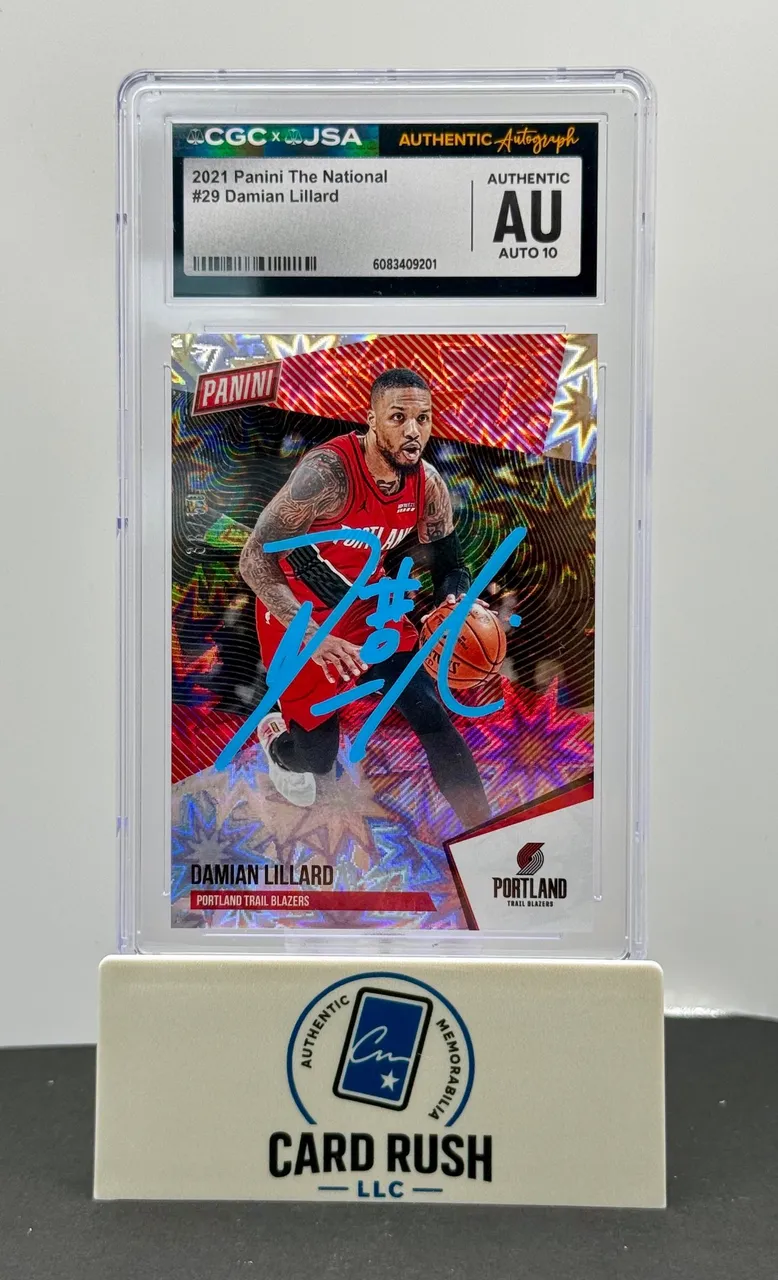
This card started as a mistake — a misread listing that turned out to be a National Convention Kaboom, not the Kaboom! I thought I was buying. The excitement, the price, the anticipation of gifting it to Christian for his stellar school year — all of it flipped in an instant.
The seller refused a refund, and what was meant to be a celebration became a disappointment. Around Card Rush, it became a running joke: not a Kaboom!, but a Kabust.
Then came redemption. When Damian Lillard signed it, everything changed. That autograph transformed the card from a misstep into a masterpiece — from Kabust to Kabang! I could not believe it, and then it got an AUTO 10 from CGC/JSA to turn it into a Hollywood ending.
Now, it's a piece of Card Rush history. A reminder that even mistakes can turn into magic. And while it's up for sale, its story will always belong to the collectors who see the heart behind the hobby.

Every artifact, presently or previously.
Not every artifact stays in the collection. Some continue their story with a new collector.


"Item shipped out quickly and delivered exactly as pictured."
"Excellent overall transaction."
"This is hands down one of, if not THE best seller on eBay. Exceptional customer service from the very beginning. CardRushLLC went way above and beyond. Card arrived in perfect condition with extra precautions taken to ensure the package stayed safe during transit. Un-Beatable value for the card, and even had a hand-written note in the package. I will forever sing the praises for this team of outstanding individuals."
"Honest and reputable seller — prompt shipping and delivery, sturdy and secure packaging, quality product as the slabbed auto cards arrived in superb condition without issue or flaw. Unbeatable prices and would definitely be happy to buy from again."
"Card arrived packaged well and in listed condition, smooth sale — would purchase from this seller again."
"Fast shipping! Product as described! Great condition! Quality packaging!"
"Great card and customer service. Love the card guys. Keep it up."
"A+++ quality, great condition, super value, great seller!!"
No replies, no likes, no discussion threads — just a curated record of who's been through the Museum, reviewed by the family before it's ever public.
Some cards are collected.
Some cards are traded.
Some cards have moved on to new collections.
But a few become something more.
They become reminders of where we were,
who we shared the hobby with,
and why the chase mattered in the first place.
Basketball cards and memorabilia can be more than collectibles.
In the right hands, with the right story, they become art.
Thank you for spending time with the stories preserved here.
The Museum will continue to grow.
And every collector who walks through it becomes part of that story.
Tell us the player, the card, or the occasion — we'll let you know what's possible.