Welcome to Card Rush Museum—where every artifact has a story.
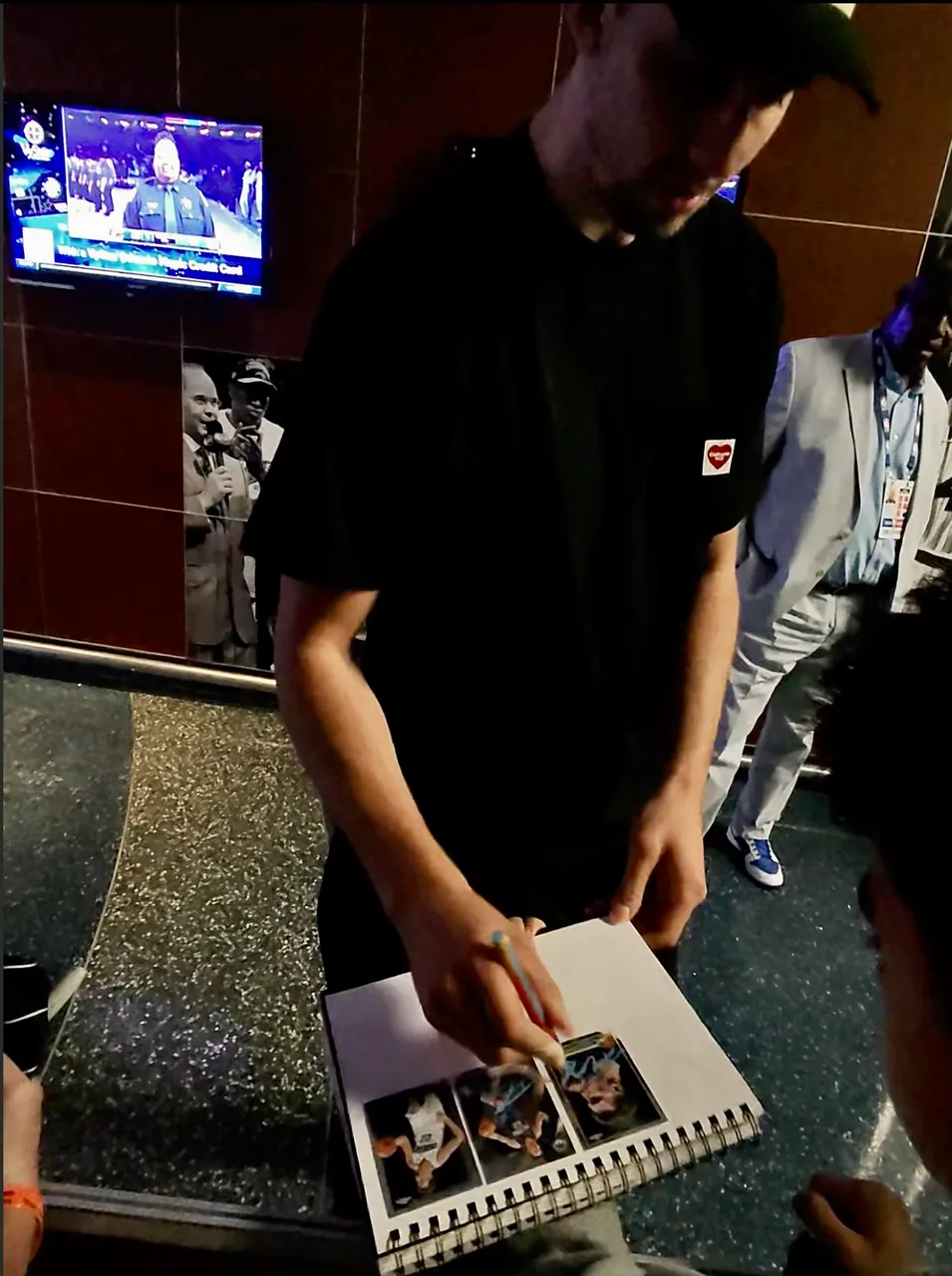
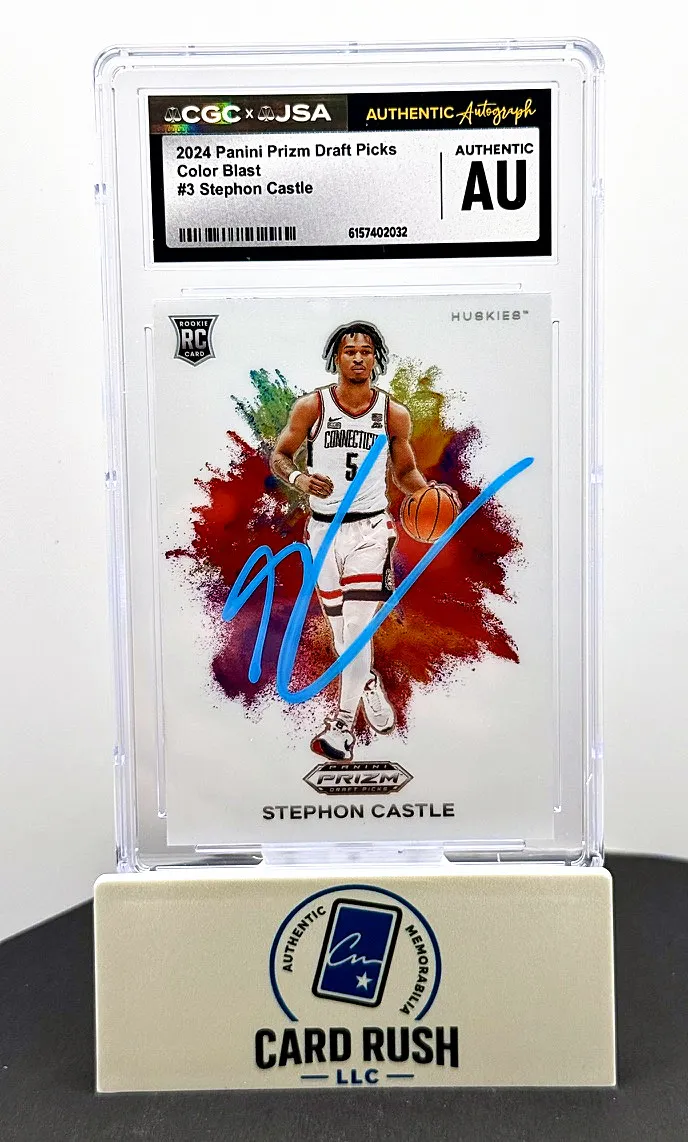
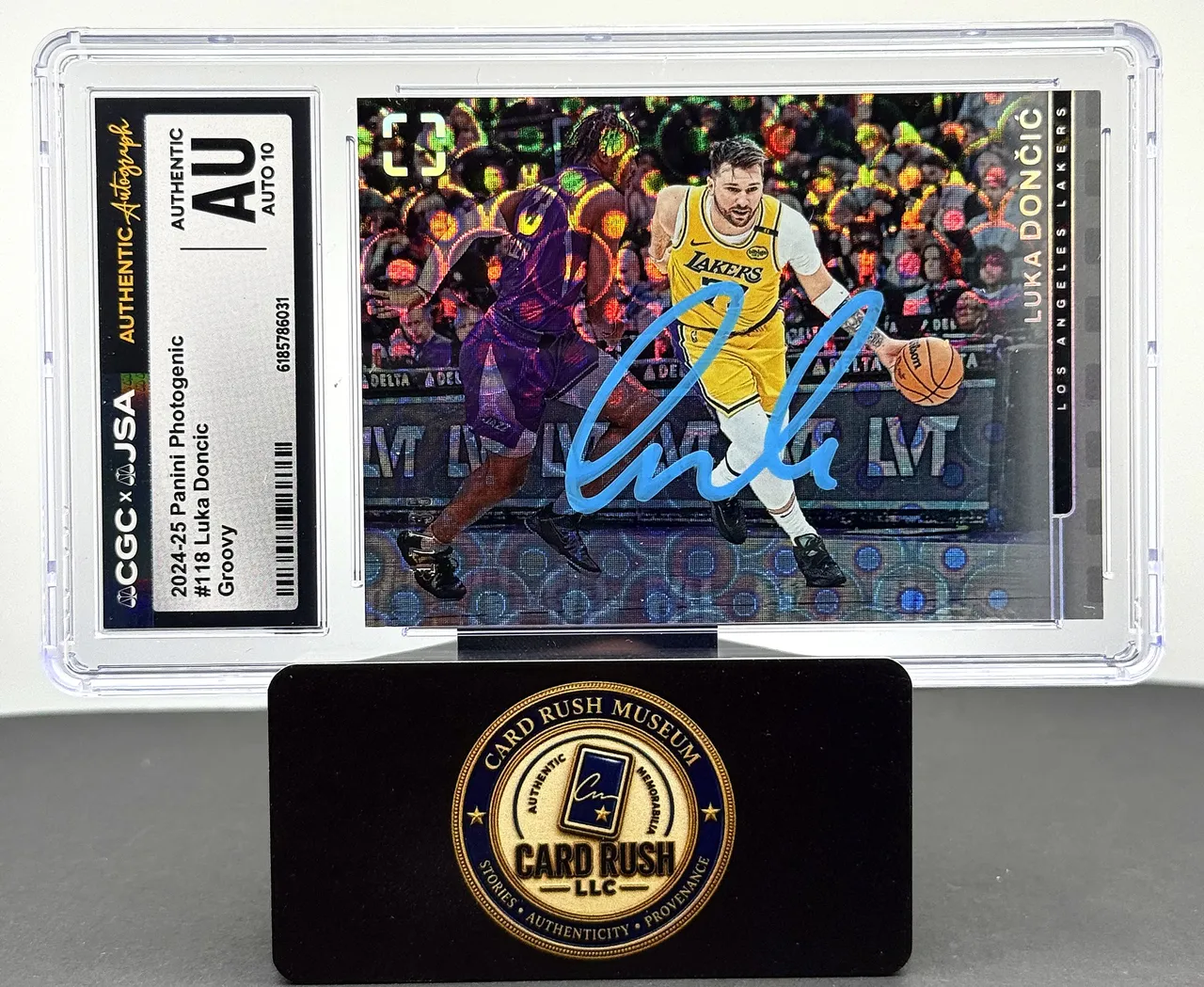
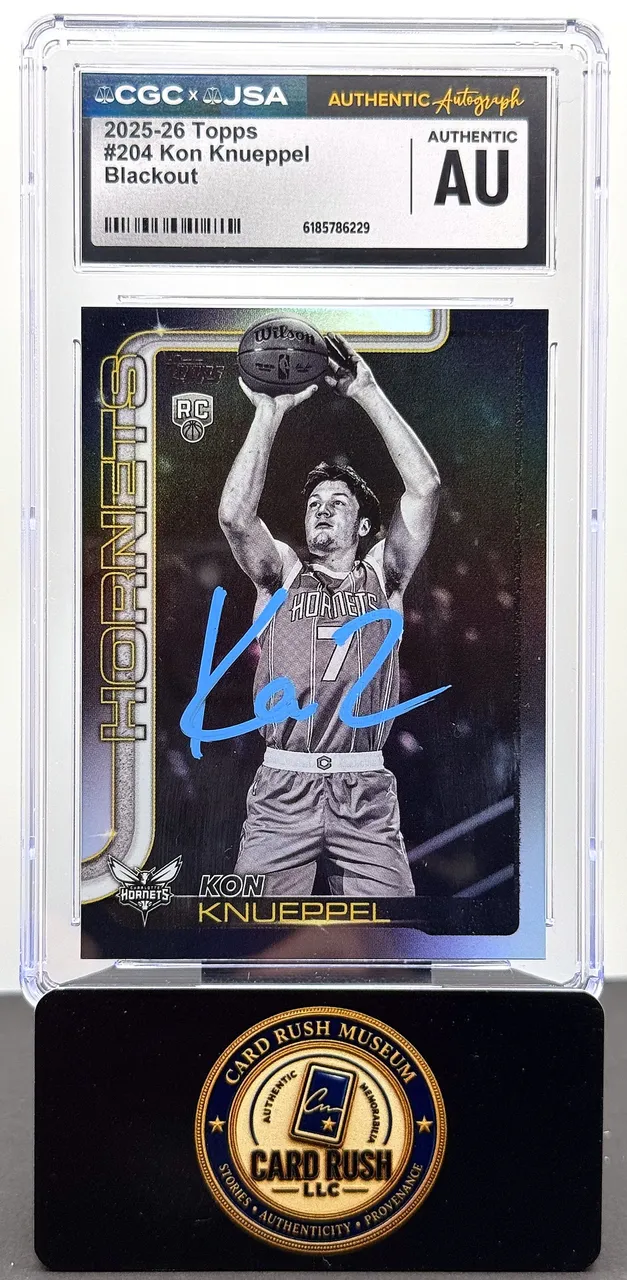
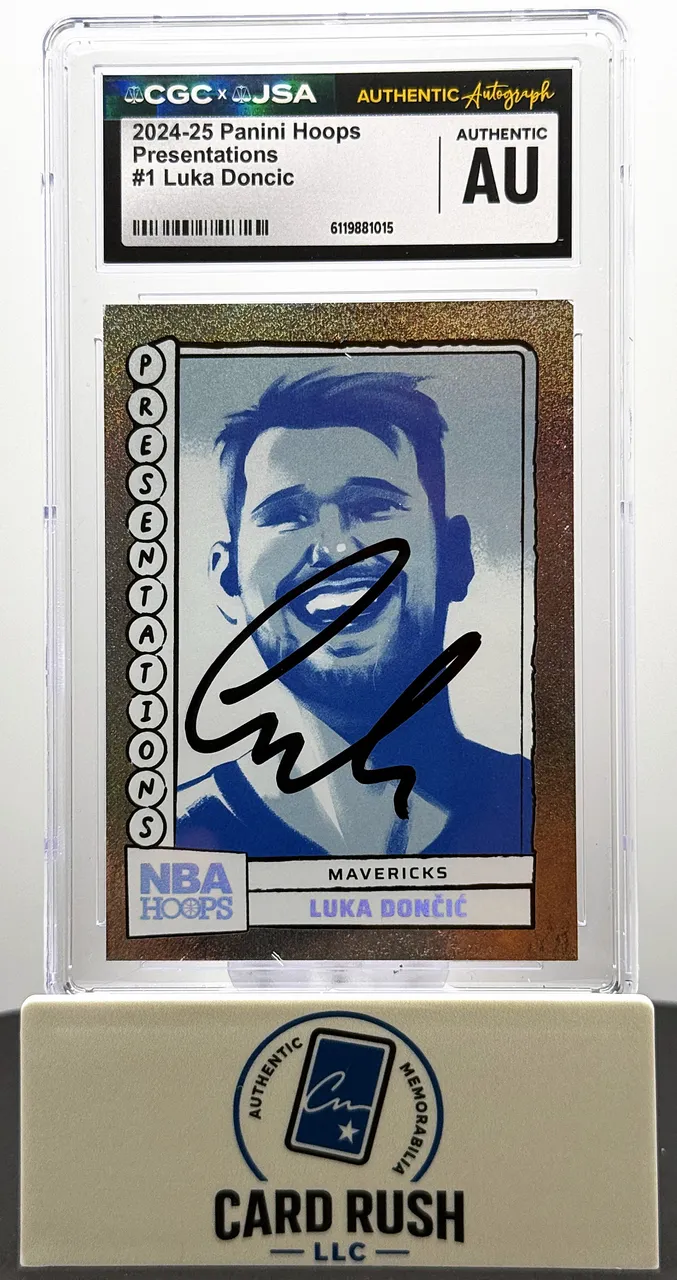
Card Rush is a father-and-sons museum of basketball autographs signed in person. A player, a paint pen, and someone close enough to ask. Every signature goes down once, by hand, and no two come out the same — so each card here is the only one like it. Most of them we watched get signed, and filmed. Where we didn't, we say so.

Extraordinary experiences deserve to be preserved.
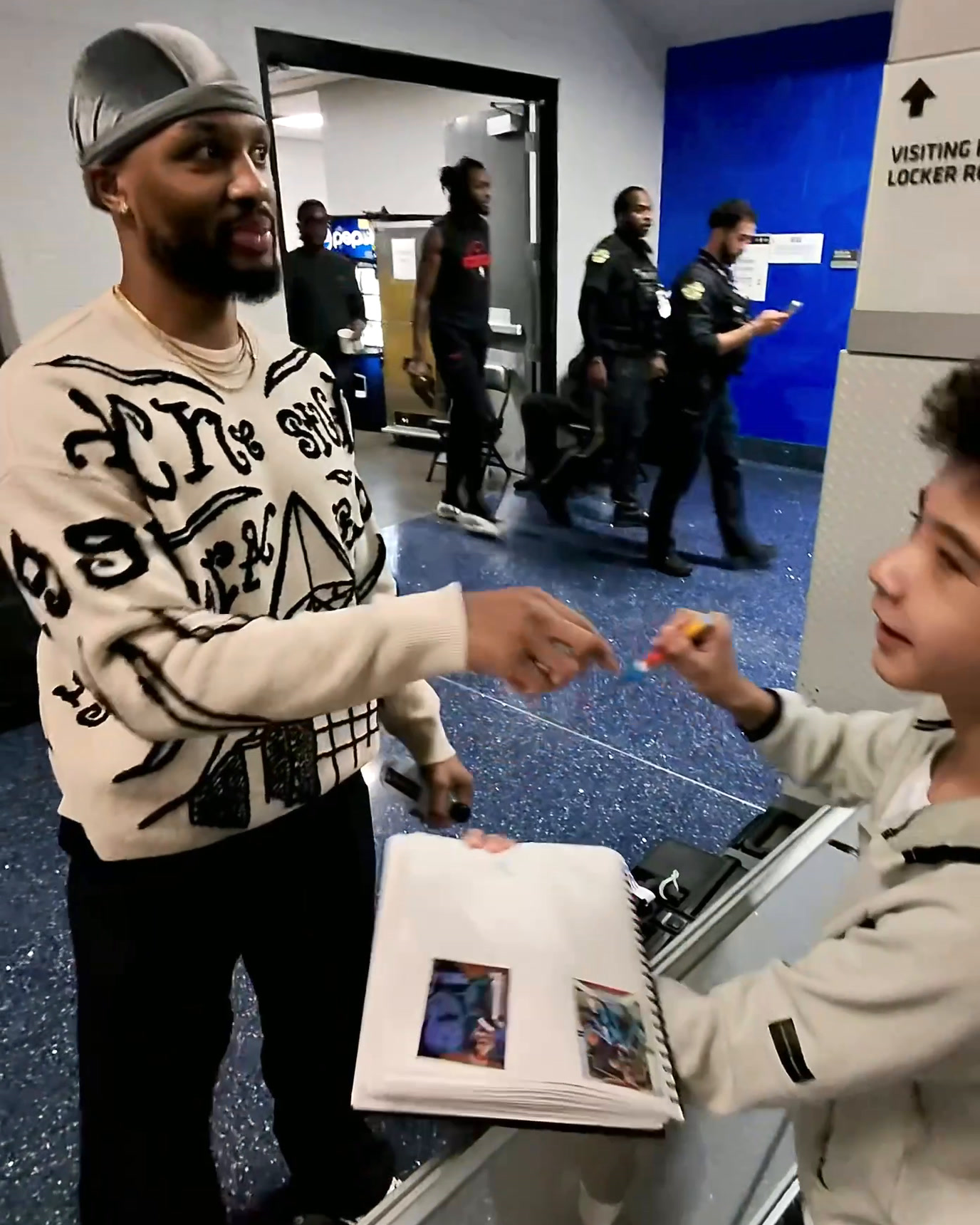
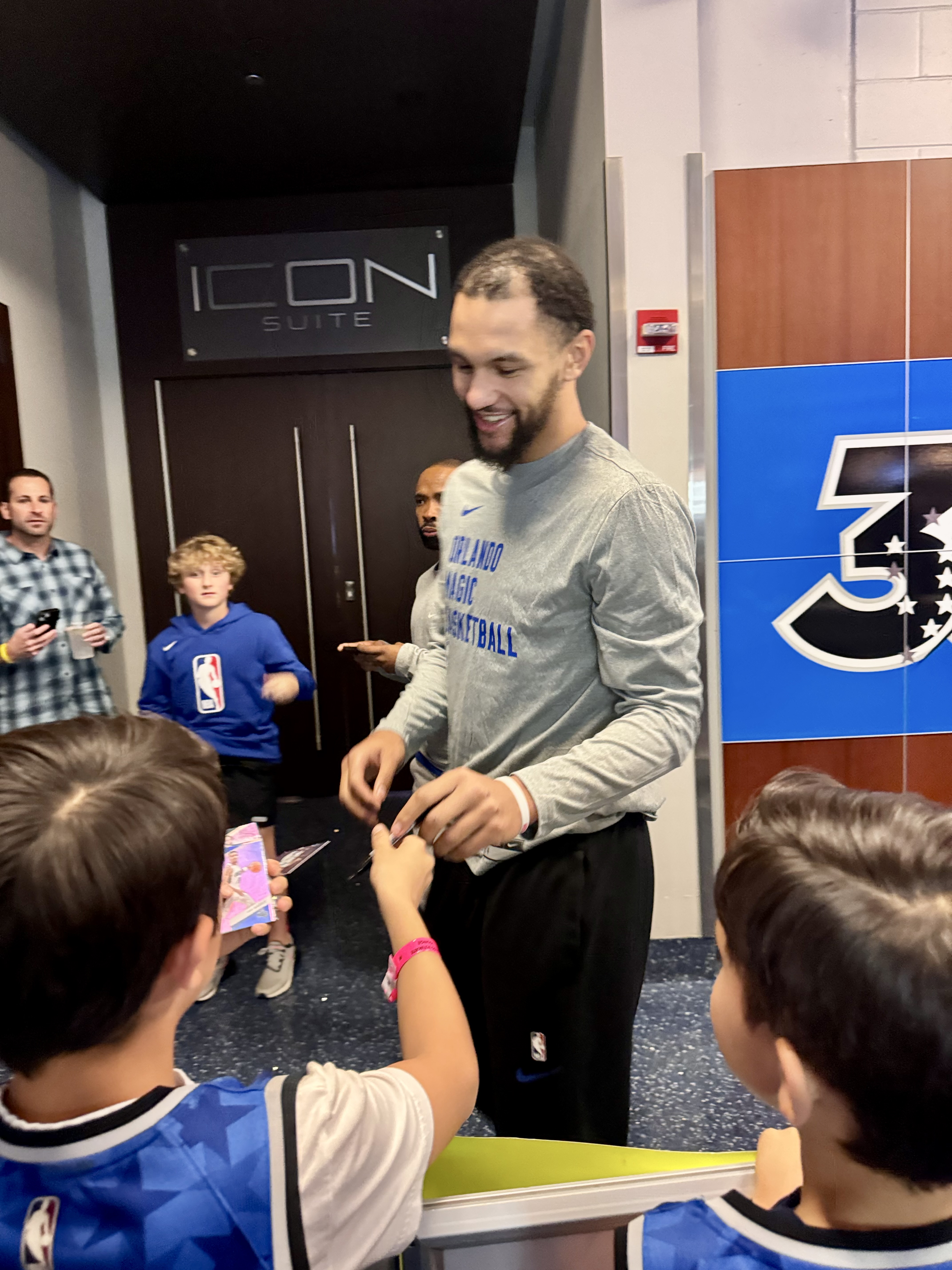
Two kids, a paint pen, and a spot at the rail.

It became a business because we got good at it. It became a museum when we finally worked out why.
Here's why.
An in-person autograph has nowhere to live in this hobby. It isn't a pack pull, so no manufacturer ever guaranteed it. It isn't a vintage slab with forty years of paperwork behind it. It's a player, a pen, and somebody standing close enough to ask — and the market has never known how to value that.
So the market defaults to what it can verify. Pack-pulled rules, because Topps and Panini say so, printed right there on the card.
Fair enough. If authenticity is the problem, let's talk about authenticity.
A manufacturer's guarantee is a company's word. We filmed ours. Where we filmed it, you can watch the pen touch the card in one unbroken shot, with a date on it. You don't have to take our word for anything. You have your own eyes.
That isn't a lesser kind of proof. It's the only kind that doesn't ask you to trust somebody.
And we don't stop there, because we don't think you should have to. Trust, but verify. Nothing leaves this Museum on our own footage: every in-person autograph is authenticated and encapsulated first by an independent third party — CGC/JSA, PSA, Beckett or SGC — so the artifact joining your collection carries a judgment that isn't ours.
And once you've watched it happen, the thing stops being cardboard in plastic. Every one is signed once, by hand, differently, and there is no second copy anywhere to compare it to.
We didn't come up with that idea. We were shown it. The man who taught us this hobby, Mario Matos, once walked us through his collection, and somewhere in the middle of it the cards stopped being cards. It wasn't inventory. It was a gallery. He is, as far as we're concerned, the Andy Warhol of card collecting.
And like Warhol, you don't have to understand it to feel it. Art doesn't ask you to get it. It just has to speak to you. There's a Tragically Hip song, “Escape Is at Hand for the Travellin' Man,” built around that exact moment: you're in a crowd, a band is playing, and you realize it's speaking straight to you. That's what happens at the rail when the pen touches the card. It's what happened in Mario's collection. It's what we want to happen to you here.
So we're not going to tell you these are art. We're going to show you.
That's not a collectible.
That's art.
We built a museum to show you
Nothing here is ranked. A building is a different kind of encounter, not a better one — and where an artifact lives depends on what it is, never on what it costs.
The Learning Hub runs through all three. So do the artifacts. Search a player and you will find everything the Museum holds on him — the stories, the portraits, the cards that are here, and the ones that aren't anymore.
Where the stories are kept.


These are the pieces that shaped our journey as collectors — the grails that taught us, inspired us, and brought us closer together. Each one carries a story, a moment, and a lesson. This is where the Card Rush Museum begins.
I’ll never forget the moment this card came out of the pack. It didn’t just appear — it hit. The corners were sharp, the surface clean, and the autograph looked perfect. For a second, I thought I had pulled something unreal. Dad saw it too. We both felt that surge — that maybe this was a true 10‑10.
Waiting for the grade felt like forever. When it came back auto‑10, I was disappointed for a moment… but only a moment. Because the truth is, this card meant more to me than any number. I pulled it myself. I felt that rush. And that feeling changed everything.
This was the card that made me fall in love with collecting. It made me want to learn, to chase, to understand what real value looks like. My younger brother Caeden jumped in with me. We started going for in‑person autographs, meeting players, and seeing the hobby up close — not just online, not just in pictures, but in real life.
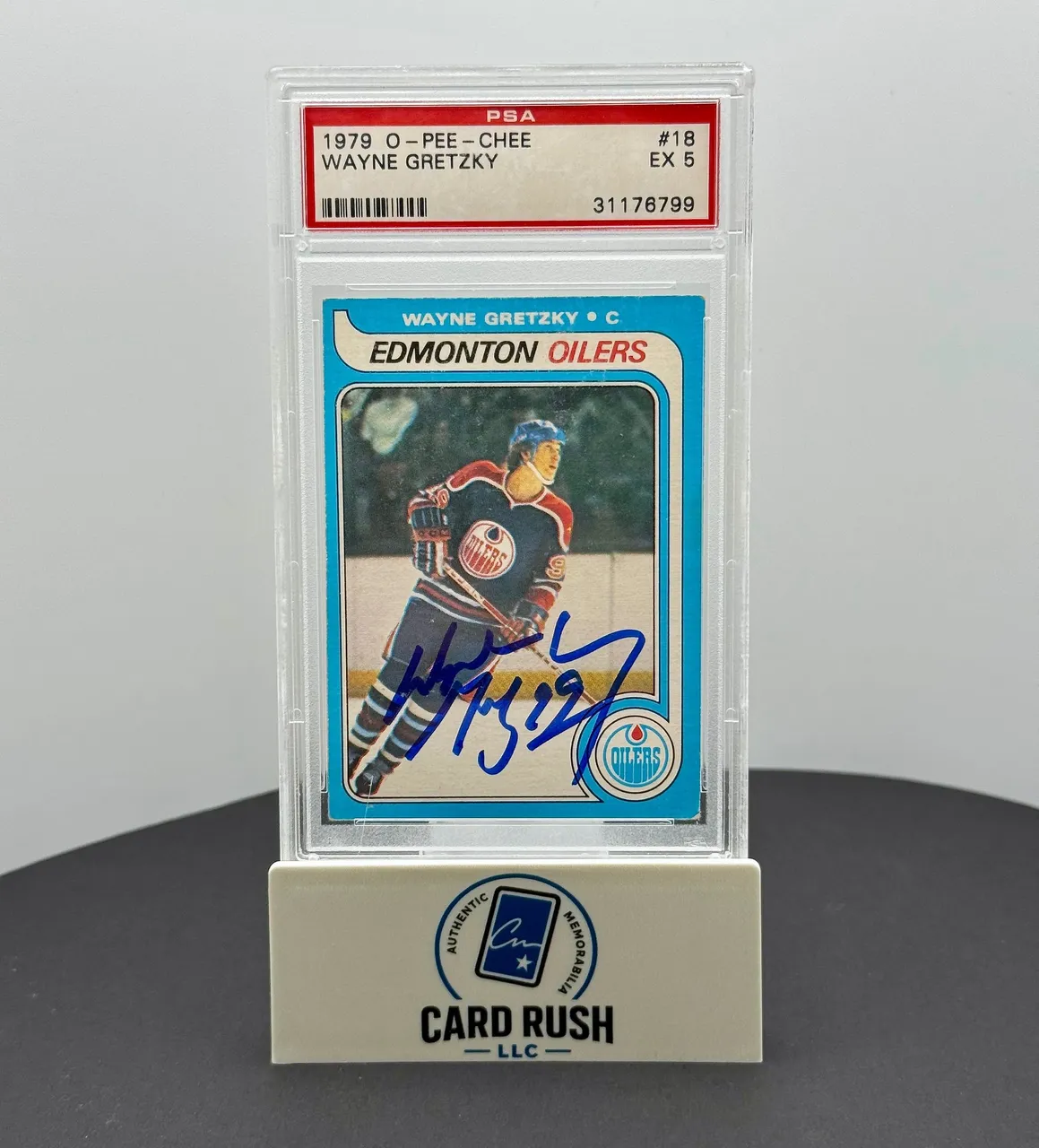
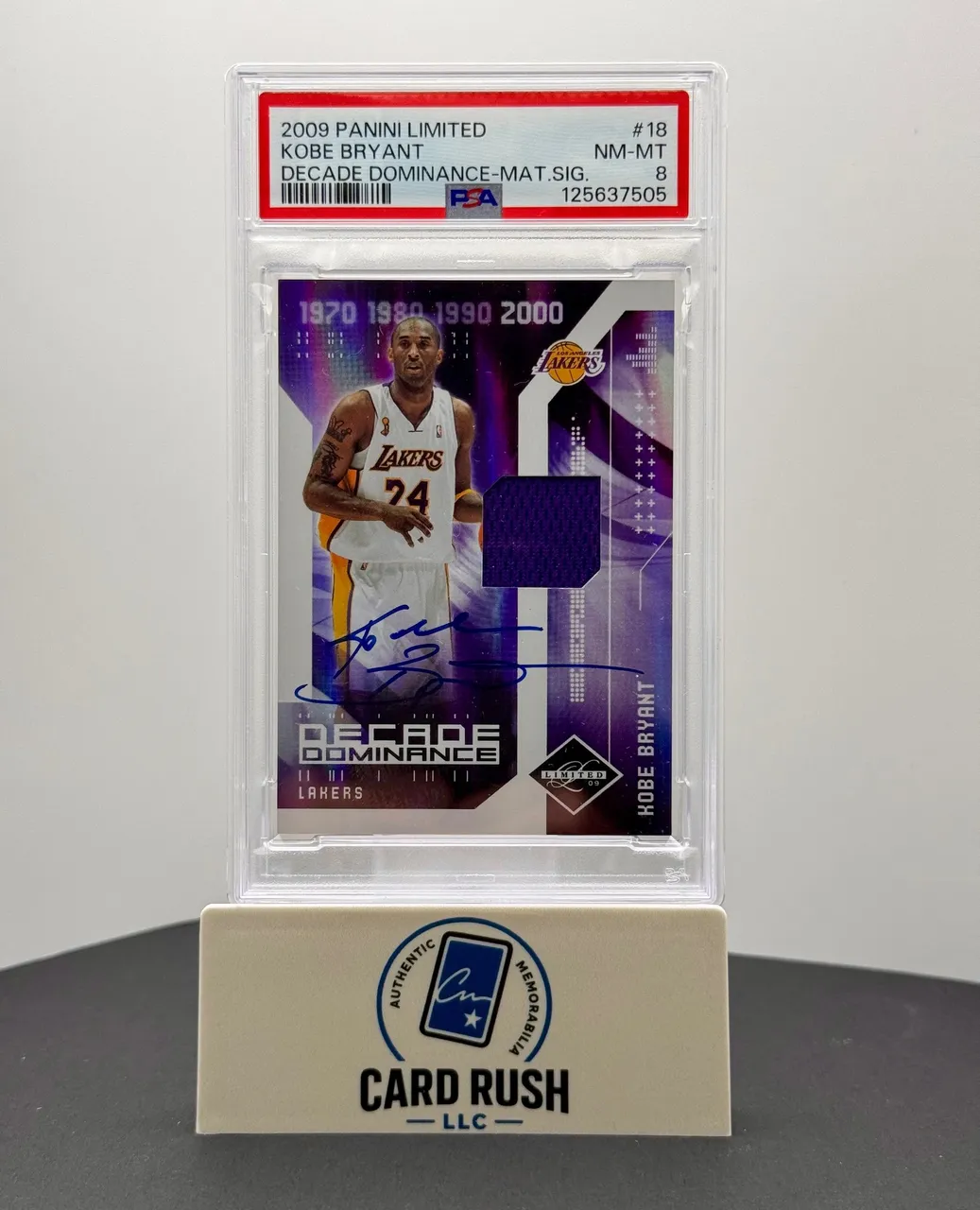
Dad showed us the grails that shaped his own journey — his in‑person signed Gretzky rookie, and the Kobe patch auto he calls his centerpiece. Seeing those cards, and holding my first big pull, made me realize something: collecting isn’t just about what a card is worth. It’s about the story behind it.
This card is where my story begins.
This is my first rush.

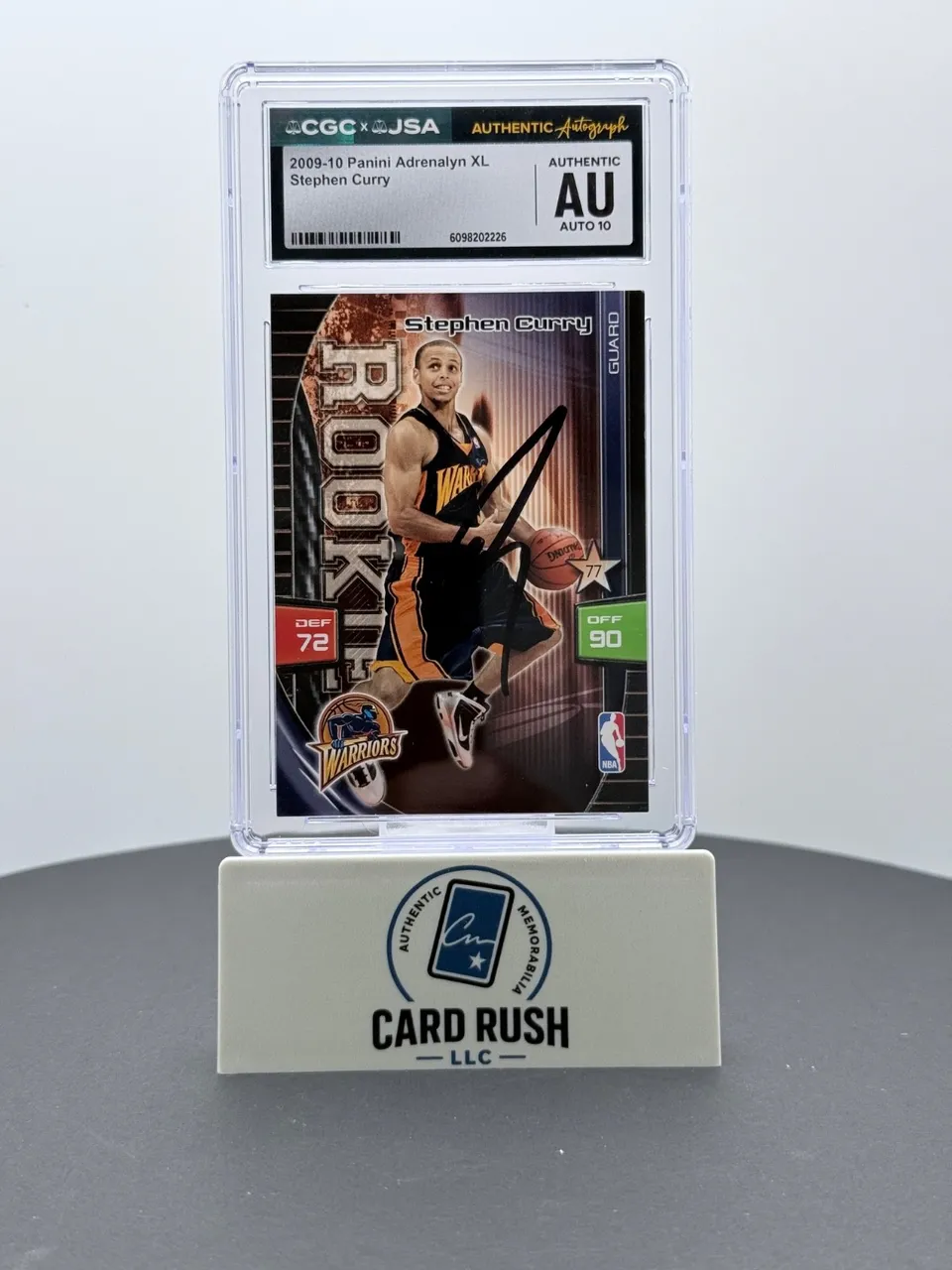
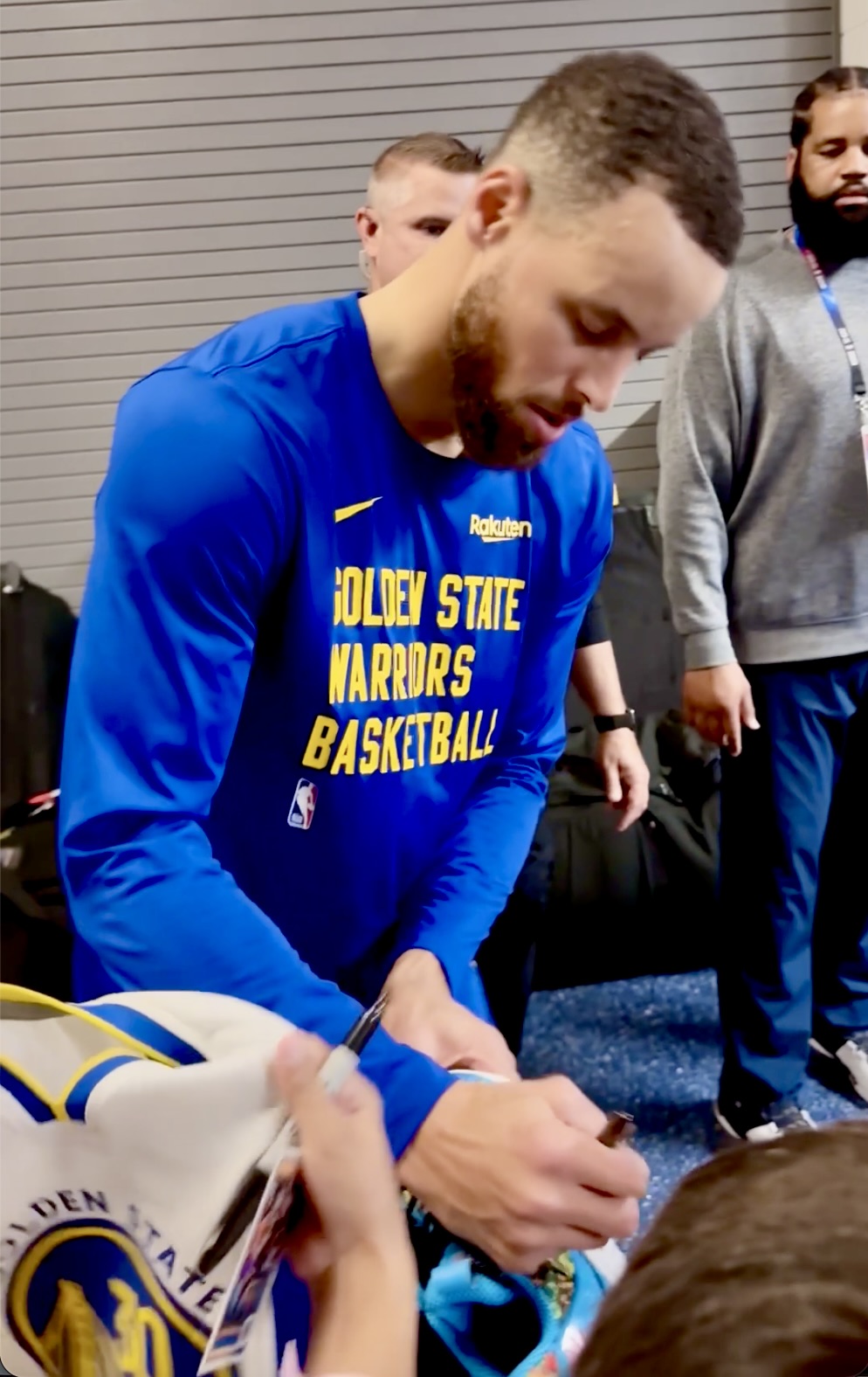
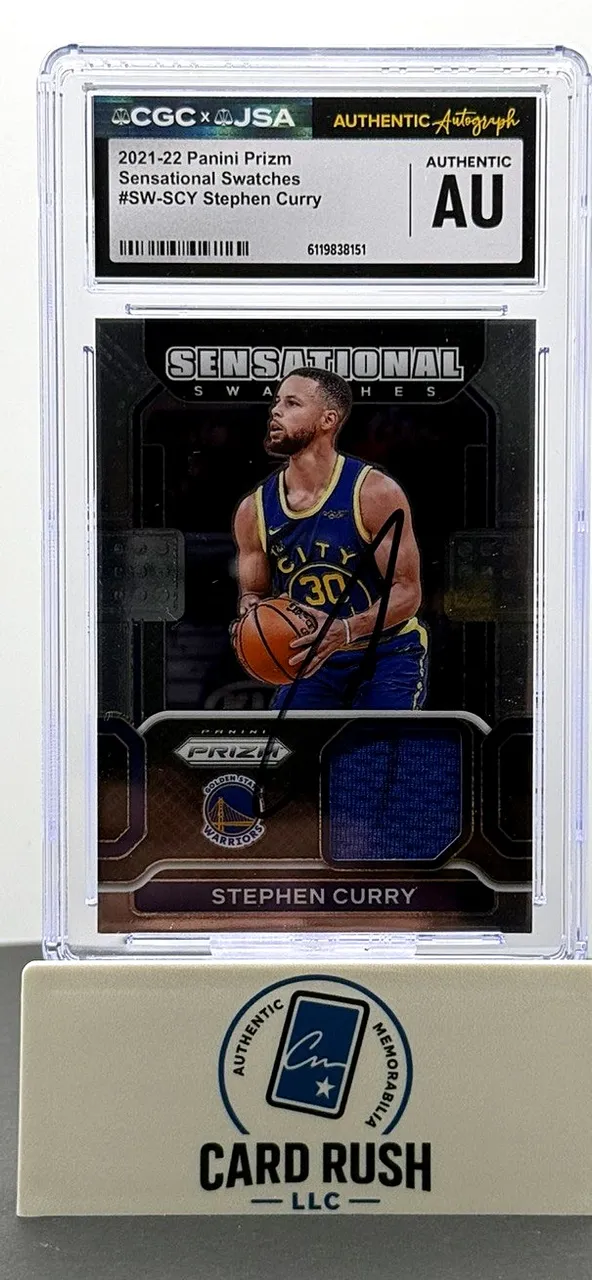
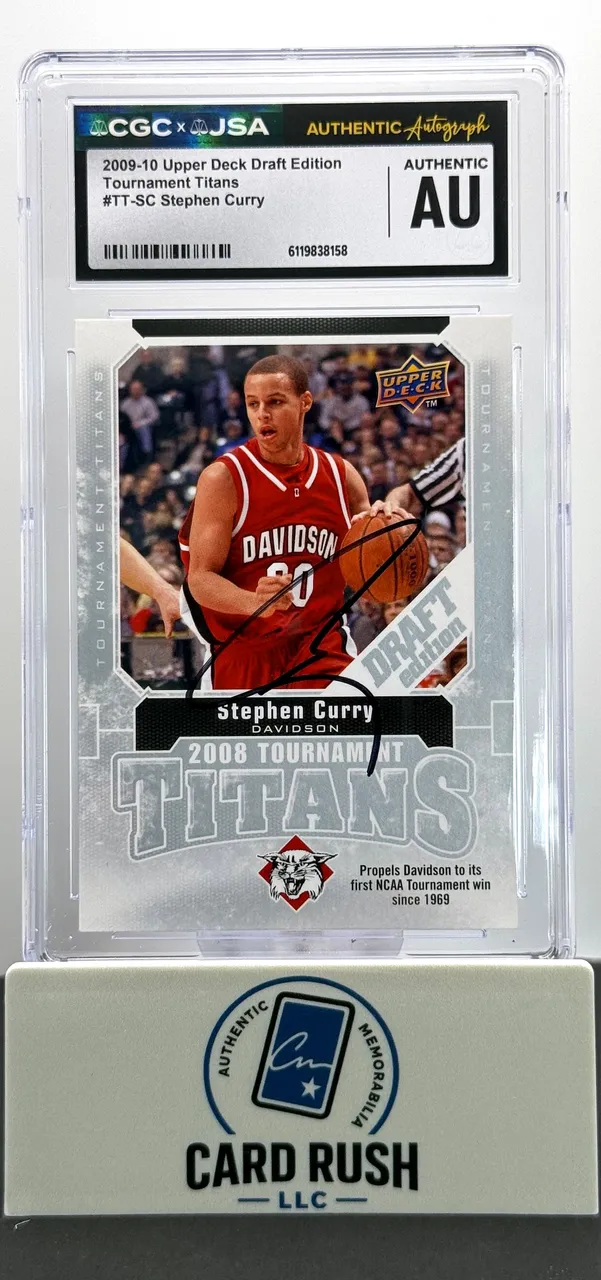
I was nine when Steph Curry stopped in the tunnel at Kia Center and signed my rookie card. I couldn’t believe he was right in front of me — actually signing something I was holding. I watched the marker touch the card. I watched him hand it back. It felt like the biggest moment of my life.
PSA rejected it even with the video of him signing, and I didn’t understand how they could say it wasn’t real when I saw it happen. CGC/JSA authenticated it and gave it an auto 10, proving the moment was exactly what I knew it was.
This card is more than an autograph. It’s the memory of meeting Steph Curry at nine years old, the shock, the excitement, and the feeling I’ll never forget. It’s the moment that made me fall in love with collecting.

The two cornerstone cards that built the Card Rush legacy.
Every museum has a beginning. For Card Rush, it began with a father who believed that collecting could be more than cardboard — it could be a legacy. These two grails represent the foundation of that legacy, the spark that inspired Christian and Caeden to build their own exhibits and continue the chase.
The Wayne Gretzky O‑Pee‑Chee rookie autograph stands as the first true cornerstone — a card that transformed a simple collection into a lifelong pursuit. The Kobe Bryant Decade Dominance on‑card auto patch completes the pair, symbolizing perseverance, passion, and the thrill of the hunt.
Together, these grails form the origin story of Card Rush: a father’s passion passed down, preserved, and displayed for generations.


Beyond the origin story, the collection keeps growing. Some pieces the family holds onto for good — the Curator's Collection, kept and displayed, never transferred. Others come with a story we're ready to pass on to the next collector, and those hang next door, in the Art Gallery.
These are the family's own keepers — pieces we've chosen to hold onto and display rather than sell. They are the Museum's permanent collection.
Terry Fox, my grandmother, and the summer in Toronto that set the course of my life.
My grandmother was my person. Margaret Beryl Radford, née Barden. We called her Ma. She was a war bride. At 17 years-old, my grandfather lied about his age to enlist in the Canadian Army to go overseas in the Second World War. While stationed in England, he met her, married her, and brought her home. When I was small, we went to live with them. That was the year she was diagnosed with breast cancer.
At ten, you don't understand what that word means. You only know it's terribly frightening.
That same spring, a young man from Port Coquitlam, British Columbia dipped his artificial leg in the Atlantic at St. John's, Newfoundland, and started running west. Terry Fox called it the Marathon of Hope. Every night we watched him on the news. Every morning I cut his stories written by Leslie Scrivener, out of the Toronto Star and pasted it into a scrapbook. When he came through Scarborough, we were in the crowd at the Civic Centre. I don't have a photo to prove it. I just remember it.
Scarborough, July 11, 1980. Film: The Terry Fox Foundation.
Their journeys ran side by side. On September 1, outside Thunder Bay, Terry stopped running. The cancer had come back, in his lungs. Ma was still in the hospital, recovering from her surgery. He died the next June. She didn't outlive him by long.
He is a big part of why I went into medicine, and then into surgery. Early in my career, much of my practice was treating breast and colon cancer.
I've run a few marathons. I still can't understand how he did it: close to a marathon a day, on one leg, for 143 days and 3,339 miles.
Around 2004, everyone was wearing rubber wristbands against cancer. I wanted one that couldn't come off when the cause went out of fashion. The next spring, I rode my motorcycle to Terry's grave in Port Coquitlam. His headstone carries an image of him running early in the Marathon of Hope, in the cold of the Maritimes, a sweatshirt under his T-shirt. Standing there, I knew what I wanted. Not that image, but Terry later in the run, in summer in Ontario, in his Marathon of Hope shirt, still going. I had it tattooed on my right arm, twelve inches tall. The ultimate wristband.
The photograph on my arm. Image: The Terry Fox Foundation.
That September, the Toronto Star, the same paper I clipped as a boy, wrote about it. I had met Leslie Scrivener, and she loved the tribute to Terry and the story behind it. She invited me to the Star to have my tattoo photographed for the story she wrote. I told her then what I still believe: when I think I'm having a bad day, all I have to do is look at my right arm, and everything's put in perspective.
Leslie Scrivener, "Two Indelible Tributes: A graveside visit leads to an epiphany," Toronto Star, Sunday, September 18, 2005, page D12.
In 2013, I ordered a limited-edition metal print of Terry running at night, and it shipped to our address in Jersey City. Someone noticed. Terry's sister, Judith, reached out to ask whether there was a story behind it. I told her all of it. Then I sent her a photo: me, my tattoo, my infant son Christian in my arms, and Terry running on the wall behind us. She loved it. That photo is below.
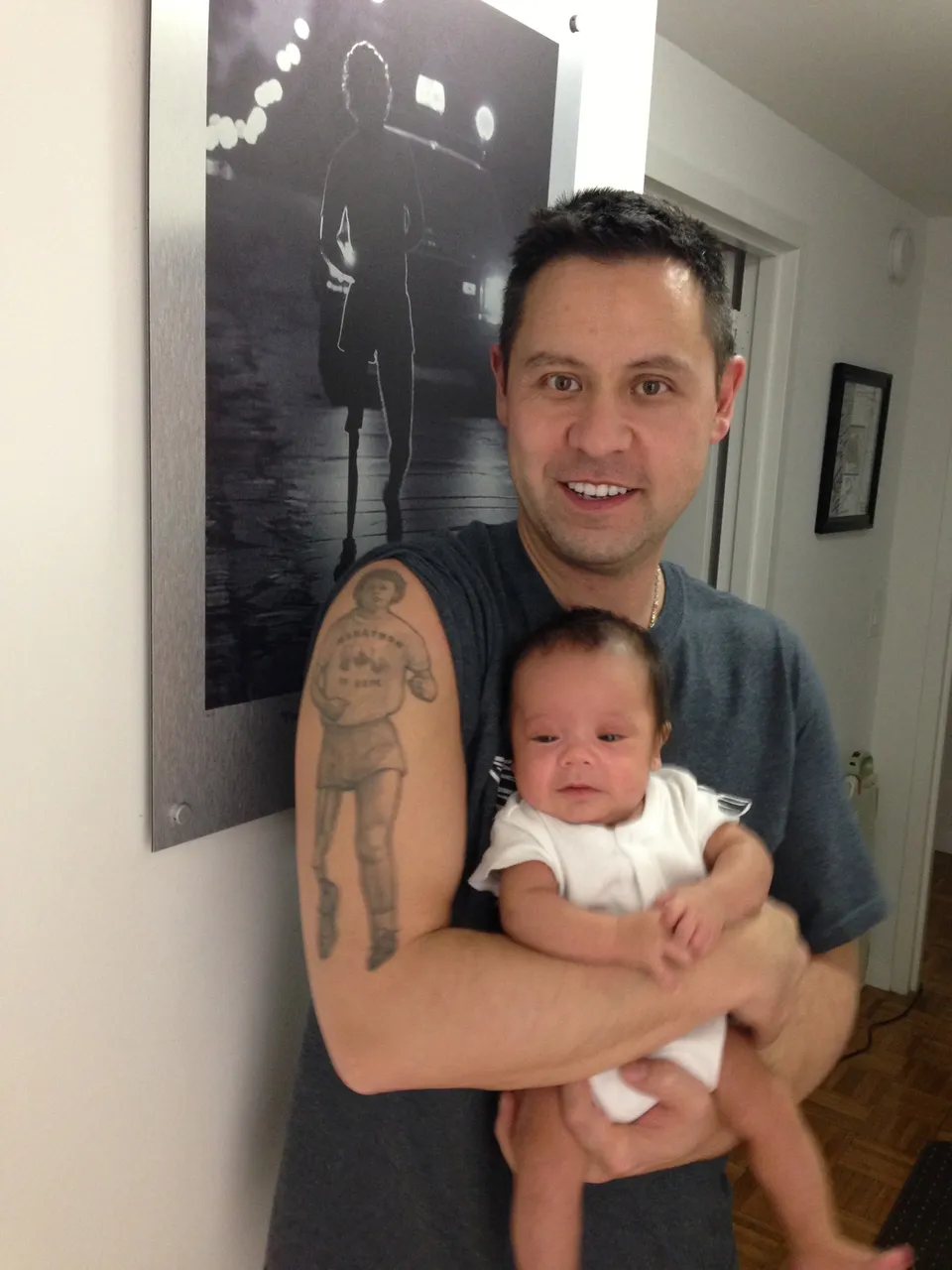
Terry Fox tattoo, with Terry running on the wall behind, and Christian
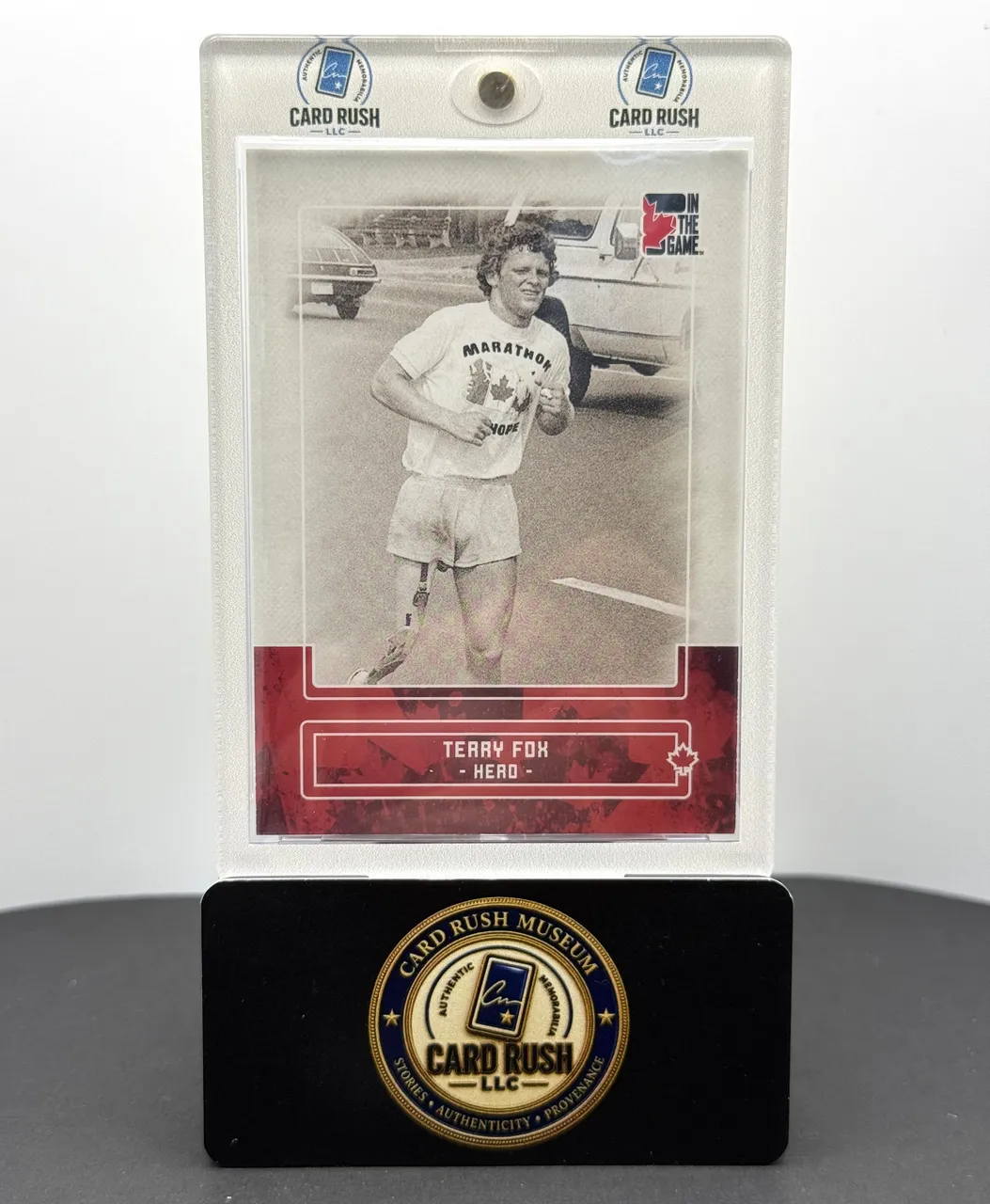
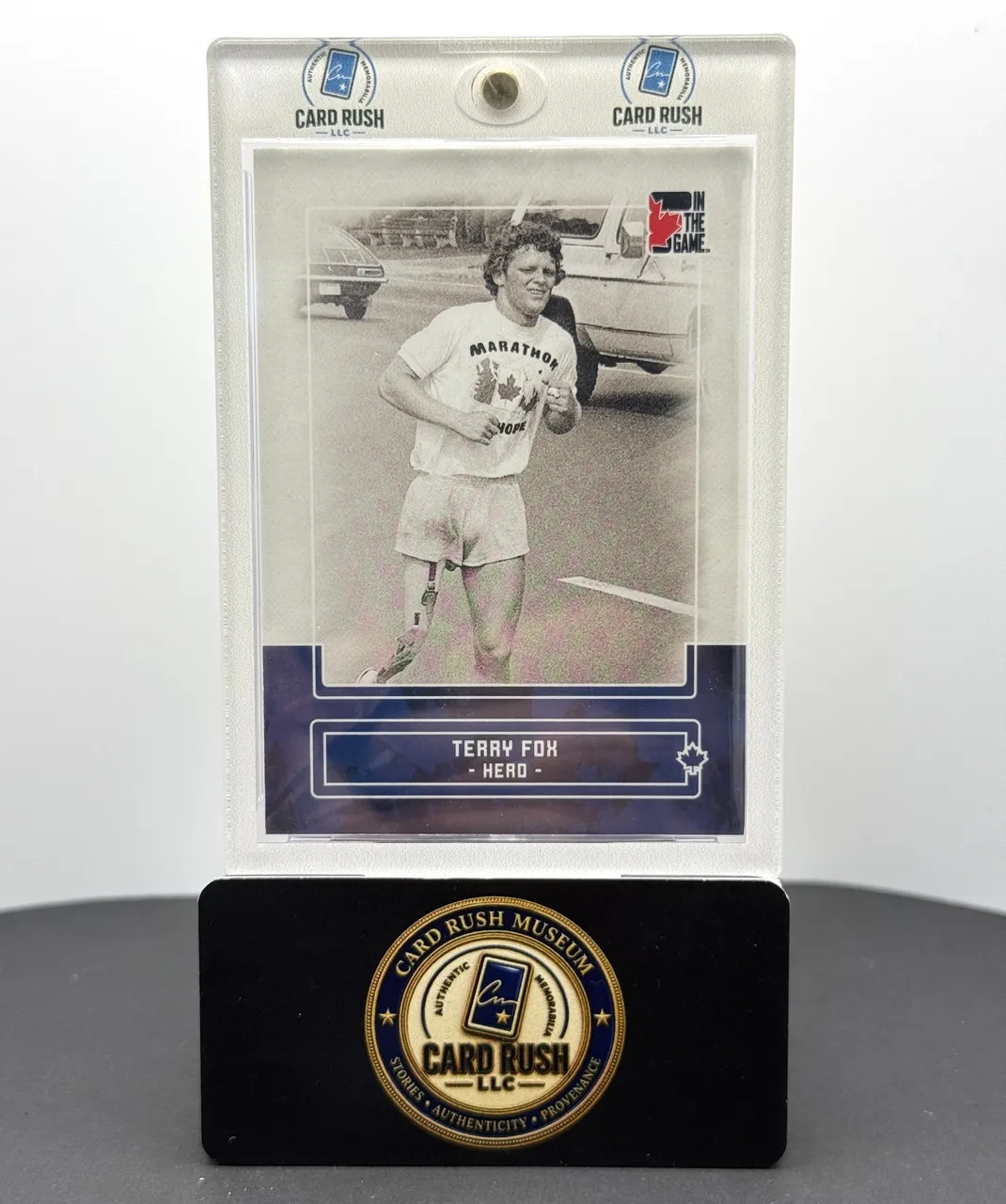
These cards are 2011 In The Game Canadiana, #88, from the Hero subset: Terry on the road during the Marathon of Hope. We keep three Ruby and one Sapphire, listed at print runs of 180 and 50. They aren't signed. They aren't graded. They will never be offered.
He never finished the run.
Nearly fifty years later, he's still running with me.
Film: The Terry Fox Foundation and The Tragically Hip.
Terry's story continues at terryfox.org.
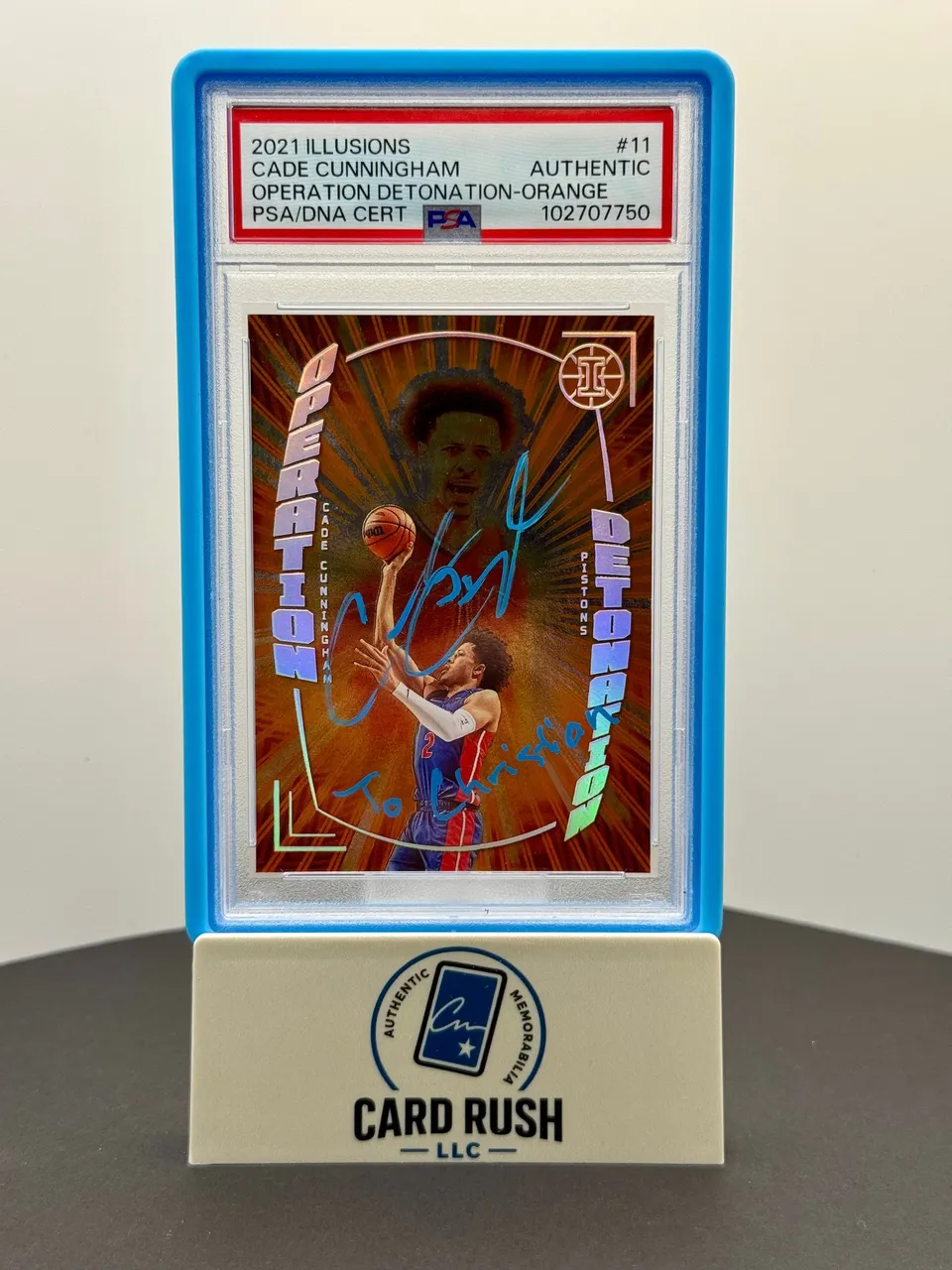
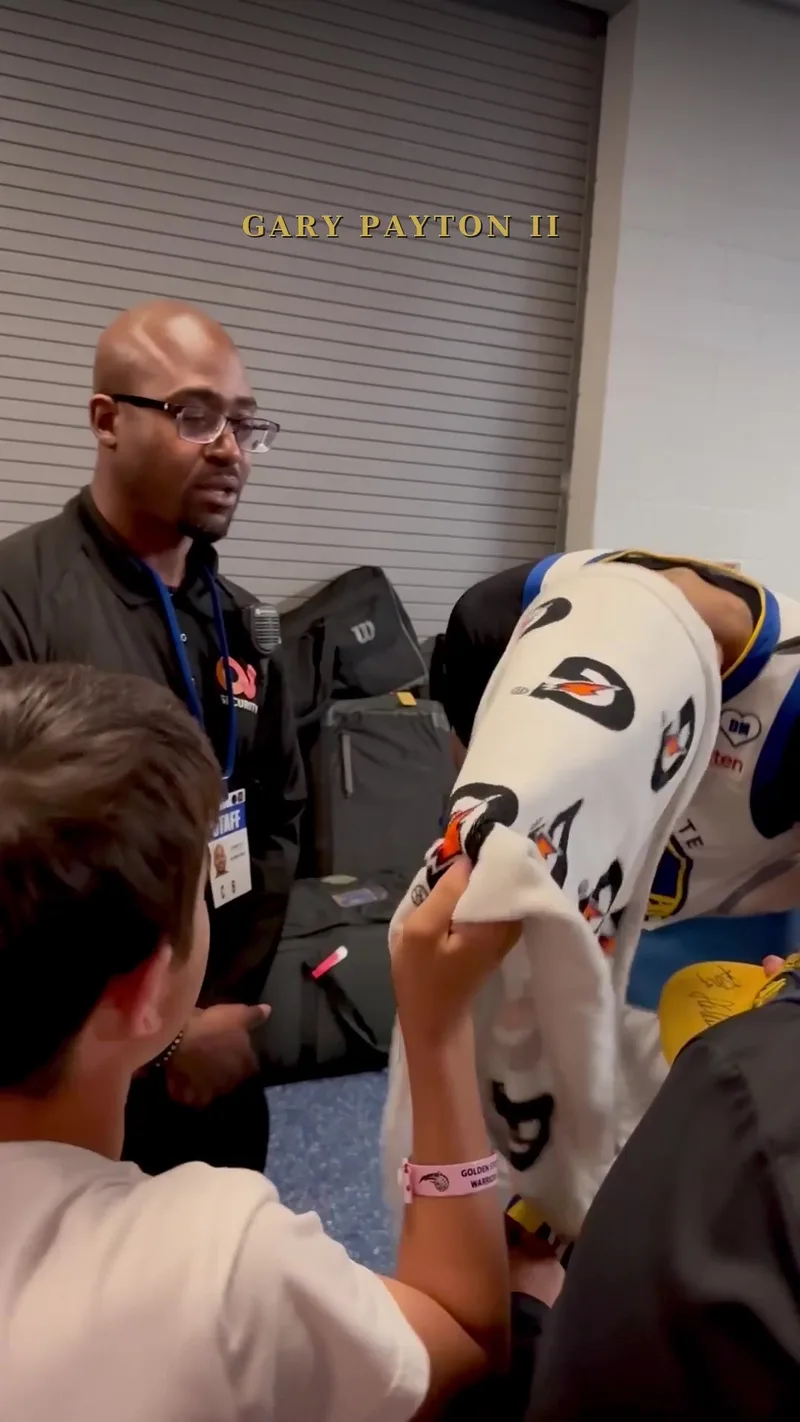
In the tunnel before the game, Cade Cunningham wasn't signing for anyone. Christian, still young in his collecting journey, held out a card anyway — not expecting much. Cade paused, looked at him, and Christian simply said, "It's okay… you can keep this one."
That moment changed everything. Cade looked genuinely touched.
"Wait… for me? For real?"
Christian nodded. Cade asked his name, took the other card in his hand wrote "To Christian", signed the card beautifully, and handed it back — while still keeping the card Christian had gifted him. A stellar experience from an NBA All-Star!

This is a story of the moment and the player, not one single card, which is why it isn't tied to a single artifact here.
The people who hold a particular place in this Museum — each for a reason this family can point to. Some shaped the game, or shaped us, long before we ever got there.
Here is the evidence, not just our word for it. Every story in this wing is anchored to real footage from the moment itself — some prove the exact artifact on camera, others prove the experience around it. Either way, it's documentation of context and presence, not a substitute for PSA/BGS/SGC/CGC/Beckett/Topps/ Panini/Fanatics authentication of the autograph itself.
The exact artifact, continuously documented on camera, becoming the artifact — the strongest evidence there is. Not reliant on memory, testimony, or trust.
Two cards, signed on camera by a player who wasn't even dressed to play — on the same day we committed to his family's camp.
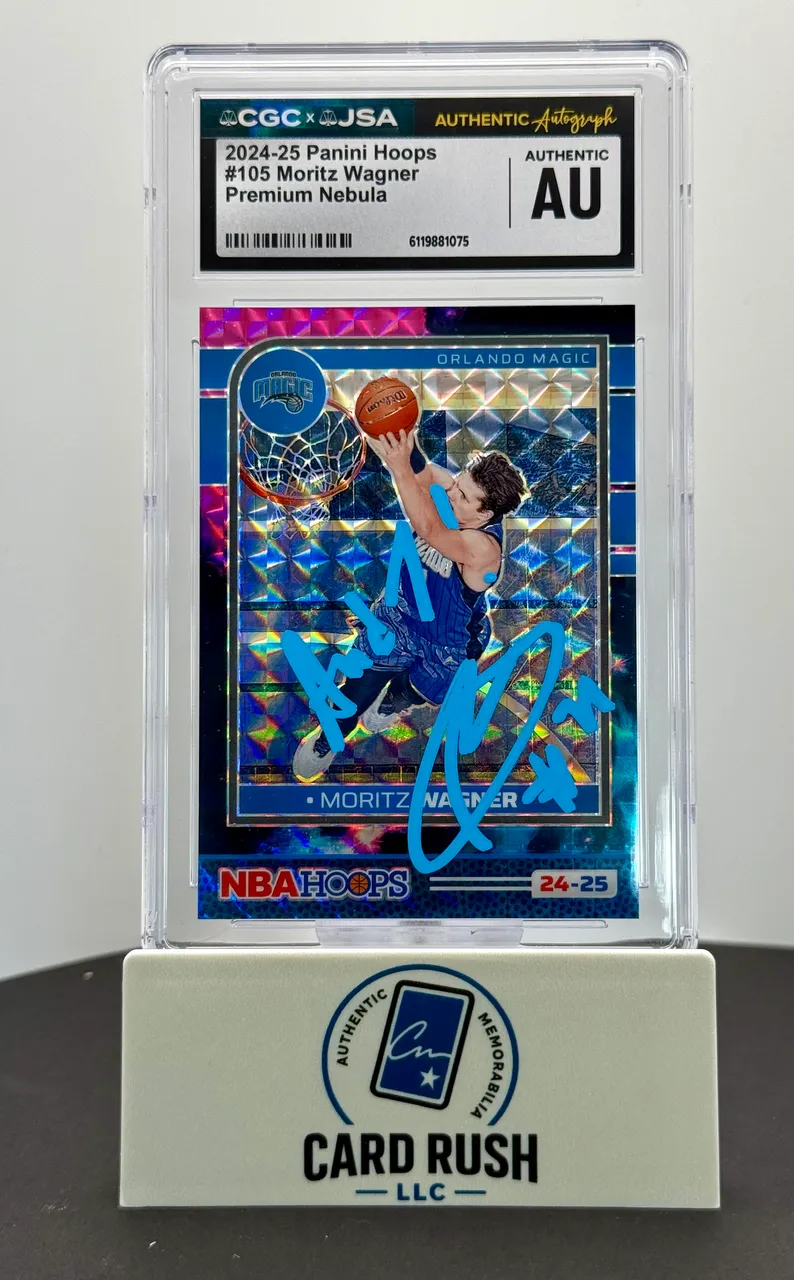
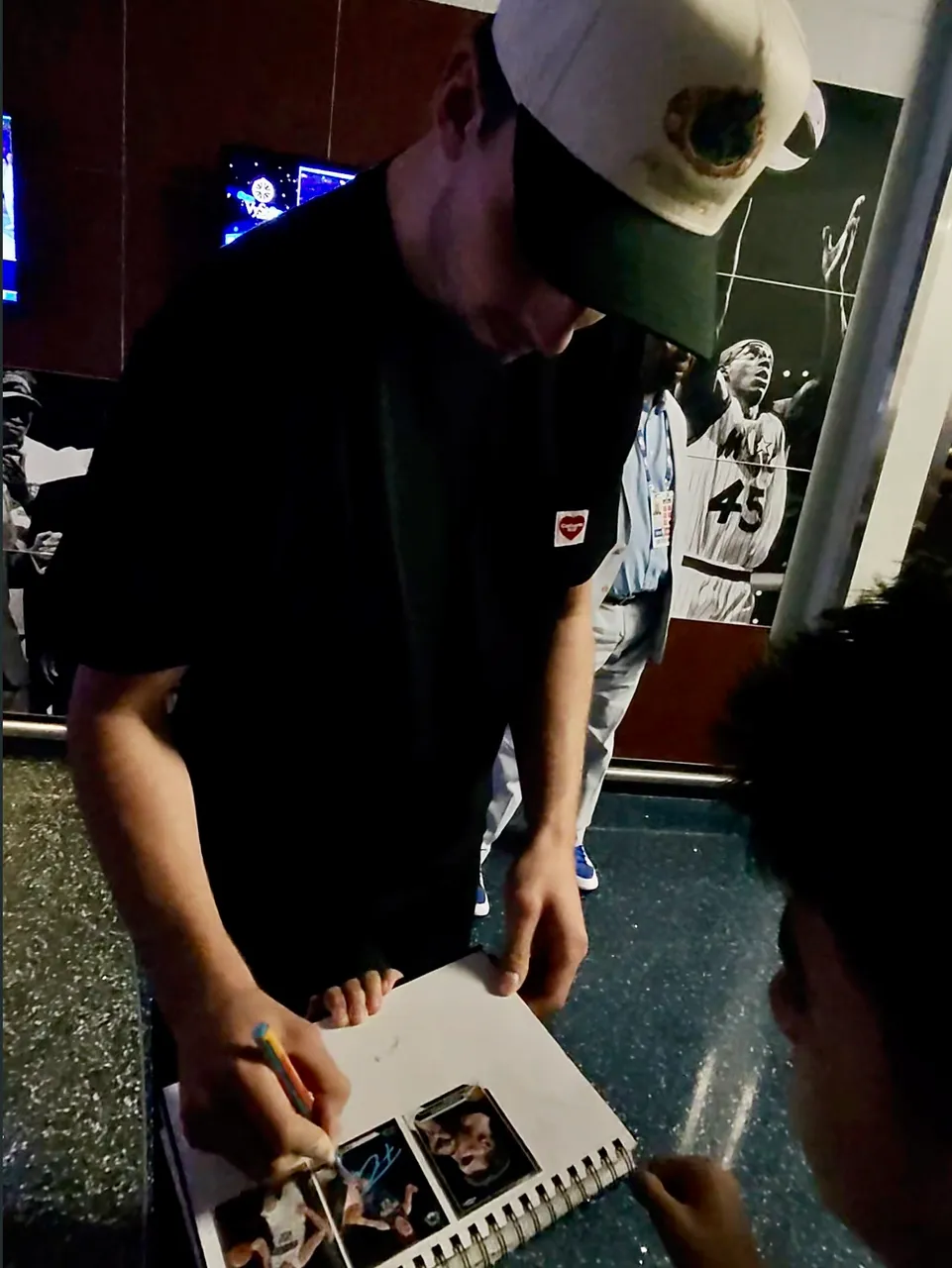
March 11, 2026. Franz Wagner was still out, still on the injured list, with no reason to be anywhere near a crowd. We saw him in the tunnel anyway.
That was the same day we had signed up for the Wagner Brothers camp — the one scheduled for that fall, right before preseason. We had already committed to spending a day with his family in the gym. We had no idea we would be standing in front of him before the day was out.
He stopped. He talked with us for a minute, and he was kind about it — the kind you notice, because a player who isn't playing owes a tunnel full of people exactly nothing. Then he signed. Two cards, one after the other, with the camera running the whole time.
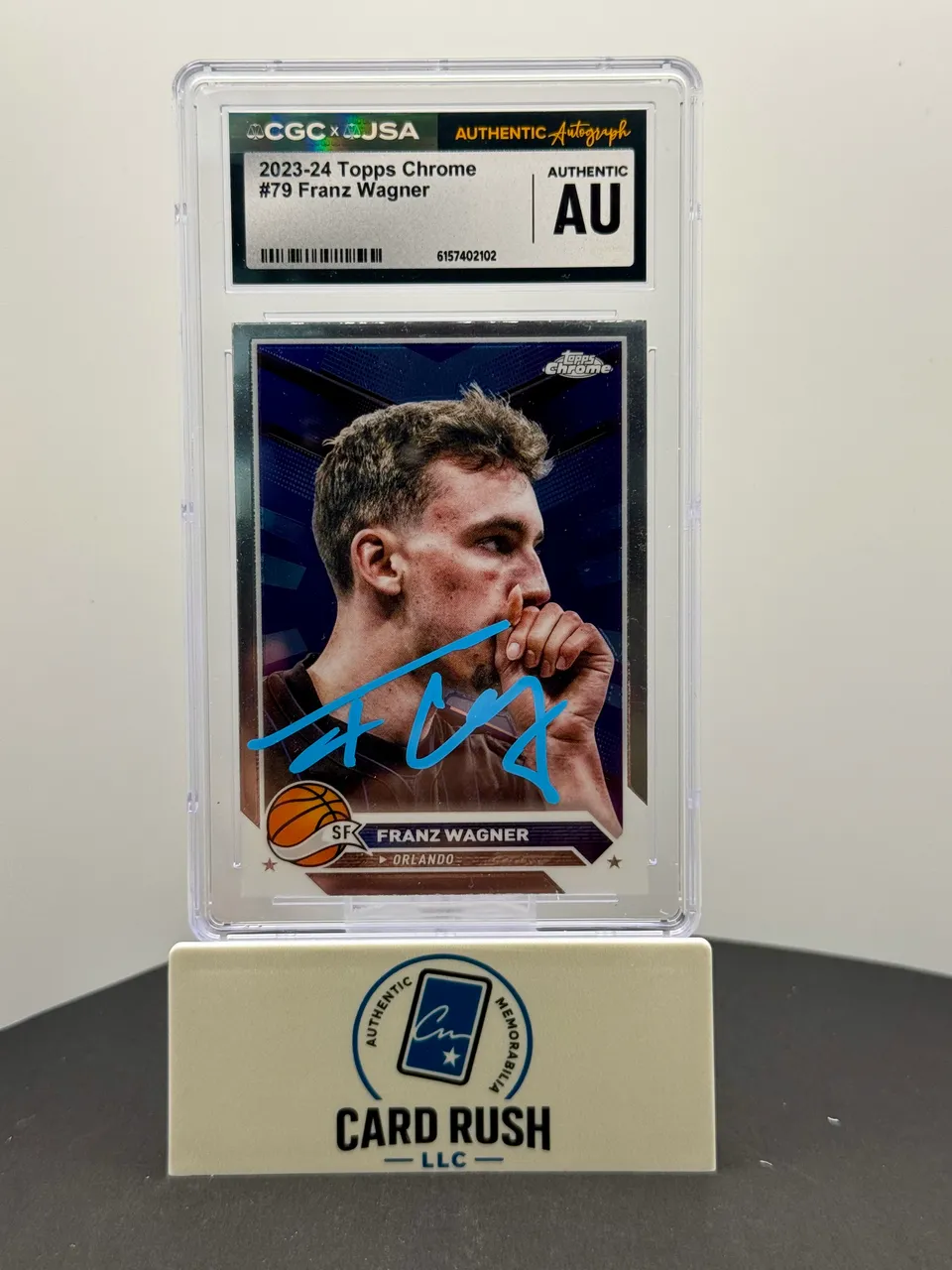
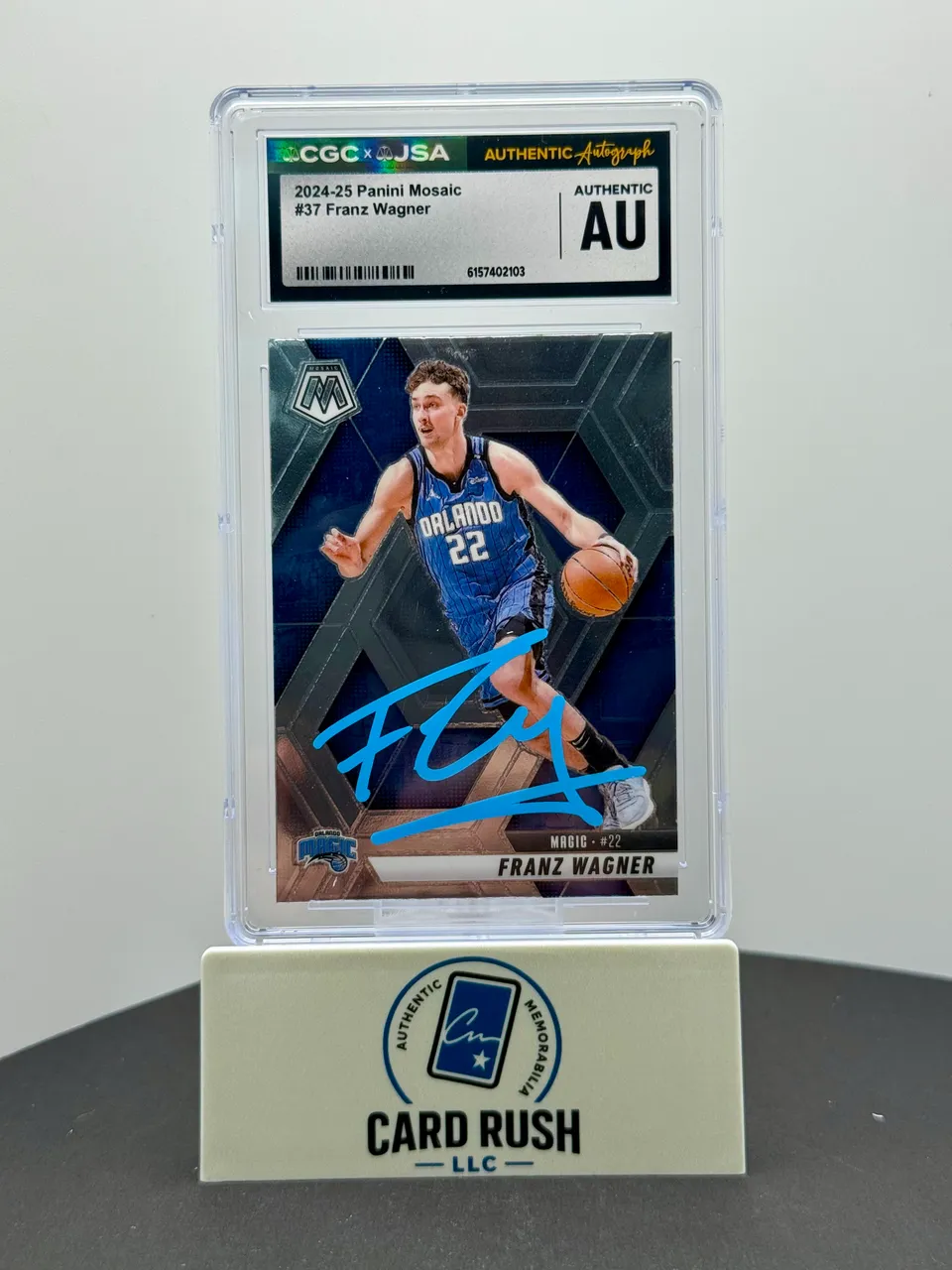
The first was his 2023-24 Topps Chrome #79. The second was his 2024-25 Panini Mosaic #37. Both came back from CGC and JSA as Authentic Autographs, certified on consecutive numbers — 6157402102 and 6157402103 — graded together because they were signed together.
That is why the Wagner brothers hold the place they hold in this museum. Franz had every reason to keep walking. He stopped instead.
We're going to miss his big brother.
We're going to stay diehard Wagner fans.

Kia Center, Orlando March 11, 2026

CRM-0359

Kia Center, Orlando March 11, 2026

Kia Center, Orlando March 11, 2026
As seen in the reel — this is a story of the moment and the player, not one single card, which is why it isn't tied to a single artifact here.
Two evenings in the tunnel, on camera from the first blank card to the last signature.
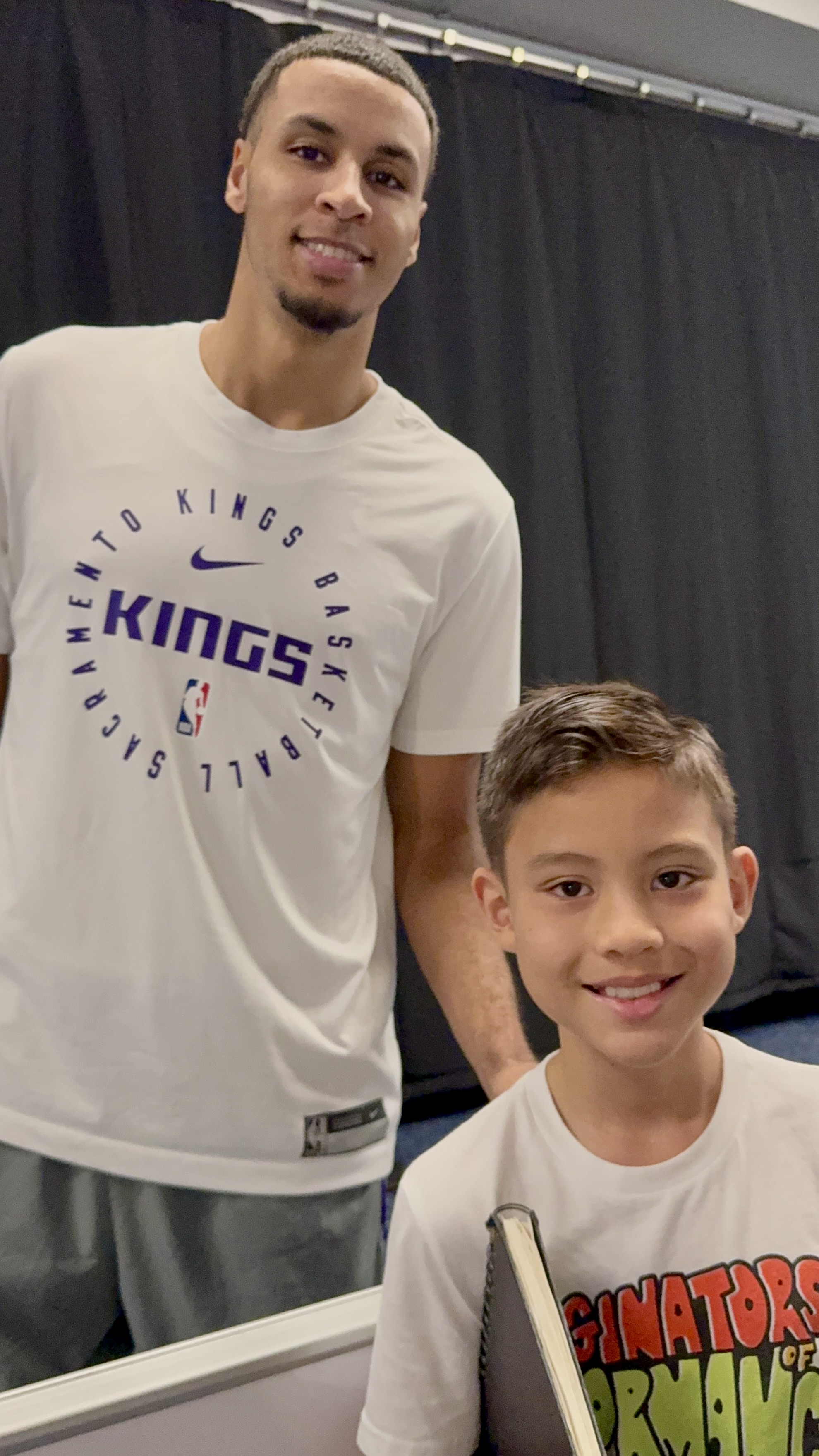
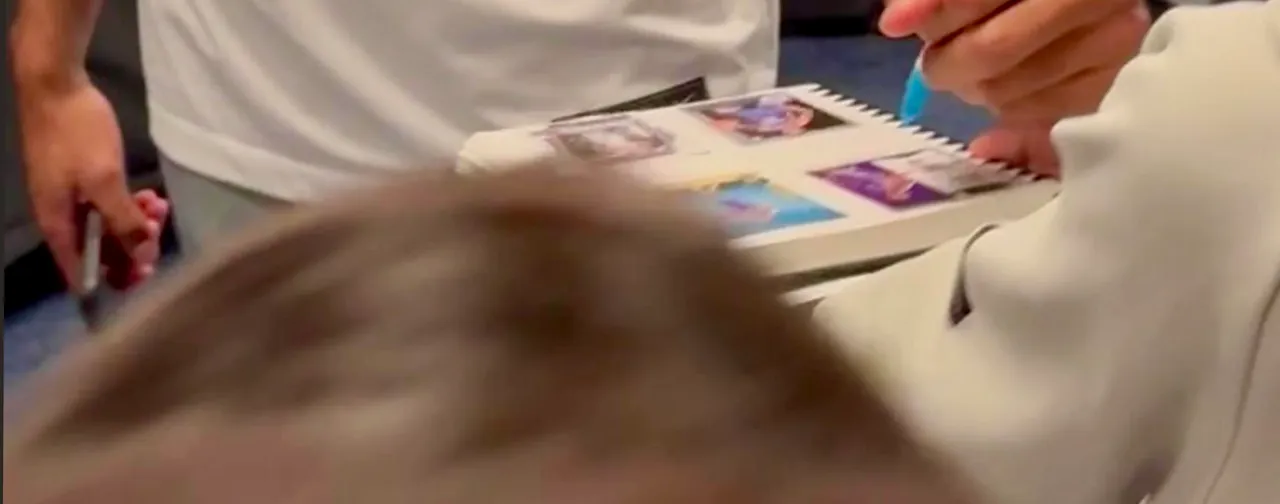
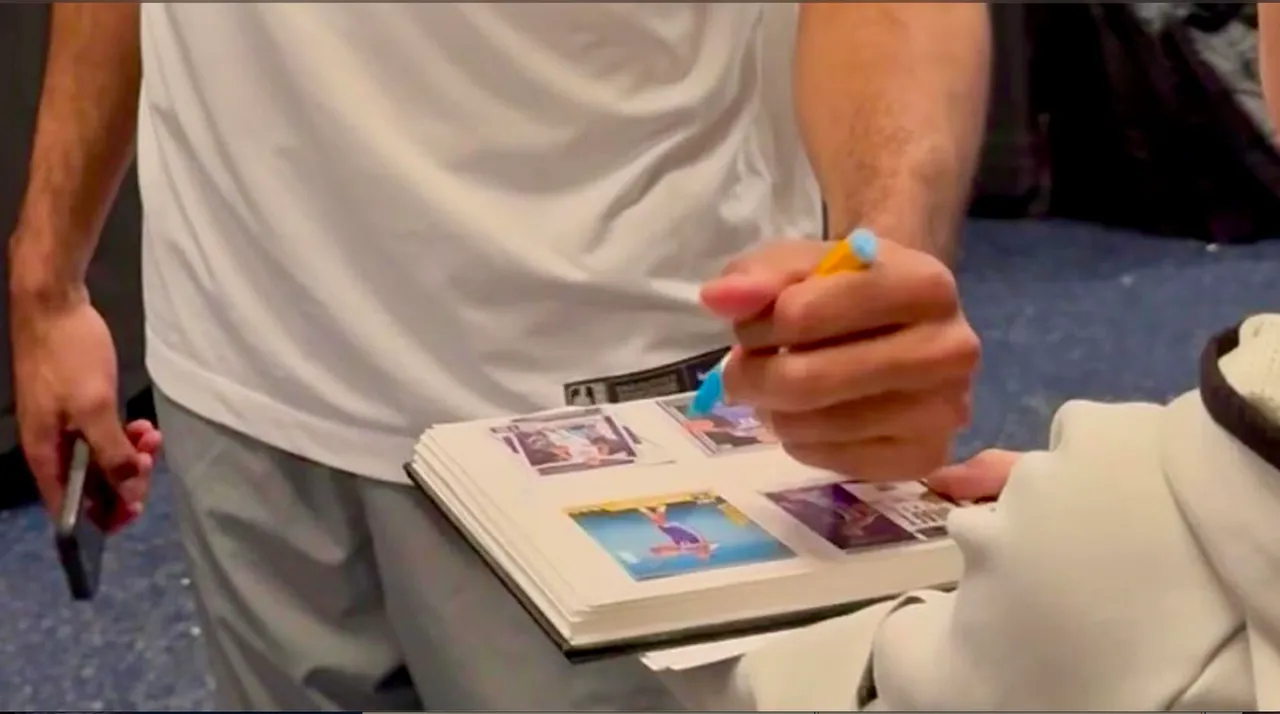
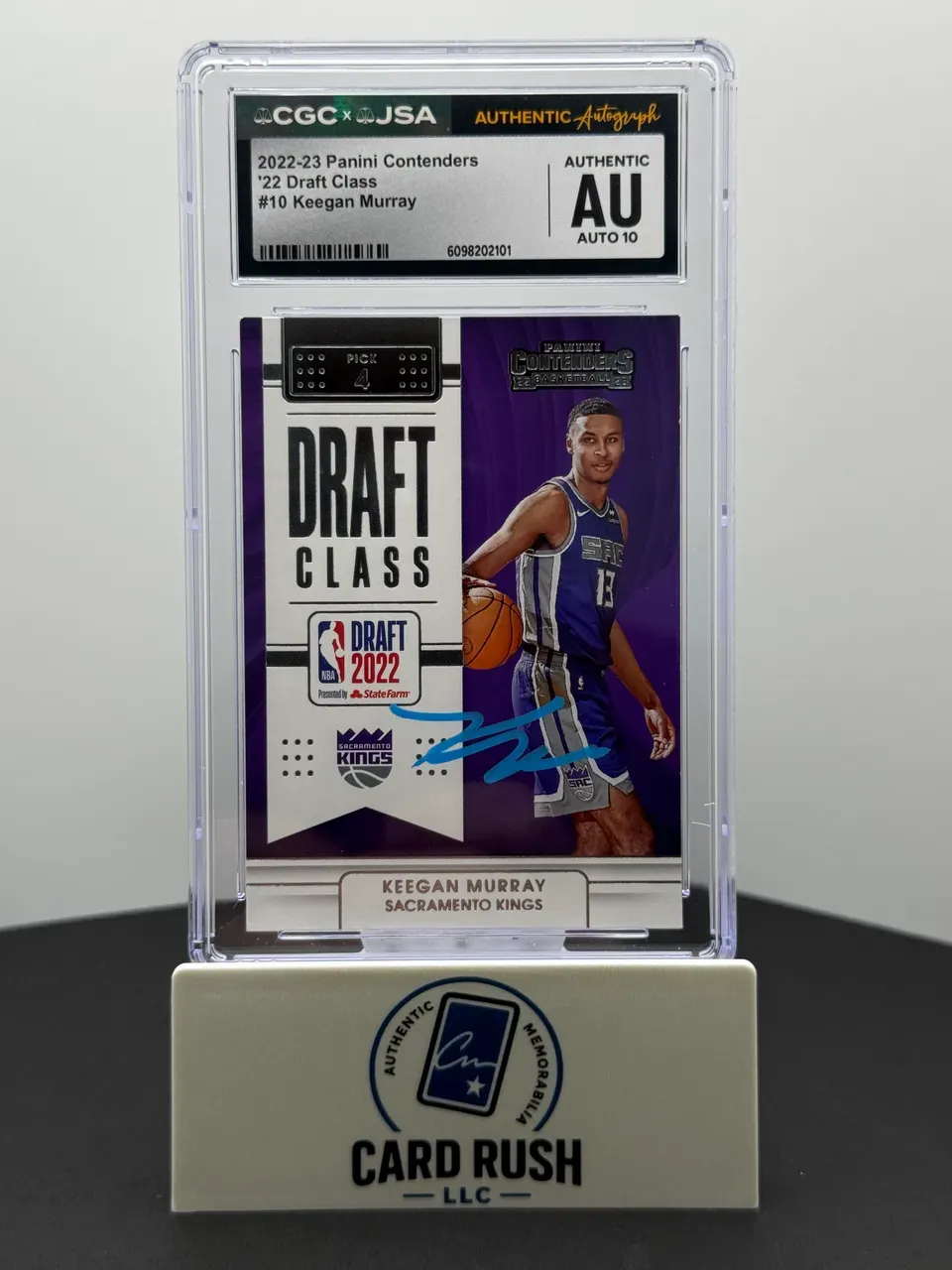
March 29, 2025. After the game, in his practice shirt, he took the pen from Christian and signed a page of four straight down, without stopping. Then he stayed for a photograph with Caeden.
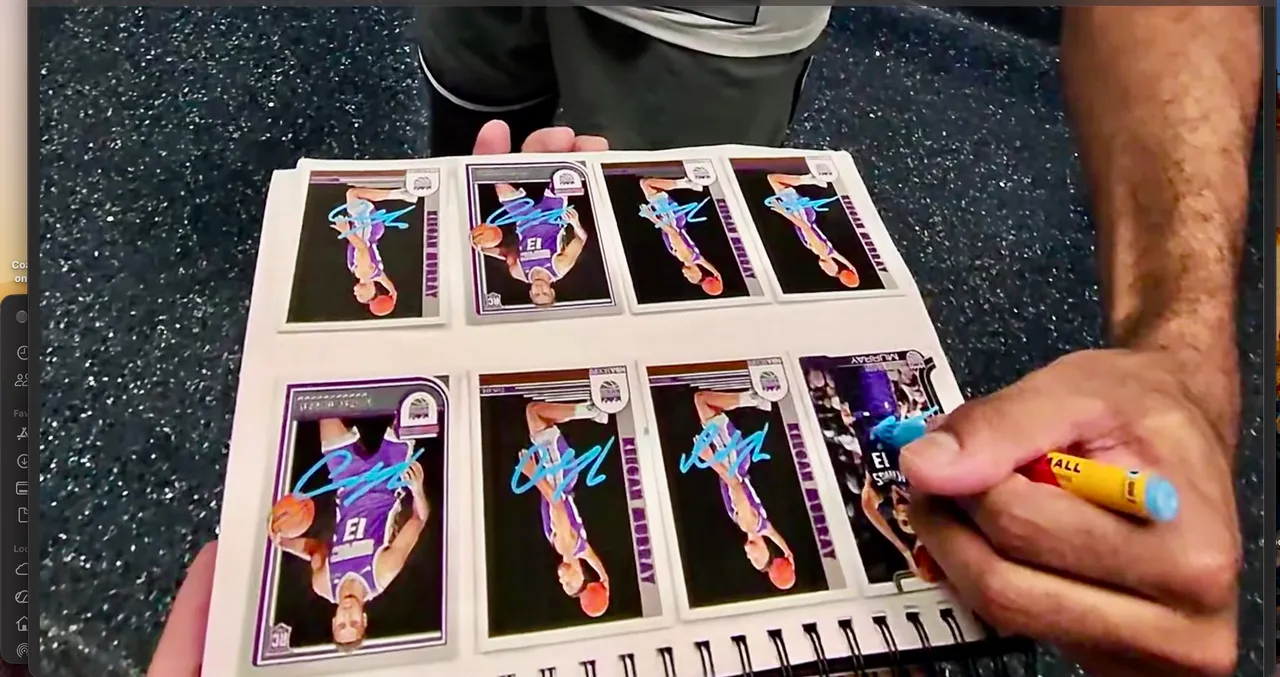
March 26, 2026. He wasn't playing that night. An injury had kept him off the floor for weeks. He came through the tunnel anyway, took the first page of eight, then a second and a third, and signed through all of them in one unbroken run. Then he handed back the pen and walked on.
Every card listed below can be picked out on film as it is signed. Each one was then encapsulated and its autograph authenticated by a third party, and its certification number is on its own record.
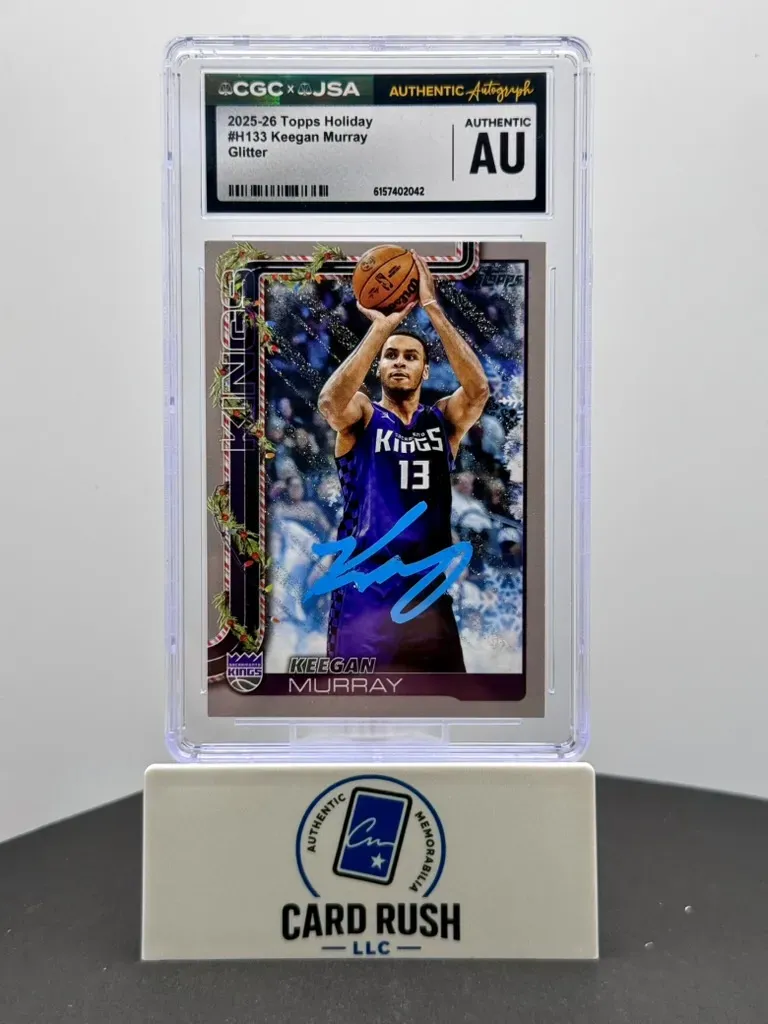
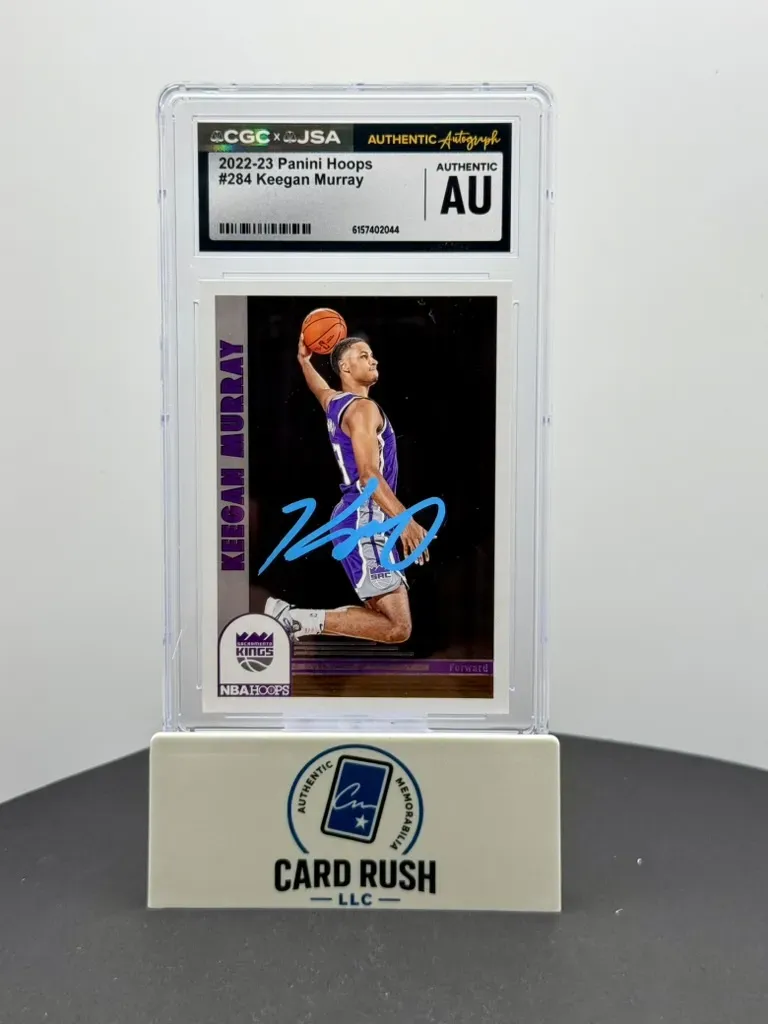
The cards: 2022–23 Panini Contenders '22 Draft Class (CRM-0277), signed March 29, 2025 2022–23 Panini Hoops #284 (CRM-0350), signed March 26, 2026 2025–26 Topps Holiday Glitter (CRM-0351), signed March 26, 2026 2024–25 Panini Mosaic #57 (CRM-0352), signed March 26, 2026 2022–23 Panini Mosaic #227 Miscut (CRM-0412), signed March 26, 2026 2023–24 Panini Mosaic Green (CRM-0167), signed March 26, 2026
You don't have to take our word for these.
Watch them signed.


Filmed in the Tunnel, March 29, 2025
Filmed in the Tunnel, March 26,2026
As seen in the reel — this is a story of the moment and the player, not one single card, which is why it isn't tied to a single artifact here.
The experience and access, documented and witnessed firsthand — even where the exact artifact isn't continuously provable from the footage alone.
Not every signature comes with a clean shot of the moment — this one still counts.
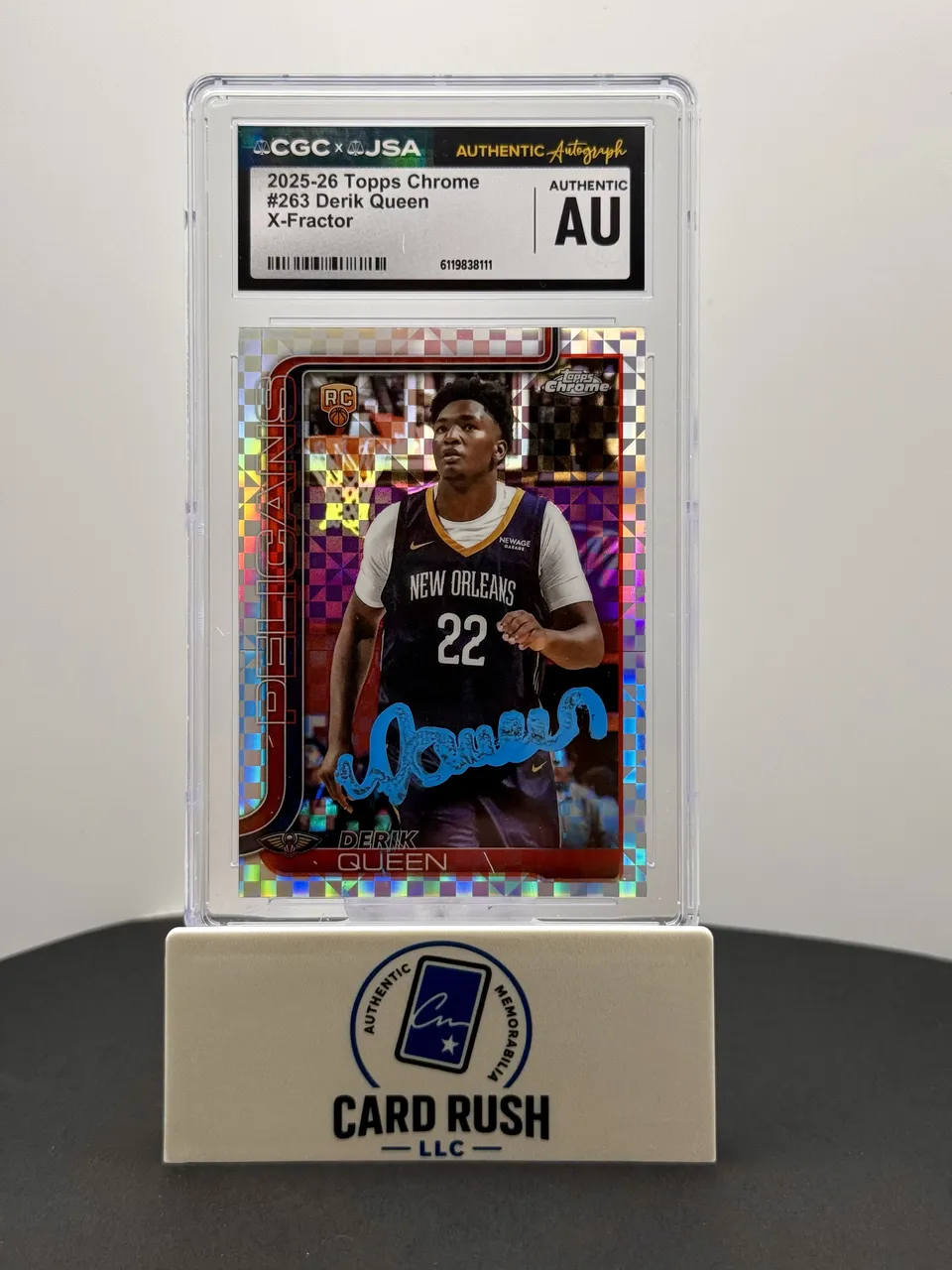
January 11, 2026 brought the Pelicans through Orlando, and with them a rookie class worth watching from the tunnel — Jeremiah Fears drawing most of the attention, and a few feet away, Derik Queen, fresh out of Maryland and already carving out his own reputation in New Orleans' frontcourt.
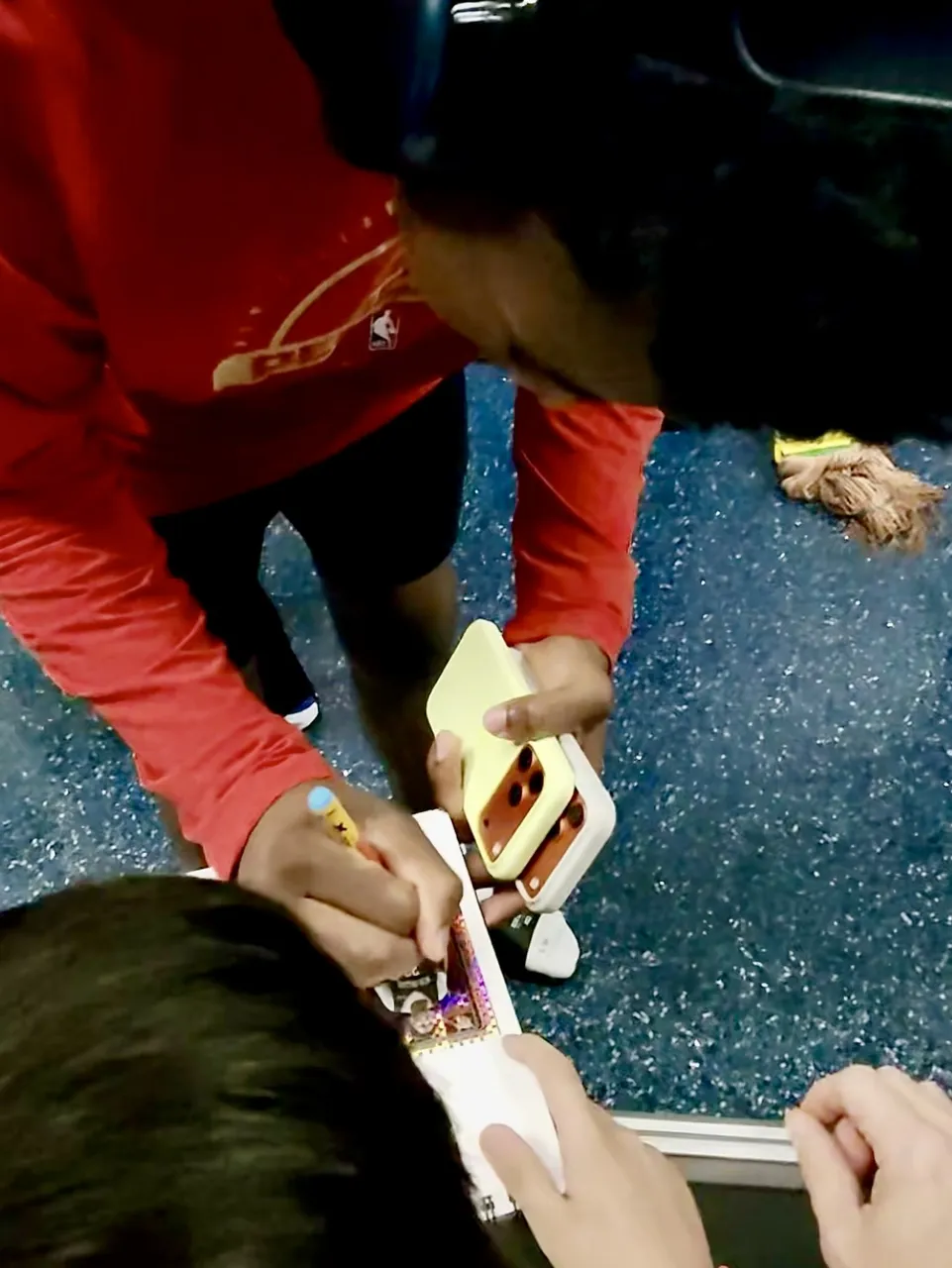
The card waiting for him was a 2025-26 Topps Chrome X-Fractor, his rookie season rendered in that shifting refractor pattern the set is built around. Queen stopped, took it in hand, and signed it in blue paint pen — a full, deliberate autograph that CGC and JSA would go on to certify as authentic.
This one is filed under Presence rather than Provenance Artifact, and that's a distinction worth being honest about. The footage from that night doesn't show his face clearly as he signs, and it picks the card back up only after the pen has already moved — not the unbroken, start-to-finish record some of the Museum's other artifacts can claim. What it does show is real: Queen in the tunnel, the card in his hands, the ink already drying by the time the camera catches up. That's presence, not proof of the whole act, and the Museum would rather say so plainly than borrow a stronger claim it hasn't earned.
A rookie signature, honestly documented for what the footage actually shows.
Kia Center, Orlando, January 11, 2026.


Signed with us standing there, but not fully on camera, so we call it Presence.
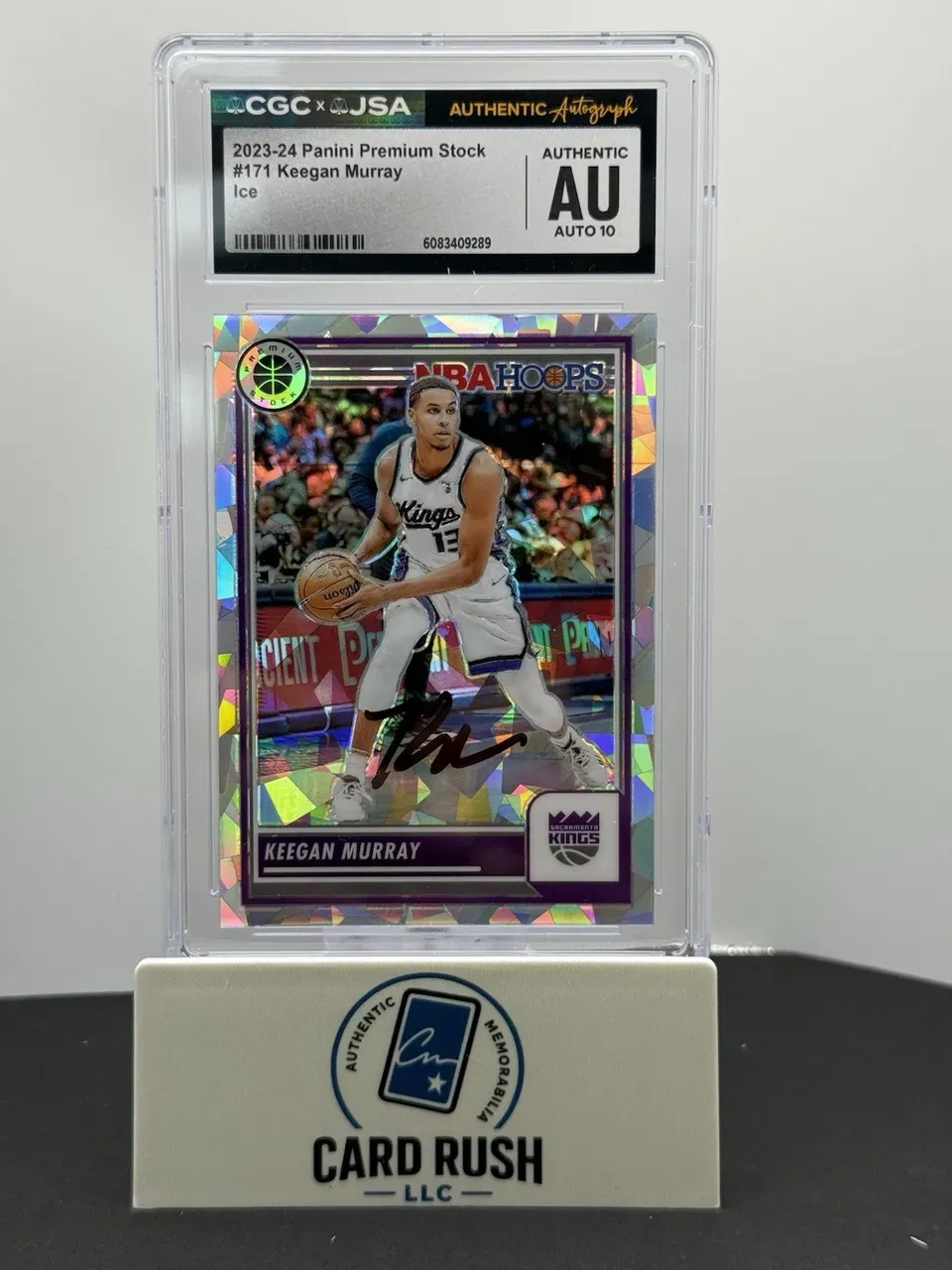
March 23, 2024. Before tipoff, Keegan high-fived Christian on his way past the rail. The camera caught that much. It missed what came after, when he came back and signed the cards held out to him. The Cracked Ice was one of them.
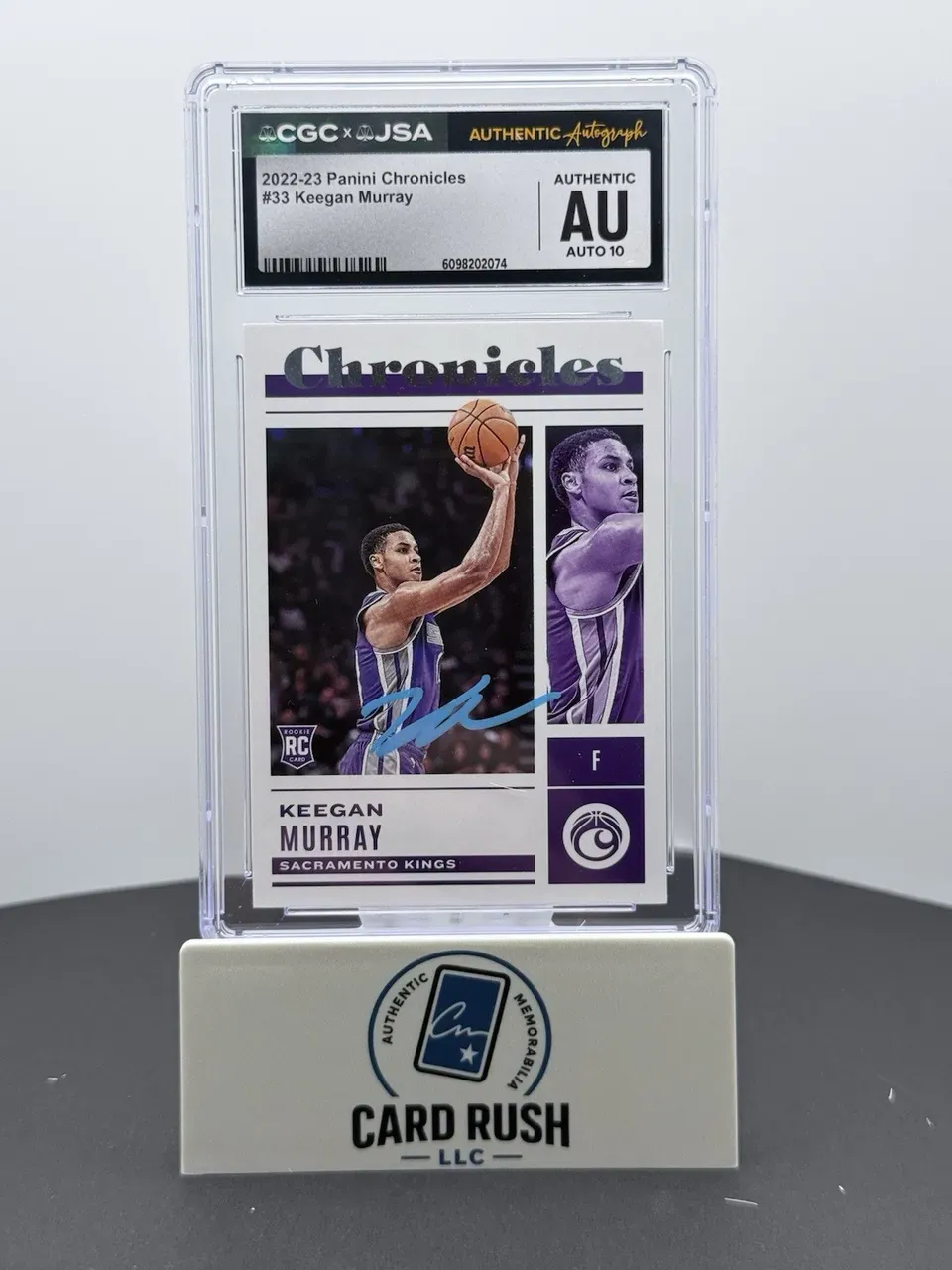
March 29, 2025. The Chronicles was signed in the tunnel that same evening, but not on a clip we can hold up from blank card to finished signature. So it rounds down.
Each card was encapsulated and its autograph authenticated by a third party, and its certification number is on its own record.
The cards: 2023–24 Panini Hoops Premium Stock Cracked Ice (CRM-0065), signed March 23, 2024 2022–23 Panini Chronicles (CRM-0056), signed March 29, 2025
We'd rather undersell a signature than oversell one.
That's what gives the Provenance beside it its meaning.


Curated temporary exhibitions from respected collectors — one collector, one theme, a run of stories over a defined window.
Check back for the Museum's next Visiting Curator exhibit.
A new observation, player watch, hobby trend, or collecting insight published each day.
Humidity, direct sunlight, and even the plastic in cheap penny sleeves can degrade a card over years. A simple rigid holder and a stable environment cost very little compared to what condition damage can cost you down the line.
This hobby has a real fraud problem. We're building an honest, plain-English guide — written in association with real experts — so new collectors don't get burned.
How to ask a professional athlete for an autograph, and why the asking matters as much as the signature.
The tunnel is loud. It's crowded, everyone is calling out at once, and the players are some of the tallest people you will ever stand next to. So the first rule is simple: speak up. A quiet "can you sign?" disappears. Say it clearly, and say it to the player, not to the crowd.
The second rule is older than the hobby: please and thank you. Players hear a hundred requests on the way to the locker room. They remember the kid who said thank you. When you're meeting a player for the first time, call him Mister and his last name. Dad does it every time. First names are for players who already know you.
Don't push your way to the front. Don't shout from the back, and never reach over a smaller kid to get your card in first. Grown-ups and bigger kids crowding out little ones is the fastest way to make a tunnel feel worse for everyone, including the players.
Be ready before he gets to you. Take your card out of its holder and have it in your hand. Don't uncap your marker early: it dries out, the signature comes out thin and broken, and the player won't wait for you to fix it. Instead, hold the marker by its cap with the end pointed toward him, so he can grab it and pull it open in one motion. A lot of players carry their own marker anyway.
Know the rules of the night. Superstars usually sign one per person and keep moving, because the line is long and their time is short. Others will sign everything you put in front of them. Have a few ready, just in case, but take the hint when it's one.
Last thing: learn about your player. Every player is a person with things they love outside basketball. Nobody expects a gift, but sharing something a player genuinely cares about can turn a hallway signature into a real moment. Some of our favorite tunnel nights started that way.
The number on a grading label that tells you how rare a card really is — and how to actually use it.
Every graded card carries a grade — a 9, a 10 — but the number that quietly matters just as much is the population report, or "pop." It's the running count each grading company keeps of exactly how many copies of that card have ever received that grade.
A low pop number is what turns a nice card into a genuine grail. We've had cards come back a perfect 10/10 where the pop report showed only a handful of others in existence at that grade — that's the kind of detail that changes a card's story, not just its price.
Pop reports move over time, too, since they're cumulative — every card submitted and graded adds to the count. That means a card that looks scarce today might have more copies pop up next year as more of the print run gets sent in for grading. It's a snapshot, not a permanent number.
When we're deciding whether something belongs in the Museum's permanent collection versus the Gift Shop, pop report is one of the first things we check. It's not the whole story, but it's real, published data — not a guess.
A graded card and a raw card fail in different ways -- here's what we watch for on each.
A slab does a lot of the work for you, but people treat it like the finish line, and that's the mistake. Cases crack if they're dropped on a corner or stacked without support, and a cracked case undoes the entire point of grading it in the first place. We keep slabs upright, in boxes actually built for the case size -- not loose in a drawer where they can knock into each other every time it's opened.
A raw card doesn't get that buffer at all, which is why sleeve-and-toploader isn't optional the way it can feel optional once something's certified. Raw cards take the everyday damage first: fingerprints, a binder page that's a little too tight, a swing in humidity overnight.
The line we tell each other is: grading changes what you're protecting a card from. It doesn't end the job. A slab keeps grime and fingerprints off the surface -- it doesn't stop a crack, and it definitely doesn't stop somebody tossing it in a box with twenty other slabs and calling it storage.
If a card mattered enough to send in for grading, it matters enough to keep storing properly after it comes back.
The museum preserves more than artifacts. It preserves the journeys of those who explore it.
A private wing of Card Rush Museum.
Your passport, credentials, provenance, and your place inside Card Rush Museum.
Everything on display here is curated by the family — but there's a private wing of the Museum too: a passport that records your journey, museum credentials that commemorate real milestones, and a provenance record that only builds, never resets.
“I really do believe that doing the online museum is a unique feature — not only for your customers, but for your children as well — and provides them with an infinite amount of reviewable nostalgia for the rest of their life.”
Member since, current standing, and every museum credential you've earned — issued as a passport, not an account dashboard.
Museum Visitor, Grail Seeker, Museum Scholar, Founder's Circle, Museum Patron — real credentials, from the moment you join to years of participation in the Museum.
Provenance is your history with the Museum — it only builds, never resets, and there's no leaderboard or point count to watch. As it grows, we reach out directly to let you know what's available to you.
Some collectors are named Museum Patron by the Museum itself — a permanent recognition, not a reward.
Every story deserves authenticity. Every artifact deserves provenance.
Every piece carries the card manufacturer's authenticity guarantee if sold raw, or independent third-party authentication from CGC/JSA, PSA, Beckett, or SGC if it's an in-person autograph — not just our word for it.
Most signings we attend ourselves. Where we can't, we use a small, vetted circle of hobby veterans only — never an open marketplace or mail-away mill.
Most cards carry independent CGC/JSA, PSA, Beckett, or SGC authentication — a second, outside set of eyes confirming what we're telling you.
The card never leaves vetted hands between the signing and your doorstep.
Where artifacts are shown for what they truly are.
Every one of these has a story worth telling — and a home still to find.
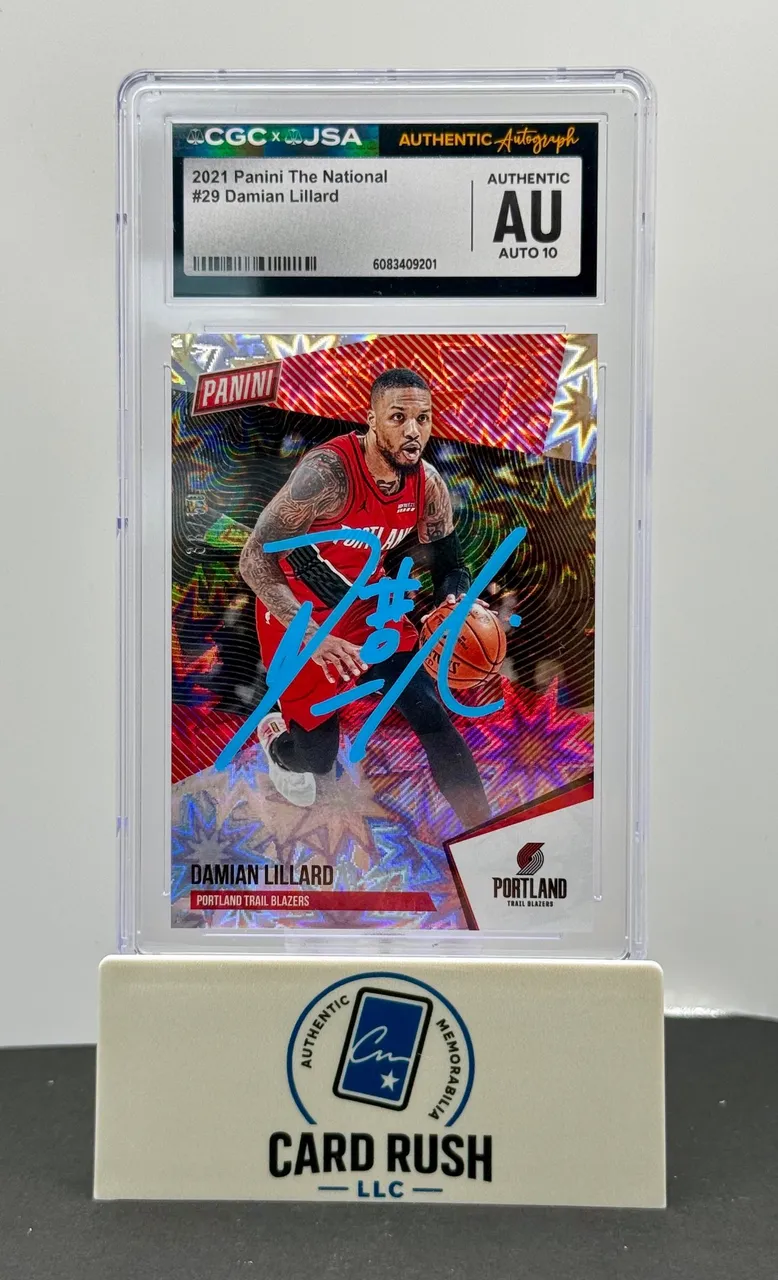
This card started as a mistake — a misread listing that turned out to be a National Convention Kaboom, not the Kaboom! I thought I was buying. The excitement, the price, the anticipation of gifting it to Christian for his stellar school year — all of it flipped in an instant.
The seller refused a refund, and what was meant to be a celebration became a disappointment. Around Card Rush, it became a running joke: not a Kaboom!, but a Kabust.
Then came redemption. When Damian Lillard signed it, everything changed. That autograph transformed the card from a misstep into a masterpiece — from Kabust to Kabang! I could not believe it, and then it got an AUTO 10 from CGC/JSA to turn it into a Hollywood ending.
Now, it's a piece of Card Rush history. A reminder that even mistakes can turn into magic. And while it's up for sale, its story will always belong to the collectors who see the heart behind the hobby.

A lesson in what a card is really worth, learned across a table at a card show.
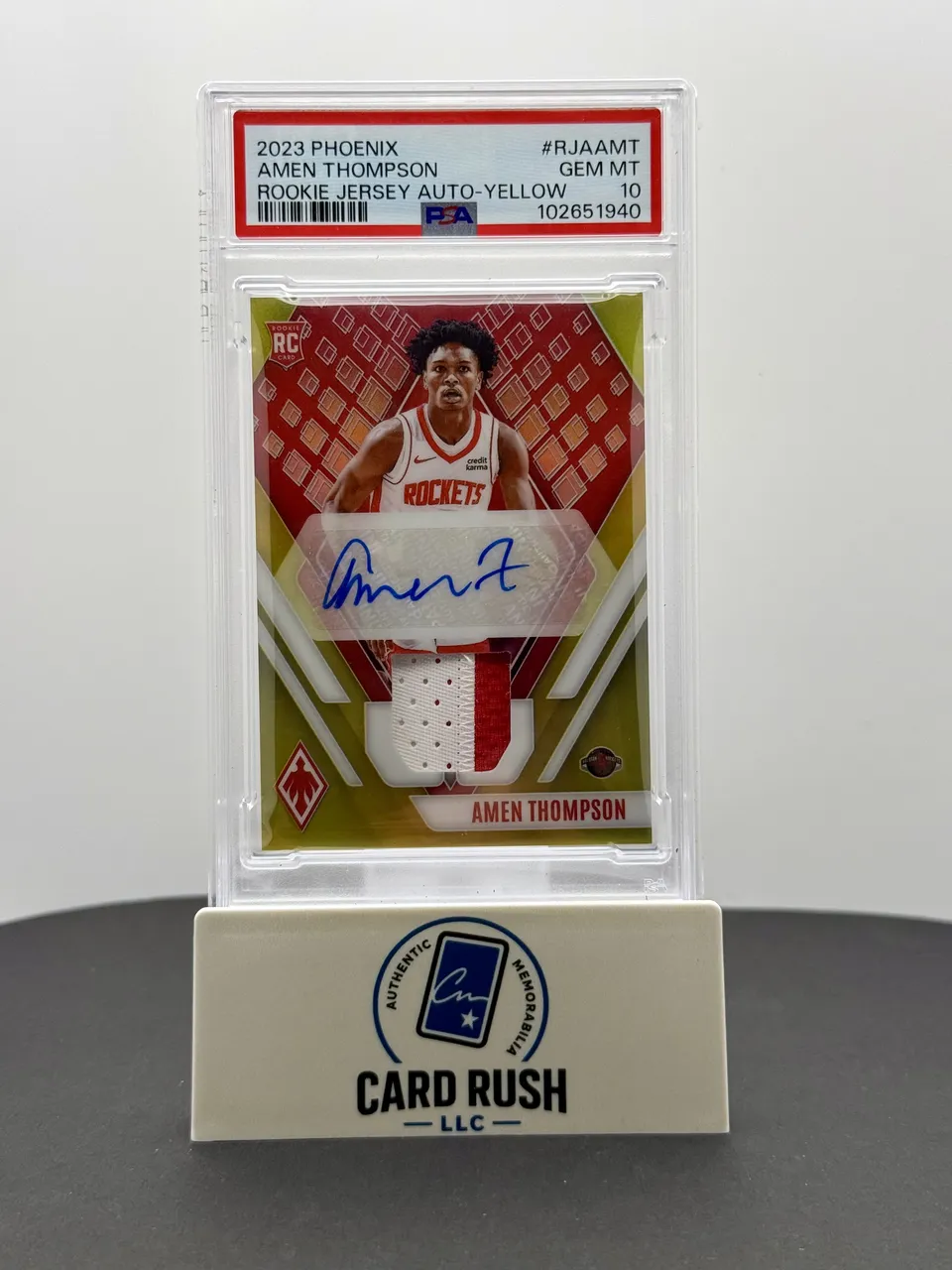
I was at a card show and came across a 2023 Phoenix Amen Thompson Rookie Jersey Autograph, the yellow parallel, graded PSA 10 Gem Mint. Amen's one of my favorite players, and I wanted this card badly. But I didn't want to just pay cash for it.
I'd brought some of my higher-value cards with me to the show, so I offered a trade instead. I gave up a Leaf Steph Curry autograph card, along with a couple of other encapsulated cards from less famous players, and walked away with the Amen Thompson.
I didn't fully realize it at the time, but that trade taught me something I still think about. Cash isn't the only way to get a card you really want. Sometimes what you already have is worth more to the right person than what's in your wallet, and knowing how to put a few smaller pieces together to trade up for the one card you actually care about is its own kind of skill.
No cash changed hands.
Just cards, a deal, and a kid figuring out how the hobby really works.

Every artifact, presently or previously.
Not every artifact stays in the collection. Some continue their story with a new collector.


"Item shipped out quickly and delivered exactly as pictured."
"Excellent overall transaction."
"This is hands down one of, if not THE best seller on eBay. Exceptional customer service from the very beginning. CardRushLLC went way above and beyond. Card arrived in perfect condition with extra precautions taken to ensure the package stayed safe during transit. Un-Beatable value for the card, and even had a hand-written note in the package. I will forever sing the praises for this team of outstanding individuals."
"Honest and reputable seller — prompt shipping and delivery, sturdy and secure packaging, quality product as the slabbed auto cards arrived in superb condition without issue or flaw. Unbeatable prices and would definitely be happy to buy from again."
"Card arrived packaged well and in listed condition, smooth sale — would purchase from this seller again."
"Fast shipping! Product as described! Great condition! Quality packaging!"
"Great card and customer service. Love the card guys. Keep it up."
"A+++ quality, great condition, super value, great seller!!"
No replies, no likes, no discussion threads — just a curated record of who's been through the Museum, reviewed by the family before it's ever public.
Some cards are collected.
Some cards are traded.
Some cards have moved on to new collections.
But a few become something more.
They become reminders of where we were,
who we shared the hobby with,
and why the chase mattered in the first place.
Basketball cards and memorabilia can be more than collectibles.
In the right hands, with the right story, they become art.
Thank you for spending time with the stories preserved here.
The Museum will continue to grow.
And every collector who walks through it becomes part of that story.
Tell us the player, the card, or the occasion — we'll let you know what's possible.